Means With No Ends

I’ve only reached middle age, but I’ve already lived to see the world remade by the introduction of personal computers and then remade again as we brought the power of the internet into our pockets with smartphones. It’s now obvious that another transformation is underway in the development of AI. As it was in the early days of other technologies, no one knows exactly what AI will mean for us long-term, but no one can deny that our world and our lives are changing fast. Humanity is always grasping for more power and control over everything we see and touch, developing new and better tools for ourselves, and we’ve been quite successful: no generation has ever had tools as powerful as the ones we wield today. This sounds like it ought to be good news, but most of us aren’t so sure. Humanity doesn’t have a great track record in using our tools well. I came across an observation recently that cuts through our progress to one of our biggest underlying problems:

“The first great fact which emerges from our civilisation is that today everything has become “means.” There is no longer an “end”; we do not know wither we are going. We have forgotten our collective ends, and we possess great means: we set huge machines in motion in order to arrive nowhere.” – Jacue Sellul

Continue reading Means With No Ends
Christmas Should Humble Us

Christmas is wonderful. The lights, the decorations, the music, the cookies, the nativity scenes, all of it. And in the nativity scenes, a baby. A baby who was the High King of Heaven. In a feeding trough. It’s a shocking picture, really, when you think about the humility of Christ. To step down from the literal throne of Heaven itself, take on our humanity, and enter our world as an infant born into poverty among an oppressed people is hands down the most extreme display of humility in all of history. Nothing else comes close.

Continue reading Christmas Should Humble Us

A Living Poem

One of the reasons I love poetry is because of the power it has to make ordinary language come alive in new and different ways. But of course, when I say “come alive” that’s only a poetic phrase—I don’t actually mean that poems could ever really live. Or could they?

Continue reading A Living Poem

Hand-Crafted

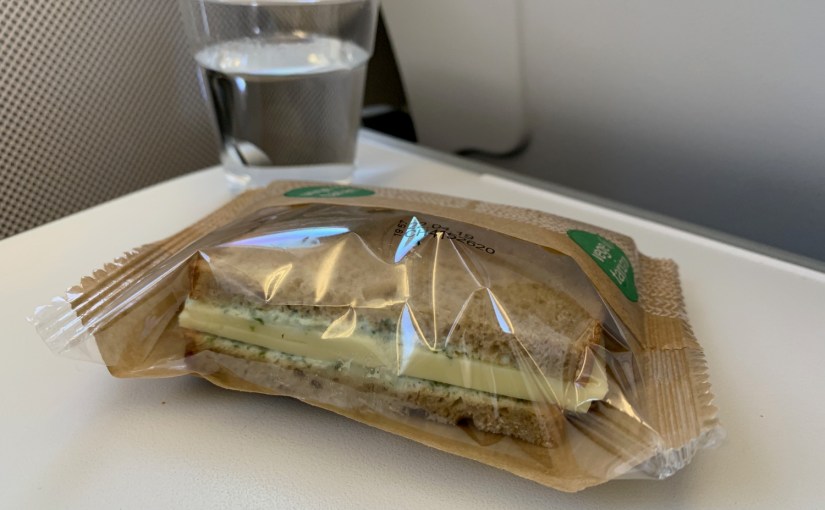
A few months ago I was on a long flight over the ocean, and towards the end of it the airline attendants brought me a sandwich. When I looked closely at the plastic packaging I noticed that mine said it was “hand-crafted”, and that the bread was made using “authentic methods”. They must have passed out hundreds of “authentic” “hand-crafted” sandwiches that morning. I’m not really sure what those words mean exactly (what would an “inauthentic method” be?), but I know there’s part of me that does prefer to know that a human was involved in the process of making my food. Which is strange, to think of it—machines are pretty good at things, after all. With the right design and programming I’m sure they could be great at producing sandwiches. Probably better than a lot of people. I suppose the difference is that machines don’t care. A lot of people don’t care, either, but at least with a human there’s a chance. And that means something. It means so much, in fact, that the sandwich packaging said “hand-crafted”, not “machine perfected”. We like the thought of our lunch being made specially, with care, not just mindlessly mass-produced in a machine.

Continue reading Hand-Crafted

Music And Lyrics

The world has a rhythm: a steady beat of seasons and sunrises, of tides and migrations and flowers and fruit.

The world has a melody: the beauty that stands out and demands our attention—the dawn chorus, the painted skies, the autumn colours and majestic peaks.

The world has a harmony: the subtle details that we hardly even notice, but they add richness and depth to the world, like the veins in a leaf, the scent in the grass, and the warmth in sunshine and fire.

The world is a symphony: exquisite and detailed and beautiful. But for all of its music, there is one thing that the world cannot supply on its own. The world has music—but it doesn’t have lyrics. That’s where we come in.

Continue reading Music And Lyrics

The Invisible Castle

In the year of our Lord, 1858, the Shirleys of Lough Fea boasted that their estate house contained the largest room in County Monaghan. The honour was not secure, however—a nearby Baron, Lord Rossmore, was determined to claim it for himself. He extended the drawing room of Rossmore Castle to steal the distinction from them. But the rivalry wasn’t over. Lord Rossmore had to extend the drawing room five times to stay ahead of the Shirleys’ relentless construction, and in the end his drawing room still came in second to their Great Hall.

Even though it lacked the largest room in the county, no one could deny that Rossmore Castle was beautiful, built as it was on top of a hill with a panoramic view and 117 windows to see it through (the Shirleys only had 96). Its towers and turrets looked as if they had been lifted straight out of a fairytale illustration, even more so when there was a party on, and there were a lot of parties. The guest lists were star-studded as well—the Prince of Wales was a personal friend of Lord Rossmore. But, as can happen in fairytales, the castle vanished. This had more to do with dry rot than magic, but the effect was the same.

Continue reading The Invisible Castle

Two British White Men And The Foundations Of Racial Equality

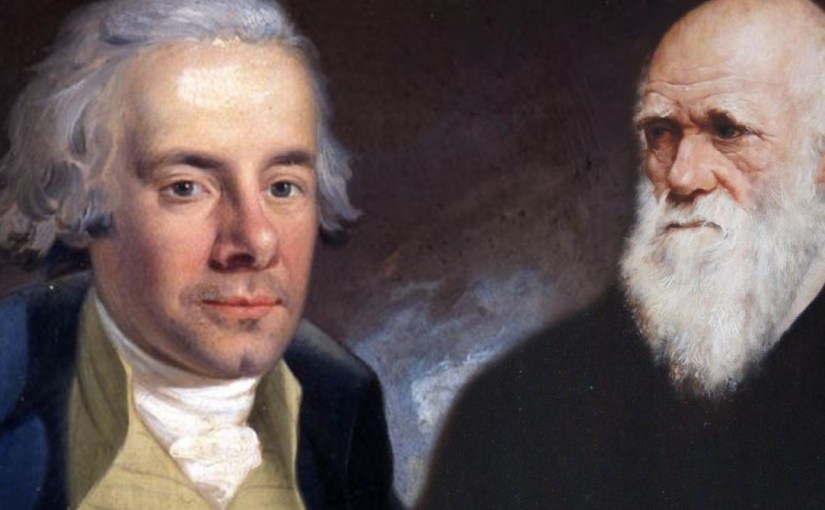
William Wilberforce was a British white man who was born into wealth, and quickly attained significant political power. He was elected as a Member of Parliament at the age of 21, while still a student. From such a position of privilege, what could Wilberforce ever legitimately say about racism? He had no personal experience of slavery. And yet, it was Wilberforce who spent most of his life and strength spearheading the effort to end the slave trade in the British Empire. 

Continue reading Two British White Men And The Foundations Of Racial Equality

The Other Pandemic

There’s another kind of sickness growing in the shadow of the pandemic. It feeds on isolation and loneliness, and our quarantines and lockdowns have created the ideal breeding ground for its growth, which is already being documented. Unlike the virus it’s nothing new, and I’ve seen the destruction it can leave behind.

I remember the eyes of my friend – I saw it there. More precisely, I saw nothing. His eyes were empty, and I found it unnerving to see them looking around with no life in them. I’d seen plenty of tired eyes, sad eyes, and eyes filled with fear – but I’d never seen eyes so full of emptiness. No spark. No motivation. No concern. Nothing. Except for one thing: pornography. And that one thing had driven out all the others. He lived for it, and died a little more each day for it. I saw it happening, and I hated it.

Continue reading The Other Pandemic