If God Meant Everybody, why did he say Neighbour?

In Leviticus 19:18, God commands his people to “love your neighbour as yourself”. Jesus called this the second greatest commandment, after loving God himself (Mark 12:28-31). When a religious leader asked him to clarify, “who is my neighbour?” Jesus used the parable of the Good Samaritan to illustrate that your “neighbour” could be anybody—even strangers, foreigners, and natural enemies.

This raises a question: if God meant for us to love everyone, why didn’t he say that in the first place? He could have commanded us to “love everyone as you love yourself”, which would seem clearer and more to the point. Doesn’t the word “neighbour” lend itself to definitions that are narrower than God intended? In fact, we have Biblical proof of just such a misunderstanding in Matthew 5:43, where Jesus refers to a saying that seems to have been popular at the time, “You have heard that it was said, ‘Love your neighbour and hate your enemy.’” Jesus rejects this saying and turns it around, commanding us to “love your enemies and pray for those who persecute you, that you may be children of your Father in heaven” (Matthew 4:44-45). That’s a good correction, but couldn’t the confusion have been avoided if God had simply said “everybody” in the first place?

Continue reading If God Meant Everybody, why did he say Neighbour?

Three Books To Draw Your Heart To God This Summer

The days are longer, the weather is warmer, and it’s a perfect time to get outside and enjoy creation. This is also a great season to let your enjoyment draw your heart closer to the One who invented the sunshine, the growth, and everything else you see. Here are three books I’ve read and enjoyed recently that can help you focus your mind and heart on God this summer:

Continue reading Three Books To Draw Your Heart To God This Summer

The Treasure Chest at the Train Station

One morning as my wife and I were waiting for a train at our local station, I cast my eyes over the familiar utilitarian scene with its phone-holding inhabitants and I noticed something I had never paid attention to before. On the far side of the tracks there was an unassuming yellow-plastic treasure chest. I could see a padlock on it, but the latch was in front of the lock, ready to open. On the front it had large, black letters openly declared its contents: “Grit Salt”. I realise that this may not sound like treasure to you, or interesting or surprising or exceptional at all—and that’s just the point.

Continue reading The Treasure Chest at the Train Station

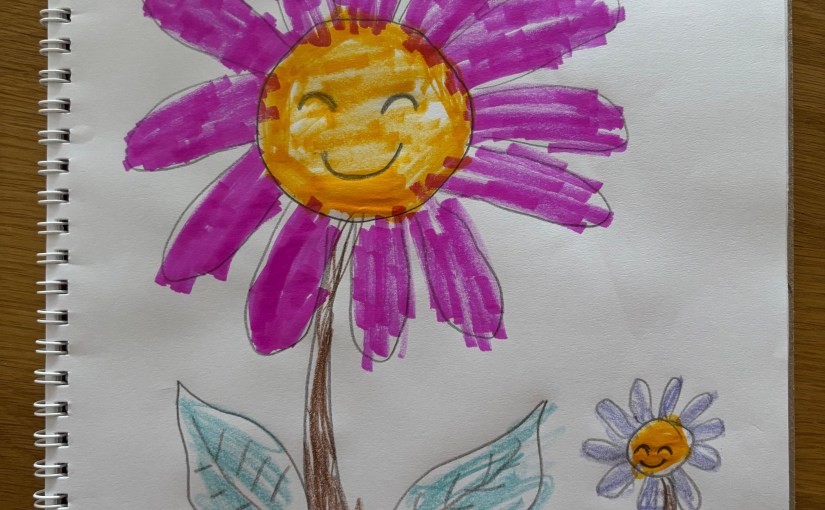
The Ingredients of a Petal (a poem)

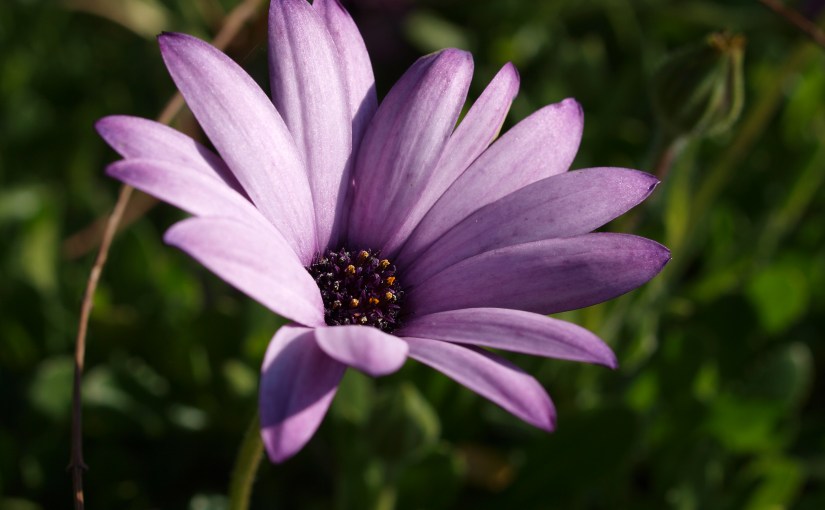
What is a petal,
and how would you make it?
What alchemic mixes
would help you create it?

The basic ingredients
everyone knows—some
soil and sunshine and
air—then it grows

But how?

The microscope cannot define
the grand and mysterious
secret of life

We see it
observe it
and live it ourselves
we plant it
and grow it
and store it on shelves

But where did it come from
and why does it bloom
with a spring resurrection
on winter’s old tomb?

A petal’s a beauty you
cannot invent—
a wonder, an omen,
an Artist’s intent

Searching for a Sign

“God, please give me a sign”, I said quietly, as I stepped outside.

I was in the middle of a confusing situation. I didn’t know what to do, or how. I couldn’t see how anything could work out well. I wanted to know that God was near, and involved. I wanted to see a display of his care, and power. I’m not sure what kind of sign I was looking for, exactly—a sudden bolt of lightning out of a clear blue sky? A rainbow ending at my house? A rare bird landing on my shoulder?

Continue reading Searching for a Sign

The Genius of Dirt

It’s everywhere. It sticks to your hands in the garden, and clings tightly to your shoes until the moment you step inside, where it promptly falls onto the just-cleaned floor. It stains the knees and elbows of children’s clothes, collects on the sides of cars, and turns into a sloppy mess in the rain. Dirt.

Continue reading The Genius of Dirt

Does Heaven Move More Slowly?

The area we live in is booming. The fields are growing houses, and there are rivers of tail lights flooding the little roads that used to flow freely. As I sat in the car, waiting again, I thought about how the people who lived here in generations past used to get around. It was walking, mostly, at the pace of people or animals, and even with the traffic my car is faster than that. On the other hand, I know that walking is healthier, and also when I walk I often bump into people I know and we might have a friendly chat—which isn’t possible when we only glimpse each other through passing windscreens. All of this got me thinking about a question I’d never considered before: what kind of transportation will we use in Heaven?

Continue reading Does Heaven Move More Slowly?

Glorious Defeat (a poem)

In our midweek Bible studies with our church we’ve been discussing the book of Hosea, and this poem is based on one of the themes we found there—a theme I’ve experienced in my own life as well.


Glorious Defeat

I raise my eyes
to my opponent
standing in the way
towering above my head
and shining like the day
I size him up
I shake my fist
I’m impotent
yet I resist
“Why?”
I shout out my complaint
though my own voice
sounds small and quaint
“Why are you here blocking me?
Move aside, now! Let me be!”
He doesn’t budge
his sword is drawn
he’s ready now for action
his eyes are burning hot
with an unsettling compassion
and with a voice
like rushing water
larger than the world
he answers with a knowing smile
“Child” he says
“My child”—is that really who I am?
“I only stand to save you from the peril
that you’re in. This path leads to destruction—
if you turn, you’ll live again. So I’ll block you
and I’ll fight you and I’ll stop you till you see
that the path to perfect freedom
is the path that leads to me.”
And so I am undone
in my glorious defeat
I run into his arms
and I find the victory

What else does God Name?

A break in the clouds made the sun shine briefly, and it filtered through the leaves of the trees that surrounded me. I’m still not well versed on the native tree species of Ireland, so I didn’t know what to call all the varieties around me. As I looked more closely at them, I thought species names wouldn’t really do them justice, anyway. Each tree was so unique, twisted and knobbed in its own peculiar ways, reaching outward and upward and marked with its own particular spots and stripes and lumpy roots. Each told its own silent story of growth over decades, with its scars to prove the challenge of survival and its buds to show the promise of life. I wanted to call each one by its own name, something fitting to itself, honouring its own unique existence. I stopped at one tree in particular and tried to find a name that would suit it. It looked stately and strong, like a weathered General in his dress uniform, but General is more of a title than a name, and probably too general. Anyway, it’s a bit silly and sentimental to be going around naming trees, isn’t it?

Continue reading What else does God Name?