Worn (a poem)

I don’t want to die
by the passage of time
the encroaching of rust
with a cover of dust
no, let my heart give out
from the sheer force of use
from the cost of the love
I refuse to reduce
let my hands be cracked
and my body be wracked
from the lifting and giving
—I will not protect
myself from the weight of
the burden of life
I’ll carry the burdens of
others, all night
so furrow my brow with
the plough-blade of thought
and give me the scars of
the battles I’ve fought
and weaken my legs
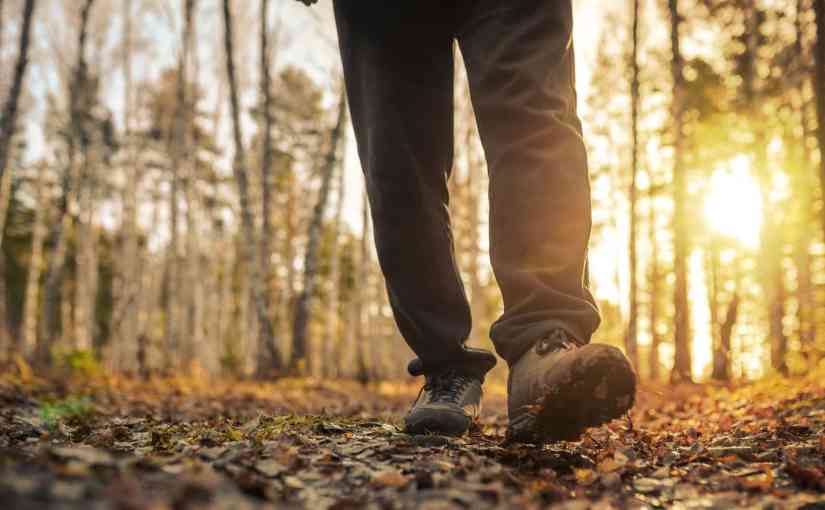
with the distance I’ve run
and so if I wear out
and fade out and come
to an age where I’m
battered and bruised—

I’ll hold my head up
and know it’s because
my body was put
to good use
The Theologian Drawing Daisies

Last Sunday, our church met together with ten of our sister churches for a combined service. Individually, our churches are small and spread out in local communities across two counties, but once every two years we all come together and it’s glorious. The singing. The shared fellowship, and vision. The friends we haven’t seen in a long time. It’s good to remember that we’re in this together. 

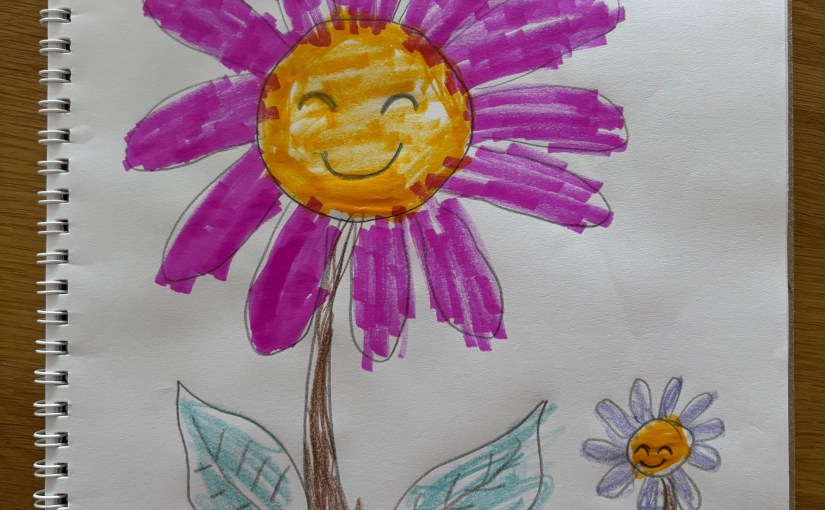
One of the illustrations in the sermon was about how, in Christ, God’s children don’t need to wonder about his love for us, like someone pulling petals from a daisy saying, “he loves me, he loves me not”. In Christ, we are secure, and every petal is, “he loves me”. Isn’t that wonderful? As I listened, I noticed a friend of mine a couple rows up doing something I’ve never seen him do before. Kevin is a leader in his local church, and a careful theologian. He teaches for our local Bible college, and is currently finishing up his doctoral thesis on the work of the Holy Spirit in the Old Testament. Yet there he was, drawing daisies on a sheet of paper. Petals, leaves, stems—and big, happy smiles. 

Continue reading The Theologian Drawing Daisies

AI Beats Us At Our Own Game

I have a friend who works for NASA. He told me that the International Space Station has always struggled with a mould problem. He said everything that goes into orbit is fully sterilised and decontaminated, except for one thing: the people. Among all the clean and tidy machines, the people remain organic. Alive. Chock-full of microorganisms and a million other mysteries including (but not limited to) mould. Even when we leave the planet, we bring our mess with us.

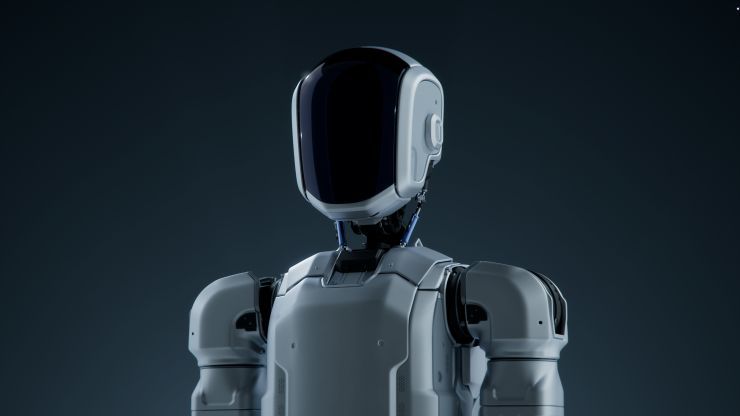
The solution to the mould problem on the ISS is obvious. All we need to do is replace the people with robots. We’re told that AI is already more intelligent than we are, and getting better and more efficient at everything we do. Robots wouldn’t need sleeping quarters, wastewater recycling units, exercise facilities, showers, or a kitchen. All that human-oriented space on the space station could be re-purposed and used far more efficiently.

Continue reading AI Beats Us At Our Own Game

The Blessing of Having Things to Worry About

The carefree seaside holiday feels far away. The sky is full of clouds, and the calendar is full of responsibilities. A text message comes in with bad news from someone you love, and the worry slips in quietly—and forcefully—with it. Of course it does. You can’t stop it.

Or can you? One way to stop worrying would be to stop caring about anyone, and anything. Go find a comfortable spot and keep to yourself. A few acquaintances might be workable, but be very careful not to make any real friends—you’ll end up worrying about them, eventually. Avoid marriage, romance, and commitment of any kind. Stay as far from children as possible. Only gather possessions that you can keep very close, and very safe. Don’t attempt anything that might not succeed. Reduce your expectations.

Continue reading The Blessing of Having Things to Worry About

How Spoiled Milk Reminds Me Of Hope

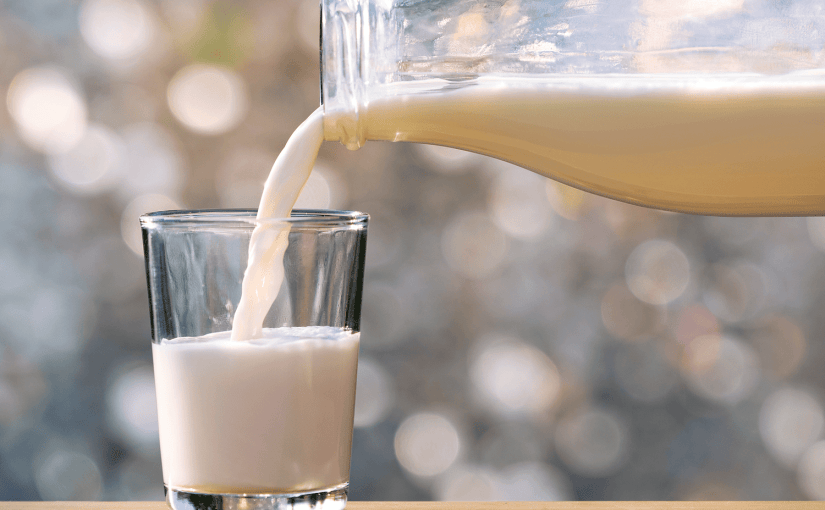
The cheese was supposed to be cheddar, not bleu. But I opened the bag and saw—and smelled—that the mould had started lunch before me. It used to be good cheese. Not anymore. I threw it in the bin, on top of the cut flowers that used to be stunning before they wilted and fell to pieces. The green leaves outside are beginning to change colours. Soon I’ll be crunching my way through their fallen glory, and they’ll fade away and feed the soil for next year’s growth. Someday I’ll fade away, too. Everything good comes to an end on this planet. Every blessing, every joy, every life. Refreshing milk sours. Even water stagnates.

It’s a good reminder. When the world was fresh and budding at the dawn of history, when the blessings were untainted with decay and the sweet enjoyment of our first parents was unmarred by any dark expectation of disease and death, when everything was good and right and lovely—that’s when Adam and Eve were tempted. That’s when they chose to accept God’s beautiful gifts, but reject the God who gave them. They forgot that the gifts could never last without him.

Continue reading How Spoiled Milk Reminds Me Of Hope

The Illustration (a poem)

I’ve been taught by a lot of people over the years. In school and university, in trainings, Bible studies, and more sermons than I can count. I know it all shaped me, slowly, bit by bit, and I do remember a few things, here and there—the real stand-out, mic-drop moments—but most of the specifics of what they said are gone now. What I remember most is not the teaching itself, but the people who taught me. I remember their faces, their lives, and the way they interacted with me and others. I remember if they cared about what they said, and if they cared about me. I remember their sincerity—or hypocrisy.

Continue reading The Illustration (a poem)

Eclipsing the Sun

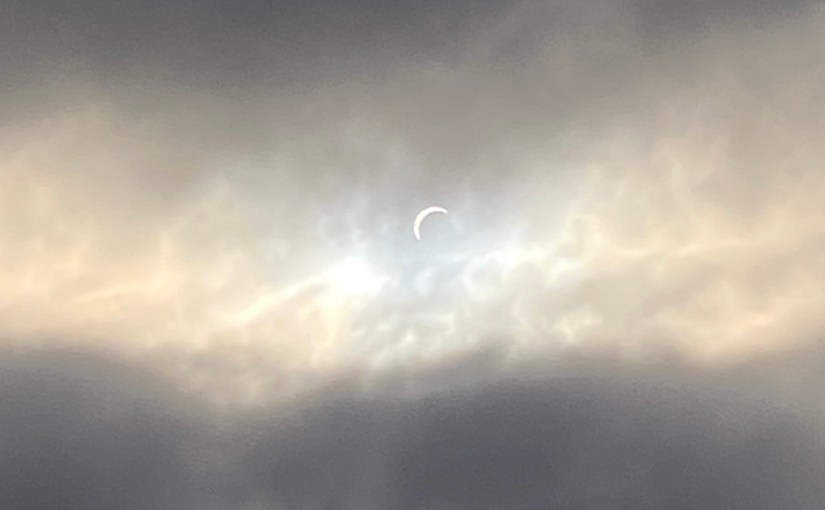
We stepped out of our front door into a eerily early twilight, as the moon began to cover the sun. From where we stood, the eclipse reached 96% coverage, at its height. One of the things that impressed me most about the experience was not how dark it became, but how much light remained when only 4% of the sun was shining. Even that small sliver of crescent-sun lit the world up more brilliantly than a full moon. The moon might be the main attraction at night, but it can’t compete. I’ve seen it in the morning, almost imperceptible against the sun-washed sky, even though it was still shining just as brightly as ever. More technically, it was still reflecting just as brightly as ever. The reason the moon can never compete with the sun is because every bit of light it shines with is received from the sun in the first place. It does not generate any light of its own. It can only give out of what it has been given.

Continue reading Eclipsing the Sun

A Lesson from the Littlest

This is a guest post by Naomi Brehm, a storyteller and poet I met at a conference earlier this year. Naomi works as an evangelist with Speak Life while also studying for a Graduate Diploma in Theology. You can find her work on the Speak Life podcast


Sussex was serving up its best. Winding country roads in summer sunshine were made for Sunday afternoon cycles like this one. Whizzing past fields and farms, my peripheral vision kept being interrupted by flashes of grey-white. I’d never seen anything like it before. Cobwebs are often intricate and beautiful and delicate, these were not. Dense, Halloween-style nets had been cast over whole sections of hedgerows.

Initial reaction: “gross.”

Secondary thought: “Ah, I should do Seth’s Inductive Nature Study thing.”

Continue reading A Lesson from the Littlest

How to Change Your Perspective on Time

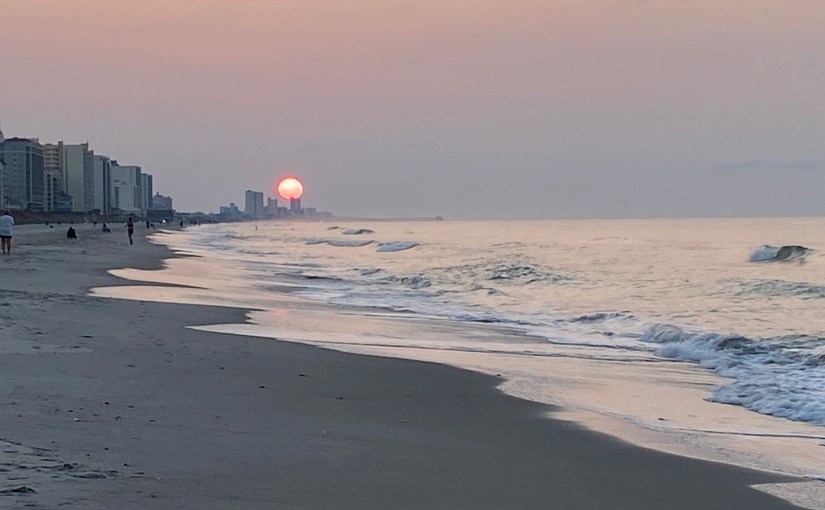
I saw the sun rise over the beach recently. I’ve seen it rise countless times before, but it still surprised me. Not only was it larger and redder than I remembered—and more beautiful than I can describe—it was also moving faster than I expected. I could measure the speed of its rising against the buildings on the horizon, and I saw it launch itself above them into the sky in the span of mere minutes. Does the sun always move this fast? It must, but I don’t normally perceive its speed so clearly because I don’t normally have stationary objects to measure it against.

Life is like that, too. Time constantly moves us, steadily, relentlessly, without ever adjusting its stride or changing its course. We easily lose track of its movement among the busy challenges and joys of living, but sometimes—like the sunrise at the beach—we realise. Sometimes, we see time measured against hard, immovable facts like the growth of trees or children, the passing of birthdays, or the whitening of hair. Sometimes, it comes as a surprise—but time is not concerned about our consternation. It continues unabated, never slowing, never quickening, always moving forward. The movement of time is a simple fact. We cannot change it. The only thing we can change is how we view and react to it, and I’m convinced that our perspective on time has everything to do with hope.

Continue reading How to Change Your Perspective on Time

Choose Your Drama

Choose your drama. There is no shortage. Every streaming service can supply a few thousand options for you, and if fiction isn’t your preference the news is a never-ending reality show (based on a true story) that nobody has the guts to cancel. Too dark? You can follow the stars, watching for which celebrities are rising, which are falling, and which are cheating. Or sports. Or soaps. Or our newest option: a steady stream of short, viral video clips that are always ready to provoke a reaction—whether good or bad or surprising or outrageous or intriguing or ridiculous or sweet or funny or comfortable or all of the above one after another for as long as you can keep your eyes open.

Choose your drama. They’re all vying for your attention, shouting, popping up, playing on your emotions, always accessible and ready to give you the satisfaction of feeling something—because there is a kind of satisfaction in feeling, even if the feeling is bad. And the handy thing about receiving our feelings prepackaged and streamed through the internet is that it’s easier to put them back in our pocket or change channels when we’ve had enough. The real world isn’t nearly as accommodating.

Continue reading Choose Your Drama