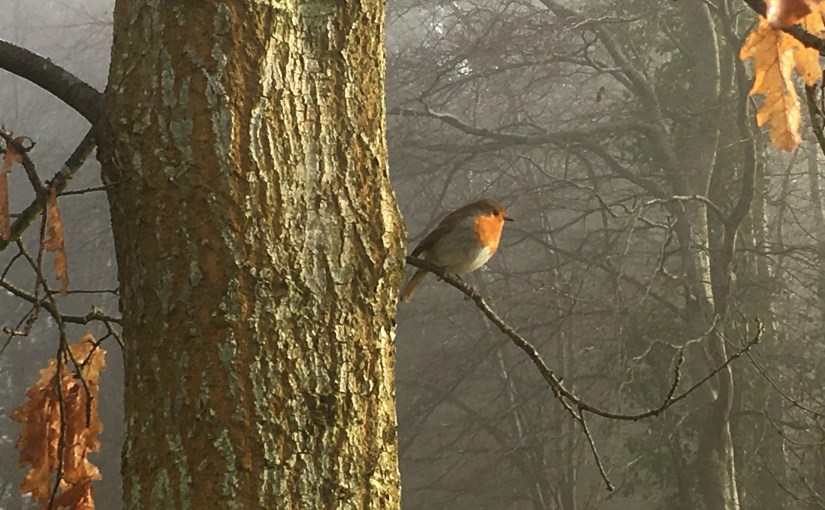
A poem, based on the encouragement of Zechariah 4:10 and Galatians 6:9:
Do not despise the day of small things
The everyday normal that every day brings
As he is working, the robin still sings
For meaning and purpose are not just for kings
A poem, based on the encouragement of Zechariah 4:10 and Galatians 6:9:
Do not despise the day of small things
The everyday normal that every day brings
As he is working, the robin still sings
For meaning and purpose are not just for kings
I’m not quite over the hill yet, but in a lot of ways I’m already old-fashioned. I like old music and old manners and old standards for grammar, and I still don’t get the new trend of using emoji skulls in the place of laughing faces. More seriously, I don’t think that the modern trend of commitment-free relationships has been good for children. Or relationships.
On the other hand, there are some old fashions that I don’t like. I don’t like wearing neckties—who decided that tying a rope around your own neck was a good idea? I also don’t like old systems of religious rules that measure love for God by obedience to commands he never gave. And I don’t like being measured by my social connections or income level instead of the content of my character—an age-old fashion that is still circulating today. So I guess I’m not completely old-fashioned.
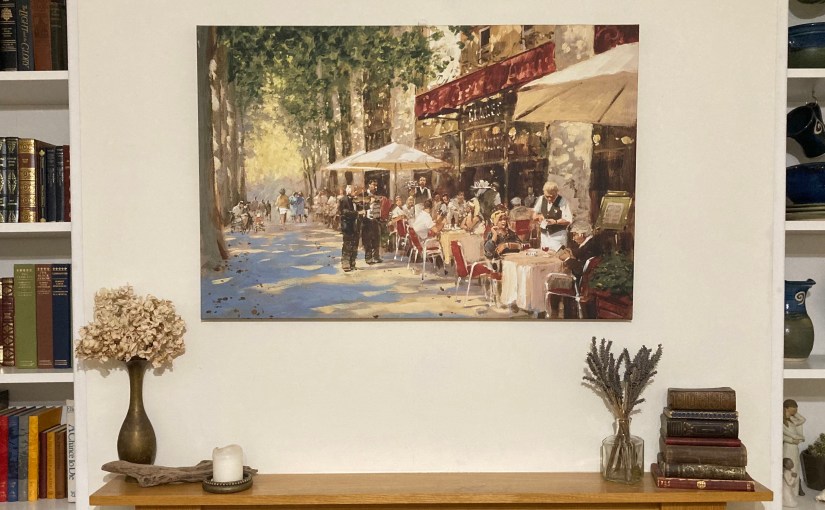
Continue reading Don’t Measure Fashions By Their AgeThe warm sunlight is filtering through the trees, there’s music in the air, and amid the bustle of the servers and the clink of the cutlery there’s a constant hum of lively conversation. I’m not there. I don’t even know where it is, but when I look at the painting of this scene that hangs over our mantle, I can hear it all. I can feel it all, and I love it. I love how the painting reminds me of moments like this one in real life, when I’ve been in seats like these with friends and family around me. I’m glad the artist captured this moment (wherever it was) and held on to it for me with his brush. I’m glad I found the print to hang in my house, to remind me of my own moments like these.
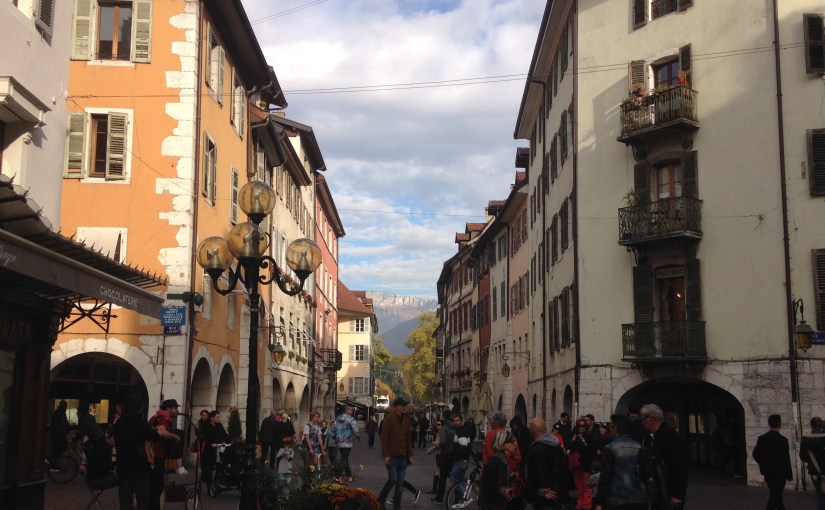
Continue reading Capturing A MomentI took a walk on someone else’s street, someone else’s everyday avenue, in someone else’s city. To me, it was all new. I’d never seen the buildings before, or the trees, and the next corner was a complete mystery that drew me on to look and discover. I didn’t know anyone who lived there, or who their cousins were, or what church they were baptised in. But they knew.
Continue reading Someone Else’s CityRestrictions are lifting in Ireland, and we’re going back to something like normal. We’re picking up the threads of life that were untouched for so long and sliding back into routines we used to think were immutable until they weren’t. It’s good. We’ve been waiting for this, looking forward to this, and now it’s happening.
And now we’re tired. I keep hearing it from all kinds of people, in all kinds of ways, and feeling it, too: The old threads of life that were so familiar feel funny in our hands now, and heavier than we remembered. The jobs we used to do and schedules we used to keep feel harder, and somewhat foreign, like running through water. Yes, we’re all happy about life returning to familiar forms. But we’re also exhausted, and it’s showing.
Continue reading Going Back To Normal (And Everyone’s Exhausted)There will always be the haters
The biters in the back
The baiters
The ones who only talk and never listen
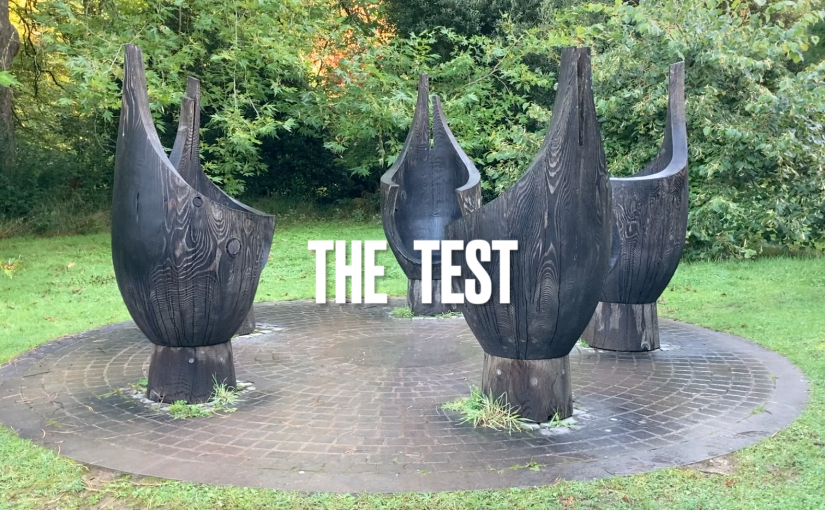
And always know exactly what you’re missing Continue reading The Test // A Spoken Word Poem
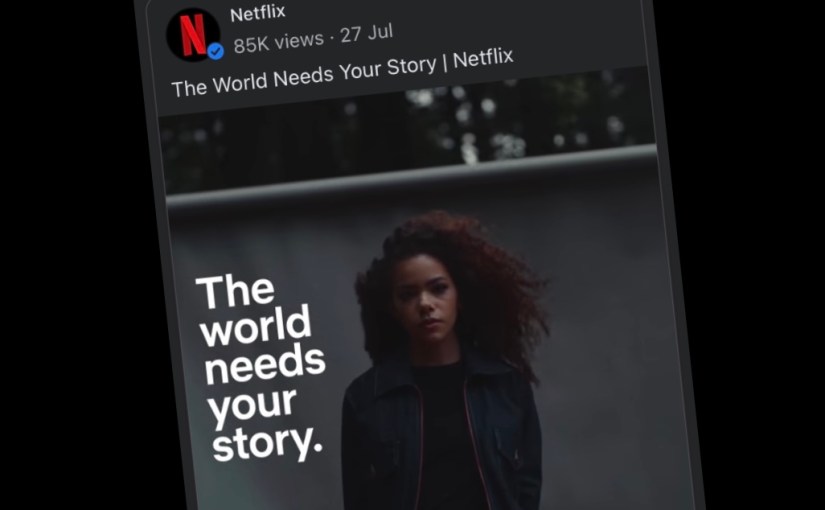
“All dreams deserve to be seen, and all stories deserve to be shared,” said the Netflix ad. “The world needs your story. Show them!” But that wasn’t the real point—it was an ad, after all—so it ended with “Discover the world’s stories.” On Netflix, of course.
But Netflix isn’t showing my story among “the world’s stories.” They don’t have any plans to produce it, either (that I know of). So how will I get my dreams to be seen? How will I get my story to be shared? I need to figure this out. After all, Netflix said, “the world needs your story.”
Does it, really? Another regular guy doing regular things in regular ways? That’s the story that the world needs? It isn’t as entertaining as the stories they already have. It isn’t as impressive, or interesting, or mysterious, or anything fun like that. There’s a reason Netflix hasn’t called for the rights to my story. Who would want to watch it?
Continue reading The World Needs Your StoryAt our house, I’ve always been the bad guy. To be more precise, I’ve been a lot of bad guys. Sometimes it is just part of me, like when my hands became the Flying Tickle Spiders. Other times I’ve needed extra props, like the brown blanket for the times when the Muddy Hole Troll tried to trap my children in his muddy pit in a terrible plot to keep them filthy. In lightsaber fights, Sith Seth has always been the one threatening destruction and calling good little Jedis to join the dark side. Then there have been attacks from the electric Volt-ure who zapped children (disclaimer: no real electricity was involved) and the Alien Chef who has tried to make them into sandwiches between the beanbags. Our house has been a dangerous place.
The thing is, all my terrible plots have ended in failure. I guess I’m not really that great at being an evil mastermind. Somehow, the children have always found a way to defeat me. Which is fine. Actually, I’m happy. I want the bad guys to lose, too. Yes, our house can be a dangerous place, but it is only silly danger, and my children can fight my evil plots with complete confidence of eventual victory. We just have fun together, and I hope they remember that. But I hope they remember more—I hope they hold on to that feeling of confidence, of knowing they will win eventually. They are growing up now, growing beyond the games and closer to the reality of the world, and here’s the thing: the world is a dangerous place.
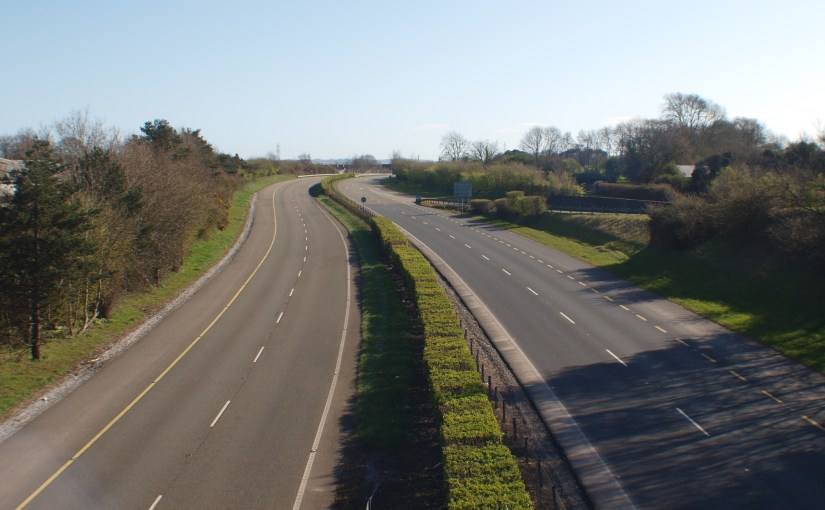
Continue reading Being The Bad GuyI’ve driven on motorways and interstates and highways, but my favourite name for big roads is freeways. It captures that windows-down-radio-up feeling better than the other words—the speed and freedom of four wheels and a smooth road combined. Freedom to travel. Freedom to move fast. Freedom to stop whenever I want to. It feels good to be free.
Of course, this freeway freedom does come with a few rules. A speed limit, for example, and lines on the road that mark my lane, and some lanes that go one way and some that go the other. Simple enough, but very important—without those lines and rules, the freeway would be a death trap. Imagine driving on a freeway with no lanes, no directions, no rules. In one way it would be even more free, in the sense that you could use the road however you wanted to. But with everyone using the road as they saw fit for themselves, no one would be able to use it well, and a lot of people would end up seriously injured. That’s why we accept the rules of the freeway. We know that these boundaries actually give us more freedom to move quickly and safely to our destinations.
Continue reading The Free WayI wasn’t born in a barn, but I did live in one for a while. My parents had bought some land in the country, and the barn went up fast. Construction of the house was slower, so we lived in the barn while it was being built. There was no insulation, and in most of the internal doorways we hung curtains instead of actual doors. I remember shaking my shoes out before I put them on in the morning to make sure there were no scorpions inside. I also remember being happy. Yes, we were roughing it in a lot of ways, living without a lot of normal conveniences, but life was good. When the house was finally finished and we moved in, it was nice to have fancy things like doors, but it didn’t change the basic dynamic that was already well-established: my parents had created a positive atmosphere, and that was the air I grew up in—it didn’t matter if I was breathing it in a barn with scorpions or a house with doors.
Continue reading When I Lived In A Barn