I have a friend who works for NASA. He told me that the International Space Station has always struggled with a mould problem. He said everything that goes into orbit is fully sterilised and decontaminated, except for one thing: the people. Among all the clean and tidy machines, the people remain organic. Alive. Chock-full of microorganisms and a million other mysteries including (but not limited to) mould. Even when we leave the planet, we bring our mess with us.
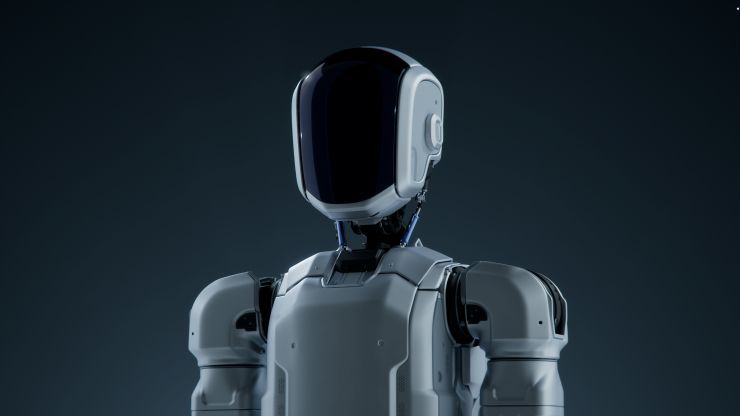
The solution to the mould problem on the ISS is obvious. All we need to do is replace the people with robots. We’re told that AI is already more intelligent than we are, and getting better and more efficient at everything we do. Robots wouldn’t need sleeping quarters, wastewater recycling units, exercise facilities, showers, or a kitchen. All that human-oriented space on the space station could be re-purposed and used far more efficiently.
It’s time to face reality. Robots beat us at our own game. They are clean, logical, and fast, with far better data-recovery skills. While I’m busy trying to remember why I opened the refrigerator, they’re still working away at full capacity doing productive tasks with no weariness or distraction at all.
We have loved for so long to compare our own intelligence and productivity against each other. We have measured our value by cleverness and efficiency. In many ways, our machines have become just what we’ve wanted to be ourselves—always knowledgable, always quick with the words that sound right, never tired, never weak, never in need.
The cursor is blinking. I don’t know how to begin this paragraph. What I do know is this: I want real, actual humans on the International Space Station. I want the mould that comes with them, and the inefficiency. I want to remember that life itself is precious, and far more than intelligence and productivity. If the robots are beating us at our own game, it’s only because we’ve been playing the wrong one. We forgot that productivity and efficiency and intelligence were never meant to be ends in themselves. If God had wanted to make a race of perfectly efficient producers, he could have done so. He didn’t have to make us need sleep and food and get so easily lost in the aroma of a rose. The point was for us to know him, personally, not just have instant access to billions of cold (and often incorrect) facts. Our productivity was meant to be a way for us to enter into the joy of imitating and creating with our Father.
There’s a lot more to be said on this, but my brain is tired. Forming coherent sentences is hard, and I’m hungry. If you’ll excuse me, I’m going to go try to remember what I wanted out of the fridge. Even if I get it wrong, I’ll find something to enjoy, and thank God for. Take that, robots. I win.


As I entered into my office at 5 this morning, I decided to read your post before opening the Bible to Ephesians 3. The sentence–“If God had wanted to make a race of perfectly efficient producers, He could have done so…the point was for us to know Him personally”–was so encouraging to me! This is the reason for arising at this hour and beginning the waking hours in Ephesians 5–to know Him personally! The Father seeks worshippers who will worship Him in SPIRIT and in truth (John 4) and A.I. can never do that!
LikeLiked by 1 person
Amen!! This is it!
LikeLike