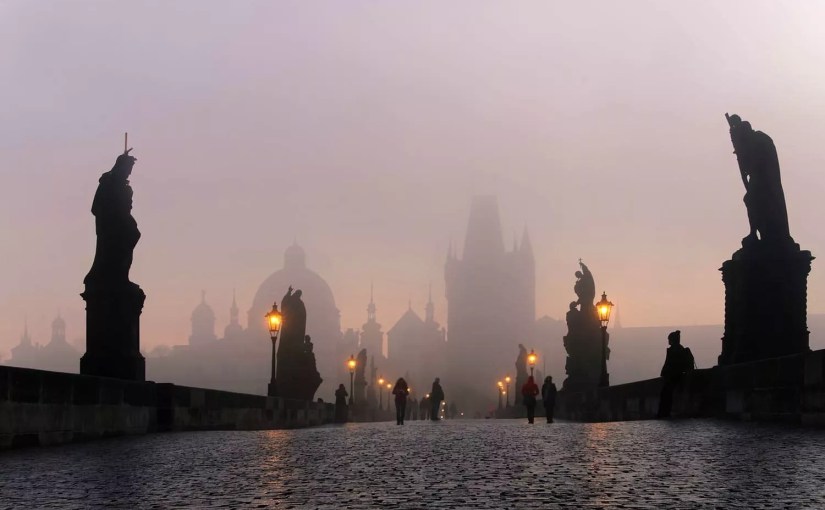
This poem is inspired by a man I once saw on Charles Bridge in Prague.
Continue reading A Bridge Through Time (a poem)Category: Culture
The Never-Ending Novelty Of Staying With The Same Person
Love songs will never go out of fashion. But have you noticed that most love songs are limited to the very first stages of love? They’re almost always about two specific topics: either the excitement of meeting someone new, or the sadness of breaking up. It’s rare to hear love songs that focus on love in the decades after the “I do’s”. They’re out there, certainly, but they don’t make the top twenty lists.
It makes sense—by sheer numbers, there are a lot more relationships that start and end than relationships that go the distance. Perhaps the excitement of meeting someone new seems more interesting than the settled daily living of established relationships. There’s an appearance of novelty to it, except that when every song on the radio is about the same kind of novelty it doesn’t quite feel as novel anymore, does it?
Continue reading The Never-Ending Novelty Of Staying With The Same Person
Why I Will Never Use AI For Writing
You will never read an AI generated word on this blog or in anything I write. Not in a sermon. Not in a book. Not even in an email. I claim each and every word and sentence, every comma and dash—I am fond of dashes—and every careless error as entirely my own. I know AI is becoming a popular tool for writers. I know AI can do in a heartbeat what can sometimes take me hours of work (although I comfort myself that at least I have a heart to beat in those hours). I’ll take the time. There are more important things than efficiency, and the brain is a muscle. The labour of collecting thoughts, choosing words, and cementing them into sentences keeps my mind strong, engaged, and growing. I dare not relinquish it. I know that AI is good, and getting better every day, at mimicking human logic, emotion, and eloquence. I understand fully that it is progressing far more quickly than I am. It could easily outpace me, and in some ways I’m sure it already has, at being interesting, informed, persuasive, and inspiring—but it can never outpace me at being me.
Continue reading Why I Will Never Use AI For Writing
Life Is Not For The Faint Of Heart (But God Is)
I feel the sunlight streaming through the windows onto my skin, yet somehow the world still seems dark and cold. The headlines this week have fallen on me like long shadows, cast by the unrelenting clouds of hatred, violence, death, and evil, and in this chilly climate my heart responds with dismay. We like to think we’ve progressed beyond our ancestors, but when I see ordinary people dancing and celebrating the death of someone they merely disagreed with, I despair. How can we ever move forward like this? When the answer to open debate is a bullet, we’re all finished. Meanwhile, wars, atrocities, and injustices continue unchecked around the world, many of which we barely hear about. Even if we did, we wouldn’t have the capacity to track them all. There are too many.
Continue reading Life Is Not For The Faint Of Heart (But God Is)
In The Internet, But Not Of It
We went on a foreign holiday this summer and amidst all the uniqueness and differences, I noticed one thing that was all too familiar: we still had to dodge people who were too busy looking at their phones to notice where they were walking. I rolled my eyes at them, but then I remembered that one of the first things I looked for in our airbnb was the wifi password. Like it or not, the internet is ubiquitous, and even when we’re not using it our minds can easily turn to the things we’ve seen there, or the things we might post later. This is the way our world works now. But that doesn’t mean we should simply accept the internet’s new role in our lives without thought, or blindly take it on its own terms. There are still decisions to be made, and they are not insignificant. One of the biggest choices is where we will build our lives.
Continue reading In The Internet, But Not Of It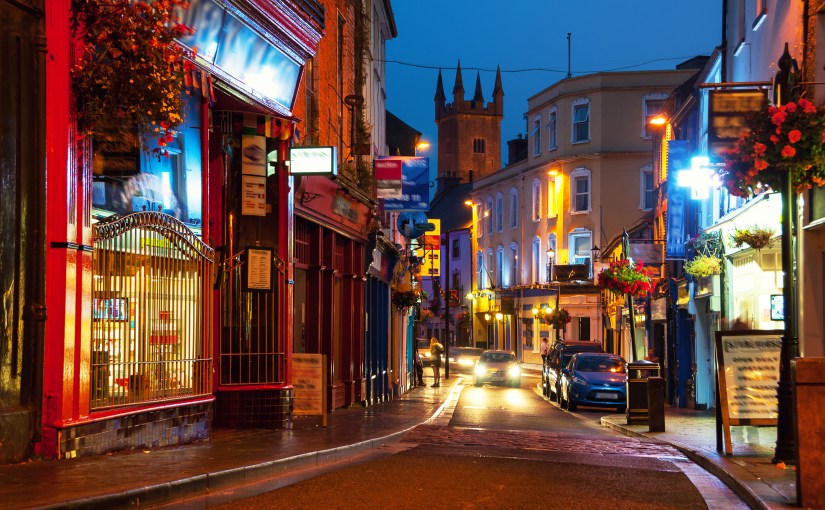
Means With No Ends
I’ve only reached middle age, but I’ve already lived to see the world remade by the introduction of personal computers and then remade again as we brought the power of the internet into our pockets with smartphones. It’s now obvious that another transformation is underway in the development of AI. As it was in the early days of other technologies, no one knows exactly what AI will mean for us long-term, but no one can deny that our world and our lives are changing fast. Humanity is always grasping for more power and control over everything we see and touch, developing new and better tools for ourselves, and we’ve been quite successful: no generation has ever had tools as powerful as the ones we wield today. This sounds like it ought to be good news, but most of us aren’t so sure. Humanity doesn’t have a great track record in using our tools well. I came across an observation recently that cuts through our progress to one of our biggest underlying problems:
“The first great fact which emerges from our civilisation is that today everything has become “means.” There is no longer an “end”; we do not know wither we are going. We have forgotten our collective ends, and we possess great means: we set huge machines in motion in order to arrive nowhere.” – Jacue Sellul
Continue reading Means With No Ends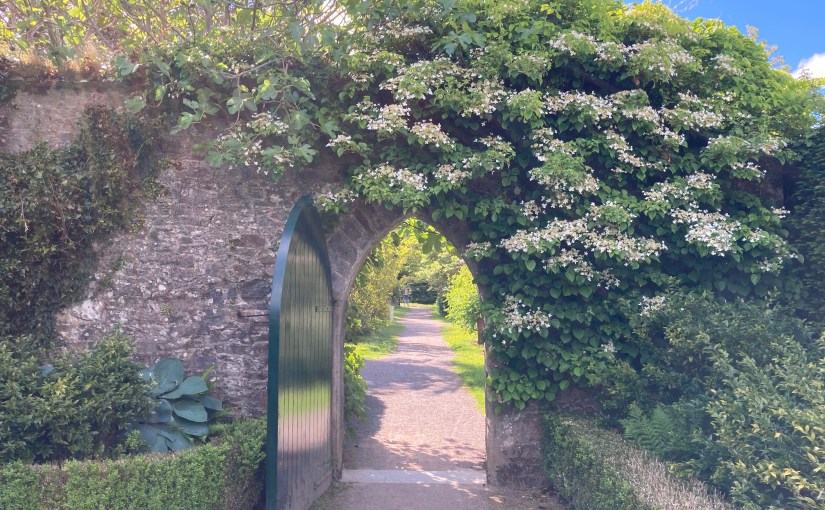
Transplanted
There’s an old Regency manor house near us that has been preserved as a heritage site, beautifully surrounded by manicured gardens that are faithfully tended by volunteers and open to the public. The gardens were planted and arranged over successive generations in the old English style—which means that the plants and trees were imported from all across the globe. This worked particularly well on the Fota estate because of its sheltered conditions. Even its name, Fota, is derived from the Irish “Fód te”, meaning “warm soil”. The arboretum is particularly impressive, boasting some of the finest specimens of pine, cypress and sequoia in Europe. There are also acers and eucalyptus, tasmanian tree ferns, acacia and magnolias that burst open with enormous flowers before the leaves even begin to appear. A walk through Fota gardens is a walk around the world, with the sights, smells, and colours of the Himalayas, Japan, Chile, China, New Zealand, the Pacific Northwest, and beyond.
Sometimes I’ve wondered how trees from California and Australia can grow so well in Ireland. I suppose they don’t have much of a choice in the matter, but they’ve certainly made the best of it. Their roots are deep in the fód te, and I have to strain my eyes to see some of their towering tops. They have not simply survived in a foreign land. They have made it their home, and thrived. When I wander among them, I am encouraged.
Continue reading Transplanted
C.S. Lewis On The Danger Of Getting Too Much News
I recently came across this excerpt from a letter C.S. Lewis wrote to a friend. He wrote it in 1946, before the internet was invented, before the dawn of push notifications and instant news updates without pause every moment of every day, and yet the wisdom in these few sentences only grows more important the more our technologies and access to information increases. We’ve reached the stage now where we can hear of every new battle, every devastating famine, every natural disaster and celebrity scandal on the other side of the globe more quickly and easily than we can hear what is happening with our own neighbours in our own community. Here’s what C.S. Lewis said about it:
Continue reading C.S. Lewis On The Danger Of Getting Too Much News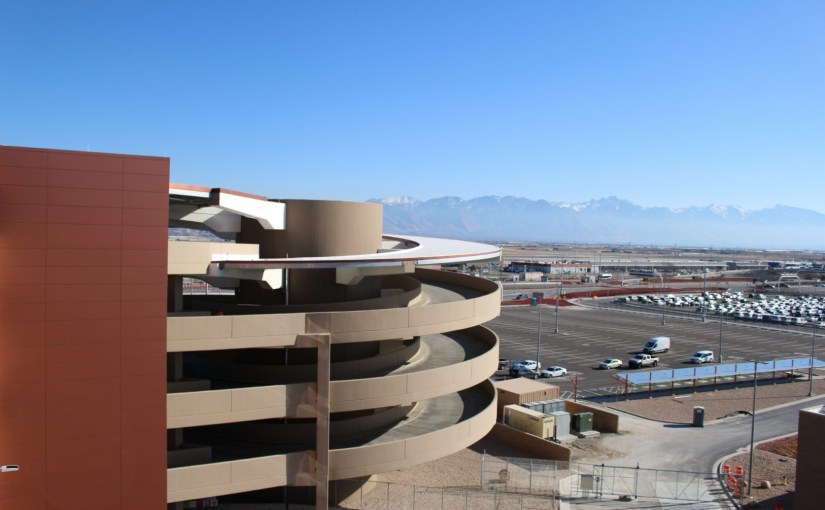
Doodles On A Masterpiece
As I pulled the car into a spot at the edge of the parking garage I saw the sky shine bright blue between the rough block wall and the concrete deck above me. Further down the wall on the right I noticed a tree branch leaning in—green leaves detailed against the grey expanse. Moments before I had been driving under the open sky with living things growing all around, the hills in front and the sea behind me. Now, I was enclosed in a concrete case of re-formed rock, where every earthly material was repurposed beyond recognition. Those materials must have come from nature originally—they had to—but the ways we work with nature are often a stark contrast to the ways nature itself works.
Continue reading Doodles On A Masterpiece
I’m Dated (and you are, too)
New Year’s Day, 2025. The day we all start having to pause to remember what year to write on forms and checks and such, or when we start writing it wrong and having to scribble it out and start again. What will this New Year bring? No one really knows. Looking back is easier—we know what the past is. For good or bad, it’s done. Before long, this past year that was so current, so vital and cutting-edge yesterday will start to feel stale and dated. Old. Has been. Whether we look back on it as the good old days or some kind of personal dark age doesn’t change the fact that we will look back on it. There was a New Year’s Day last year, too. Do you remember it? Or ten years ago, or twenty? Last Halloween I saw that they were selling ’90’s costumes, as if the ’90’s weren’t just last week. But they did look a bit funny.
Continue reading I’m Dated (and you are, too)
