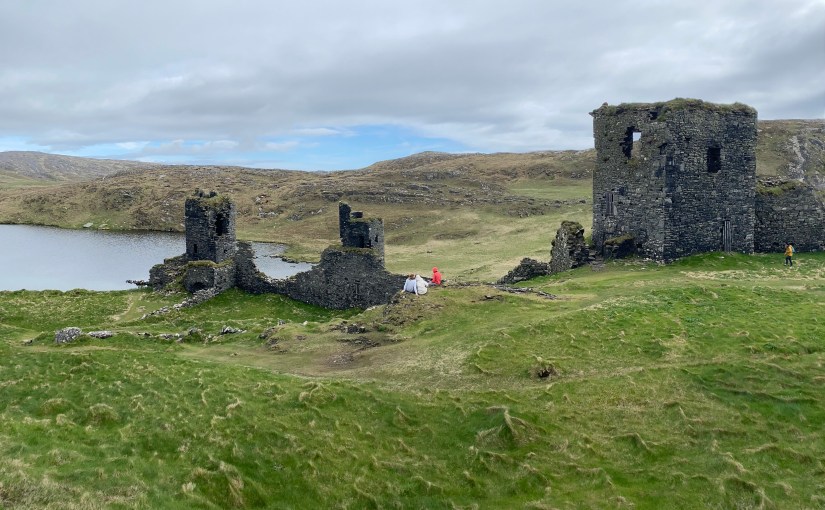
On a sunny day in the Spring, we pulled the car into a gravel parking area at the end of a remote peninsula in Ireland. The sea shimmered in the light beyond the deep green fields lined and dotted with grey rock walls and white sheep. We opened the gate and crossed a field, and then another, and another, carefully following the faint paths worn by the feet of those who had come here before us. Sometimes we had to make a choice—it seems not all of our predecessors had gone the same way. Or did hooves make one trail, and feet another? Eventually the grassy fields gave way to rocky hills, and we scrambled up one side and down the other where the grass and mud and boulders and the sound of the sea all blend together into a kind of otherworldly magic and I had to remind myself that I wasn’t looking at an illustration of the Wild Lands of Narnia—I was in the real, tangible, wild of the actual world.
Continue reading Three Castle HeadTag: Living
I Don’t Know Where The Streams Are
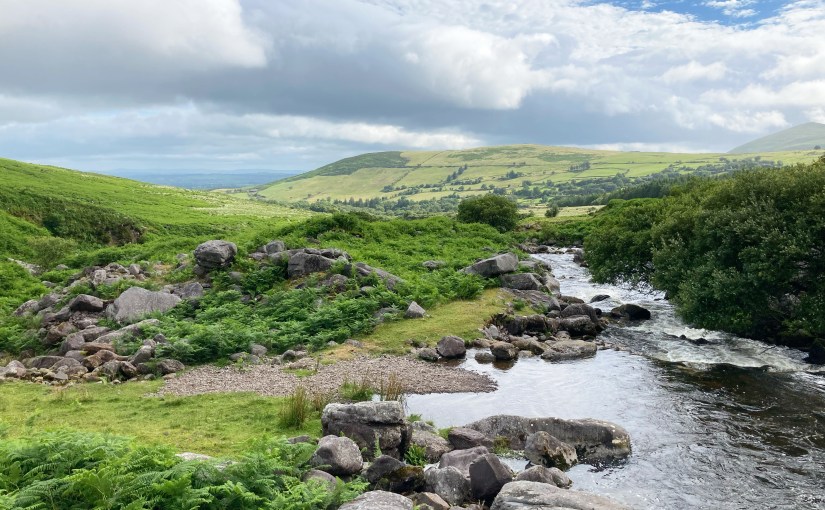
One warm Monday evening, I found myself with half an hour to fill as I waited for one of my children to have a music lesson. Across the street was a new greenway, quietly inviting me to spend the time strolling instead of scrolling. The path passed along roads I’d travelled many times in the car, so I didn’t expect to see anything new, just to stretch my legs. I was wrong.
Things look different when you’re walking. You have time to notice the individual wildflowers, and the meadow behind the wall with the horses in it that you just couldn’t see from the driver’s seat of the car. The discovery that surprised me most, though, was the stream running right beside the road. Through the crowded trees and bushes it babbles away constantly as it splashes its way over rocks and under roots and how did I travel this road so many times and never even know this was here?
Continue reading I Don’t Know Where The Streams Are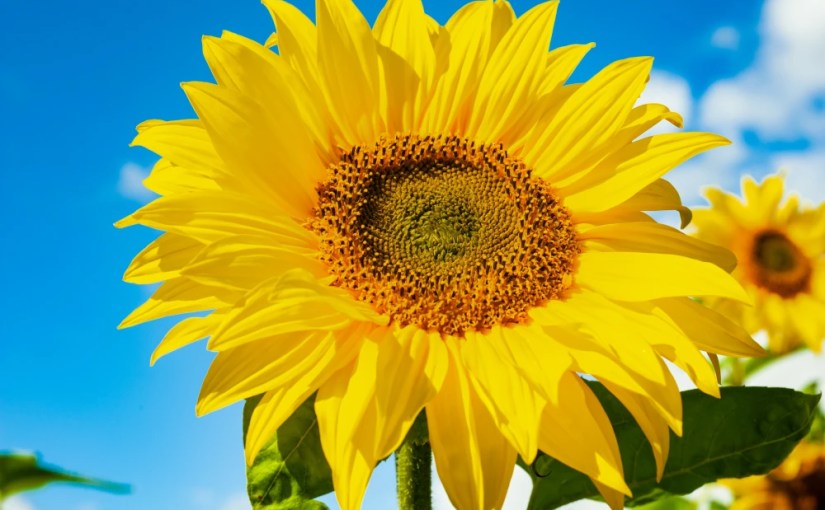
Easter Isn’t Over
Easter Sunday was a few days ago now, but that doesn’t mean it’s over. The effects of what we celebrated last Sunday continue to grow, slowly, like the buds of spring continue to open all around us and the fresh green continues to deepen into maturity and the apple blossoms transform themselves, somehow, into delicious fruit. Jesus said, “unless a grain of wheat falls into the earth and dies, it remains alone; but if it dies, it bears much fruit” (John 12:24). Then he died—for us. Now, 2,000 years later, his resurrection is still bearing fruit—transforming the cold, dead hearts of sinful, proud, selfish people who trust in his forgiveness and salvation into living, loving, new creations—a transformation that is every bit as glorious and surprising as the growth of a tiny, dull little sunflower seed into a towering, thriving wonder of nature. This is how God works. He does nothing by half-measures. He doesn’t ease off once he’s done enough to get by. He goes on, and on, and on—working wonders far beyond anything we could ask or imagine, and glories no mind has conceived (1 Corinthians 2:9). That’s why, in 1 Corinthians 15, Paul uses seeds as an illustration of the resurrection of God’s people:
Continue reading Easter Isn’t Over
A Poem About Life
I sat down to write a poem about life
The roof is leaking.
I began to think about the happy and
The dryer’s squeaking.
I got up and sat again and thought
Of mysteries
And things I ought
To have done yesterday.
Life is full of joy and
I’d better fold the clothes.
How it goes so fast
Nobody knows.
Again, it’s full of joy and
Interruption
Moments of construction
Of this messy
Happy gift of
What was I saying?
Oh yes the gift I love—
Life
Seedlings Need The Weather (repost)
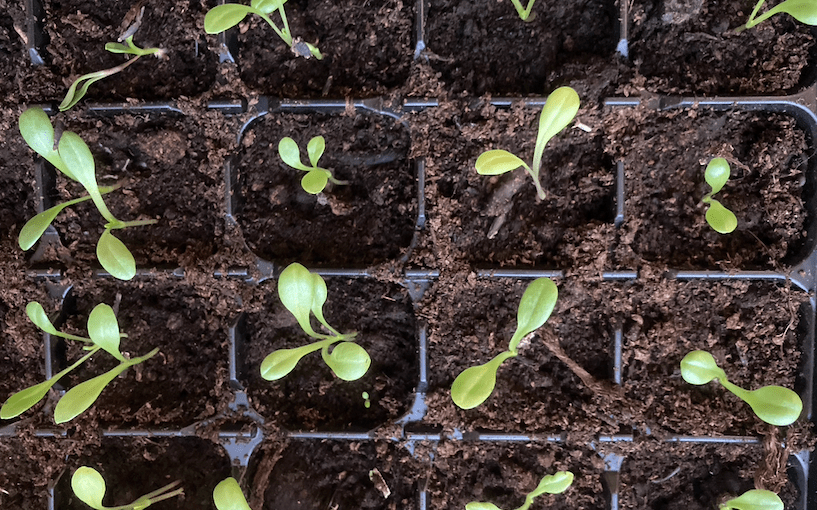
It’s the time of year when fresh green leaves are unfolding and Jessica is preparing trays of seedlings for our garden. A few years ago I wrote about what I learned from our seedlings, and I’ve been thinking a lot about those lessons recently, so I decided to repost this post for you today. If you look closely, you’ll see that God is constantly communicating many valuable truths to us through the world he made for us. That’s what my forthcoming book is about— “The Language of Rivers and Stars”.
There’s a small square of earth behind our house that belongs to us. Which is strange, because it was here a long time before we were and will be here a long time after we’re gone. But there’s a deed in an office somewhere that has our names on it, so the ground is ours. And with that ground comes the responsibility to care for it—a responsibility that didn’t come from an office, but from Heaven.
We do our best. And when I say “we”, I really mean my wife, Jessica. She’s the one who does most of the caring and tending and planting. I made the raised beds around the edges of the garden, but she’s the one that filled them with roses and blueberries, mint and strawberries, pineapple sage and climbing jasmine and passion flowers. This year, she brought home packets of seeds for dahlias, zinnias, and cornflowers as well, because she wants to have flowers to cut for our dinner table throughout the spring, summer, and autumn. She sowed the seeds in trays of compost and found the perfect spot inside our glass door where our seedlings could have ideal conditions: plenty of sun (by Irish standards), warmth inside the house, protection from cold and storms and slugs, and regular watering. We babied our little baby plants, and we were delighted to see them grow, and grow fast. In fact they grew so fast that their stems became long and thin and too weak to hold up their own new leaves. One by one me they began to fall over. What went wrong? How could our seedlings be so weak when we protected them from every difficulty and obstacle? What more could we do for them?
Continue reading Seedlings Need The Weather (repost)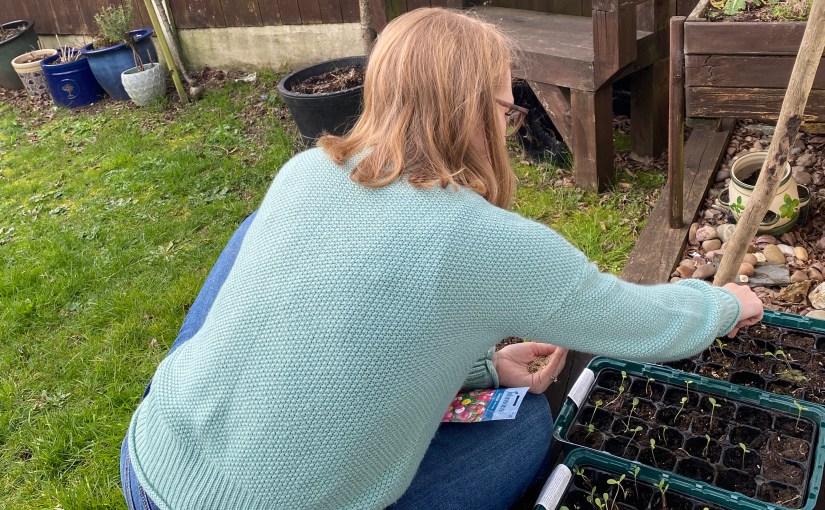
The Gardener
When we moved in to our house, the garden was undeveloped. It was a small patch of grass, with a shed. And those things are still there, but they’ve been joined now by a row of roses at the back, with jasmine and passion flowers growing against the wall. Blueberry bushes bloom on one side, with strawberries and grapes beside them. On the other side is an apple tree, a plum tree, and a collection of pots growing a collection of colourful flowers that Jessica cuts and gives away or brings inside for us to enjoy. This year, we’re expanding our window boxes to hold even more flowers. As I write today there are rows of seedlings on the back stoop, reaching up and acclimatising, being prepared for planting—because none of this growth happens overnight. We’ve lived here seven years now, and the progress has been slow. It is measured in months and seasons and years, not hours and days. It was my wife, Jessica, who saw what our undeveloped little plot could become and patiently worked over the years to bring that vision to life. As I go outside to look at the buds forming and opening this spring, I see the fruit of her careful attention and I rise up and bless her for bringing such abundance and beauty to our home.
Continue reading The Gardener
Realism And Resurrection
Perhaps it’s a product of growing up, but I do feel that the passing years have tarnished the old optimism I remember from the world of my childhood. There were always deep problems in the world—even I knew this growing up—but there was also a general sense of progress in the air, at least as I remember it. There was a hopeful feeling back then that our problems were not insurmountable, and better days were ahead. Science was supposed to solve some of our challenges, politics would solve others, and culture and civilisation would inevitably advance, even if the process was slow and bumpy. Those were the days when the unified, peaceful vision of a harmonious humanity depicted in shows like Star Trek felt like it could be a real possibility someday—minus the teleporters, of course.
Now we’re not so sure. The world feels different. Maybe our new technologies haven’t been all that we hoped they would be. Maybe our political leaders have burned us too many times and left us disillusioned with the system. Wars have continued relentlessly, as have human trafficking and slavery and corruption. Selfishness, injustice, and cruelty still plague our cultures and institutions, and they can pop up unexpectedly in our own hearts, too. Things are still moving quickly, but it’s become clear that movement isn’t necessarily progress. The old optimism of my memory has given way to a tired realism that doesn’t expect as much, hope as much, or feel as disappointed when everything goes sideways—isn’t the whole world constantly spinning sideways anyway?
Continue reading Realism And Resurrection
The Indispensable Inefficiency of Prayer
The to-do list is long—it’s always long—and the day only has so many hours. If we want to maximise our time on this planet, we have to prioritise. We can’t do everything, and it’s important to “make the most of every opportunity”, as the apostle Paul tells us in Ephesians 5:16. But what does this mean? How does it look?
For a Christian, one of the most effective uses of our time is an activity that looks to most people—and maybe quite often to ourselves—like one of the most inefficient. And yet, if we really believe what we say we believe, and if we really trust our Saviour to guide us, then it is indispensable:
Prayer.
Continue reading The Indispensable Inefficiency of Prayer
C.S. Lewis On The Danger Of Getting Too Much News
I recently came across this excerpt from a letter C.S. Lewis wrote to a friend. He wrote it in 1946, before the internet was invented, before the dawn of push notifications and instant news updates without pause every moment of every day, and yet the wisdom in these few sentences only grows more important the more our technologies and access to information increases. We’ve reached the stage now where we can hear of every new battle, every devastating famine, every natural disaster and celebrity scandal on the other side of the globe more quickly and easily than we can hear what is happening with our own neighbours in our own community. Here’s what C.S. Lewis said about it:
Continue reading C.S. Lewis On The Danger Of Getting Too Much News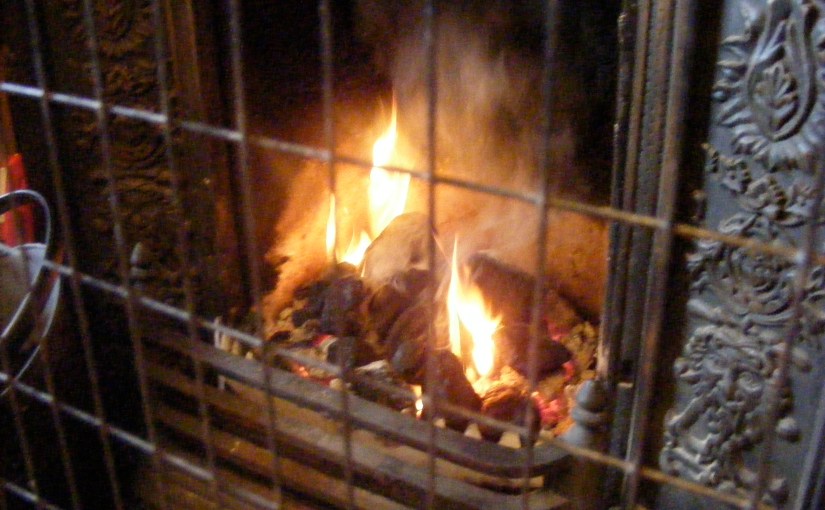
An Elegy For Our Fireplace
When my father built a home for our family in the hills of Alabama he put a large wood stove in the very centre. A good fire in that stove could heat the entire house, upstairs and down, for most of the night. I grew up splitting logs and carrying them in, building fires and learning to finesse small sparks into roaring warmth. They say firewood warms you twice, and it’s true—first when you cut it, and again when you burn it. The sound of our fire sucking air through the stove vents like breath, the crackling wood, the reassuring smoke from the chimney as I headed in from the winter cold—all are essential pieces of my childhood, baked into my soul by the power of the flames.
Continue reading An Elegy For Our Fireplace sethlewis.ie