
We went on a foreign holiday this summer and amidst all the uniqueness and differences, I noticed one thing that was all too familiar: we still had to dodge people who were too busy looking at their phones to notice where they were walking. I rolled my eyes at them, but then I remembered that one of the first things I looked for in our airbnb was the wifi password. Like it or not, the internet is ubiquitous, and even when we’re not using it our minds can easily turn to the things we’ve seen there, or the things we might post later. This is the way our world works now. But that doesn’t mean we should simply accept the internet’s new role in our lives without thought, or blindly take it on its own terms. There are still decisions to be made, and they are not insignificant. One of the biggest choices is where we will build our lives.
Continue reading In The Internet, But Not Of ItTag: community
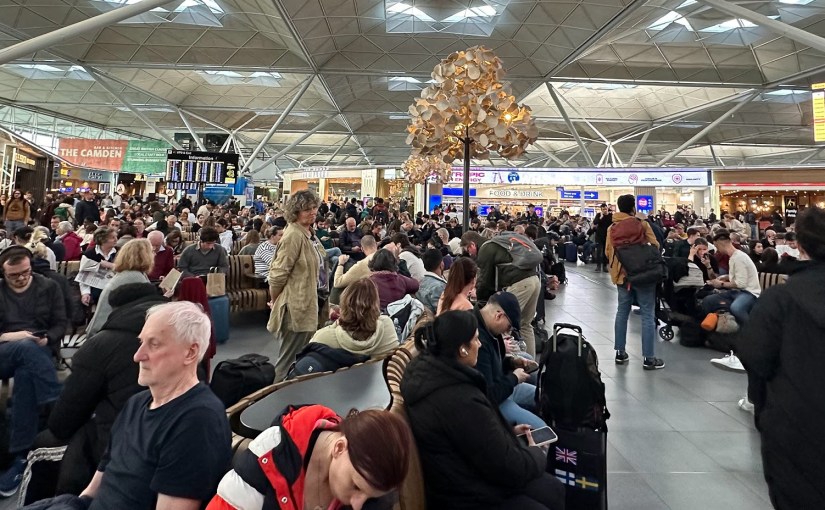
Layover At Stansted (a poem)
I hear English and Italian
And (I think)
a bit of French
As I’m sitting (one more stranger)
In the airport
On a bench
This assembly
Of the transient
People moving (yet we’re still)
Thrown together
For a moment
With a layover to fill
This collection
Of humanity—
The tired
Sad
Excited
Proves that
Being in proximity
Is not the same at all
As being in community
I’m glad I’m going home

C.S. Lewis On The Danger Of Getting Too Much News
I recently came across this excerpt from a letter C.S. Lewis wrote to a friend. He wrote it in 1946, before the internet was invented, before the dawn of push notifications and instant news updates without pause every moment of every day, and yet the wisdom in these few sentences only grows more important the more our technologies and access to information increases. We’ve reached the stage now where we can hear of every new battle, every devastating famine, every natural disaster and celebrity scandal on the other side of the globe more quickly and easily than we can hear what is happening with our own neighbours in our own community. Here’s what C.S. Lewis said about it:
Continue reading C.S. Lewis On The Danger Of Getting Too Much News
How To Avoid A Midlife Crisis (an open letter to twenty-somethings)
Dear young adult,
I know you’re not thinking about having a midlife crisis right now. I know the concept feels far away and foreign, the domain of grumpy gen-Xers and geriatric millennials who drink too much coffee and still complain about being tired all the time. I know you’re probably tired of people telling you to enjoy your stage of life because it all goes so fast. You might not believe me, but the reason almost everyone says this when they reach a certain age is because stages of life actually do go quickly. In fact I can prophecy with confidence that you’ll be saying the something similar in about twenty years time, to the tolerant nods of your juniors. Twenty years probably feels like an eternity to you right now. I get it. But eventually the speed of life catches up with you like a marathon runner who loses sight of the starting line and suddenly realises that the impossibly-distant finish line is actually real and not so distant after all. The difference is that a marathon runner wants to reach the finish line, whereas in life most people don’t. Thus, the midlife crisis. And apparently, I’m due for one. I’ve slept through enough nights and celebrated enough birthdays to qualify for such things, even though no one can tell me what the true mid-point of my life is with any degree of certainty. The specifics don’t matter. My life is clearly passing by, and I’ve reached the stage where this fact can no longer be hidden or ignored. This is the driving force of the midlife crisis—the sudden intrusion of truths we like to push away for as long as possible. At some point they come in anyway, and make themselves at home.
Continue reading How To Avoid A Midlife Crisis (an open letter to twenty-somethings)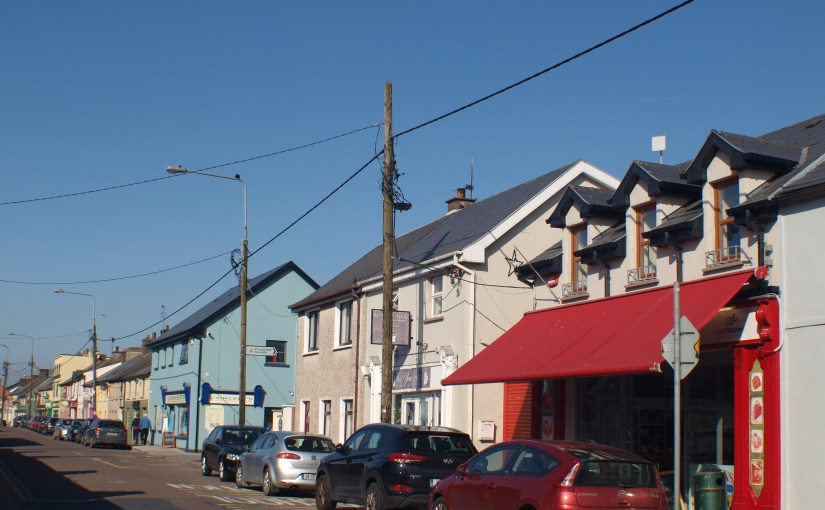
What Makes Our Town (Or Any Place) Great
What makes a town or a city a great place to live? There are many factors, of course, from cost of living to amenities and natural beauty and so on, but there is one factor that surpasses them all. This was pointed out to me by a man who has been dead for some time, G.K. Chesterton. He wrote about what makes cities great in his often surprising and famously thought-provoking testimonial work, Orthodoxy. Using Pimlico as an example—a village in central London which must have been dire in Chesterton’s time—he says:
“Let us suppose we are confronted with a desperate thing—say Pimlico…. It is not enough for a man to disapprove of Pimlico: in that case he will merely cut his throat or move to Chelsea. Nor, certainly, is it enough for a man to approve of Pimlico: for then it will remain Pimlico, which would be awful. The only way out of it seems to be for somebody to love Pimlico: to love it with a transcendental tie and without any earthly reason. If there arose a man who loved Pimlico, then Pimlico would rise into ivory towers and golden pinnacles; Pimlico would attire herself as a woman does when she is loved… If men loved Pimlico as mothers love children, arbitrarily, because it is theirs, Pimlico in a year or two might be fairer than Florence. Some readers will say that this is a mere fantasy. I answer that this is the actual history of mankind. This, as a fact, is how cities did grow great… Men did not love Rome because she was great. She was great because they had loved her.”
Continue reading What Makes Our Town (Or Any Place) Great
Slow Happiness
As I look out the window at the sunshine on my garden, I remember the many days that I saw the same view differently—when the glass was streaked with rain, when the ground was hard with frost, and the plants that are budding and growing so beautifully today were nothing but tiny seeds or bare sticks. It all changed so slowly, but it changed so much. And as good as it looks today, I know that there are even better things ahead—the apple blossoms will ripen into apples, the rose stems will bloom with their own unique colours and fill the air with their intoxicating aromas, there will be blueberries and strawberries and maybe this year we’ll finally get some grapes from the grape vine, now that it’s more established. It takes time, establishing. Our blueberry bushes give us a lot more now than they used to, and the apple tree is a little bigger every year. Life is like that, too, isn’t it?
Continue reading Slow Happiness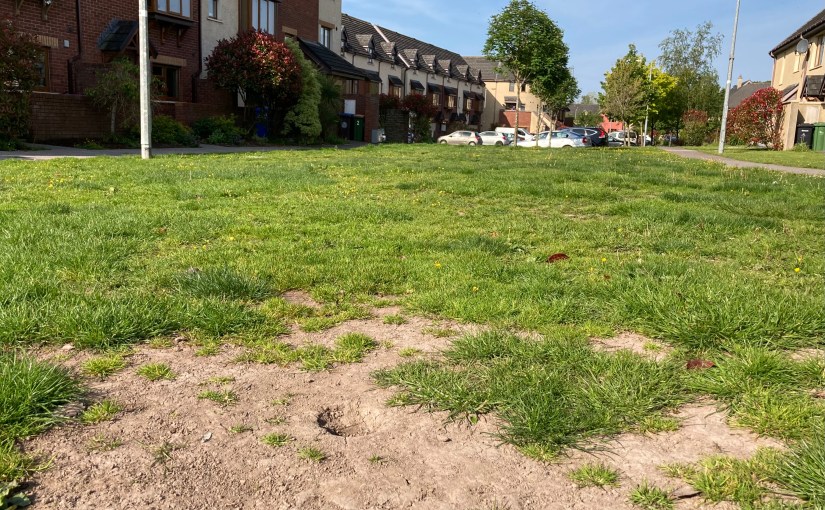
The Green
When we moved from America to Ireland fourteen years ago, one of the first things we noticed was the architecture. The buildings in Ireland are quite different from the ones we grew up in, all the way up from the thick concrete (or stone) walls to the slate tiles (or rarely, thatch) on the roofs. The unique climate, resources, history, and culture have all helped to shape these buildings. And they have shaped not only the individual buildings, but also the way the buildings relate to each other and the spaces around them. For example, it makes sense that our village is compact enough to walk everywhere when you consider that it was built hundreds of years before cars were invented. We have cars now, but that’s still a great feature—I love being able to walk easily to any building in town. But one of my favourite features of Irish design is not a building at all. It’s not a structure of any kind, and it doesn’t take a degree in architecture or urban planning to understand it, imagine it, or built it. It’s just a bit of grass, and it’s known as “the green.”
Continue reading The Green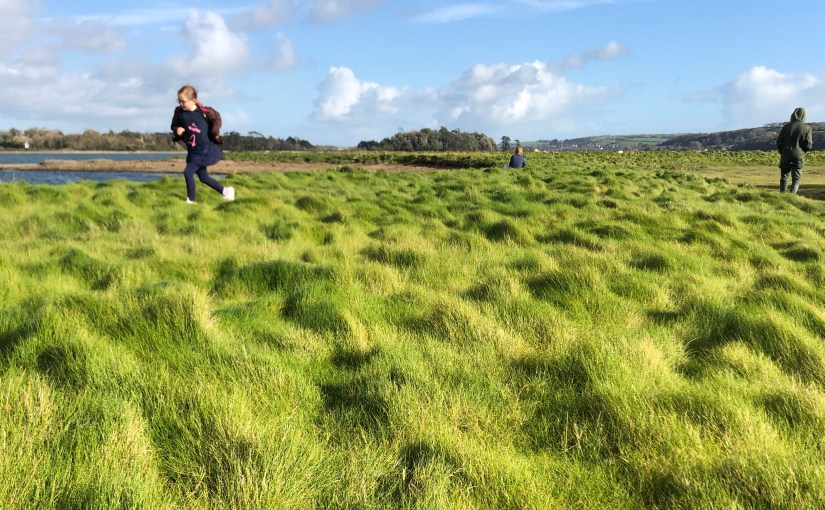
Strangers Are Some Of The Nicest People You’ll Ever Meet
During the first covid lockdown, with its strict travel restrictions, our family discovered a local treasure: a little spot known as Brown Island. Our neighbour told us about it. It’s not an easy place to find. When we went the first time I had to ring him because we couldn’t find the entrance hidden away down a country lane through a small gap in the hedge you’d never notice unless someone like my neighbour told you exactly where to look.
Continue reading Strangers Are Some Of The Nicest People You’ll Ever Meet
The Same Old Faces
My wife and I are planning to make some improvements to our garden this year, and one of the things we’d like to do is plant a new miniature apple tree. We like planting trees. It’s fun to anticipate what a newly planted tree will become in the years ahead. But there’s the rub: “years ahead.” Because if you want to eat the fruit from a tree, you need to give it time. A lot of time. You need to let it grow, put down roots, and become part of the ordinary, everyday scenery. It’s only after you look out of the window for years at the same old tree that you start to be able to reap the full harvest of fruit and shade and beauty and all that a tree can be in its maturity. By that time, the tree is nothing like new. The initial excitement of planting eventually gives way to a more settled appreciation and enjoyment of the tree as a part of everyday life.
Continue reading The Same Old Faces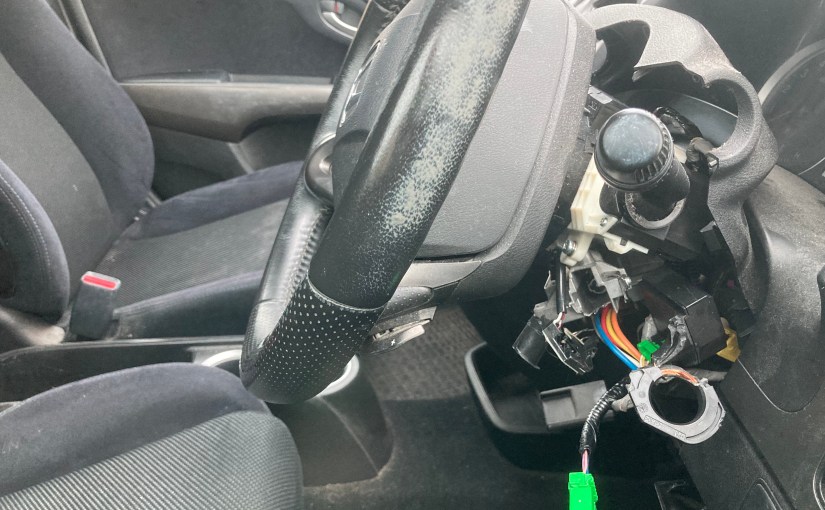
How An Attempted Car Theft Taught Me To Love Where I Live Even More
Last Friday evening, I finally got around to cleaning and washing the car, and refilling the windscreen wash. I can’t remember the last time I did any of that, which might tell you something about what it looked like before. The next morning, telling jokes along the way, my children and I walked out to the car to drive to basketball. When we got there I noticed that the driver’s side door frame was bent several inches away from the car. When I opened the door, I understood why: the steering column had been torn apart and the ignition wires were dangling loose.
Someone had tried to steal our car.
Continue reading How An Attempted Car Theft Taught Me To Love Where I Live Even More sethlewis.ie