We Cry Out

We’ve been working our way through Romans in our local Bible study group, and last week we talked about the part in chapter 8 where Paul writes this:

“We know that the whole creation has been groaning as in the pains of childbirth right up to the present time. Not only so, but we ourselves, who have the firstfruits of the Spirit, groan inwardly as we wait eagerly for our adoption to sonship, the redemption of our bodies.”

As I’ve read the news this week, I have thought about these verses often. I feel it in my own heart: I am groaning inwardly. The whole world is groaning in pain. But the beauty of this passage is not in its realism, although the realism is important. We dare not downplay the pain. It is too real, too horrible, too heavy. In a global moment like this, we simply cannot ignore the brokenness of our world, or pretend that everything is fine. It’s not fine. At all. And yet, we see in these verses that although reality includes pain and groaning right now, reality is more than those things—there is a hope that is just as real—even more so. That’s what I tried to capture in this poem:

Continue reading We Cry Out

Music And Lyrics

The world has a rhythm: a steady beat of seasons and sunrises, of tides and migrations and flowers and fruit.

The world has a melody: the beauty that stands out and demands our attention—the dawn chorus, the painted skies, the autumn colours and majestic peaks.

The world has a harmony: the subtle details that we hardly even notice, but they add richness and depth to the world, like the veins in a leaf, the scent in the grass, and the warmth in sunshine and fire.

The world is a symphony: exquisite and detailed and beautiful. But for all of its music, there is one thing that the world cannot supply on its own. The world has music—but it doesn’t have lyrics. That’s where we come in.

Continue reading Music And Lyrics

Every Corner Is Crowded

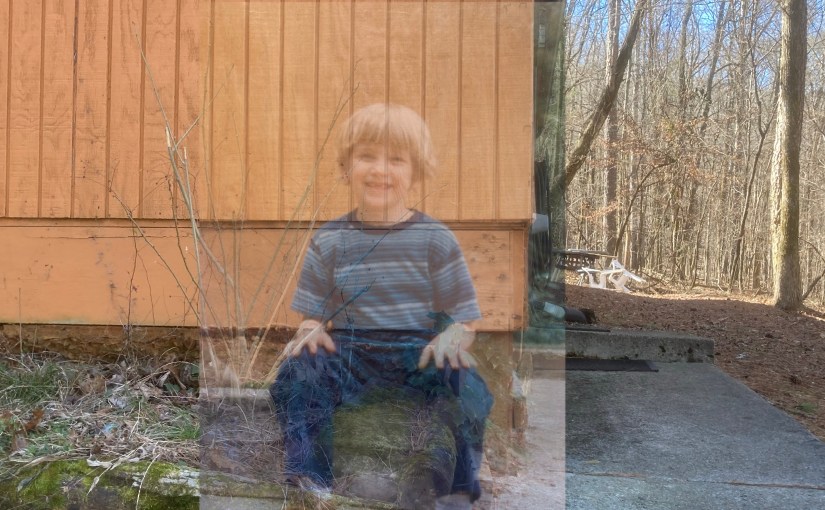
Last week, I stood in front of a barn in the woods in Alabama that no animals have ever lived in, but I lived in it. I was a child then, and my family lived there while our house was being built on the same property and that worked out pretty well for us. I hadn’t seen it for several years, but it still looks like a barn. At least, that’s all you would see. When I look at it, I see more. I see so much that my mind can hardly keep up. I could stand there all day and look around at the barn and the house and the trees and I could watch the river of scenes pass by for hours and hours because this is my place, this is where my life took root and grew up with the pecan trees that my father and grandfather planted. When I go back there now, I feel like I have to walk slowly because the place is so crowded with memories. The sweet and bitter and happy and sad and embarrassing are all jumbled up together—every step, every sight, every sound and smell is full of them.

Continue reading Every Corner Is Crowded

The Success Of Others

The internet has the power to connect people in ways no one could have anticipated. Now I can keep track of where my old acquaintances go on their holidays, see pictures of lovely dinners eaten by people I haven’t spoken to in years, and find out what my childhood playmates think about government policies. Amazing, isn’t it? Through their pictures and posts, I get a glimpse into their lives—their homes, families, travels, and their stunning accomplishments and successes. 

I’m glad for them, really. But sometimes I also wonder—how does my own life measure up to theirs? Is my life still important if it doesn’t include the same kinds of successes that I see other people achieving and enjoying? If they reach higher and go further than I do, am I just one more loser bringing up the rear in some kind of cosmic reality show competition?

Continue reading The Success Of Others

Don’t Measure Fashions By Their Age

I’m not quite over the hill yet, but in a lot of ways I’m already old-fashioned. I like old music and old manners and old standards for grammar, and I still don’t get the new trend of using emoji skulls in the place of laughing faces. More seriously, I don’t think that the modern trend of commitment-free relationships has been good for children. Or relationships.

On the other hand, there are some old fashions that I don’t like. I don’t like wearing neckties—who decided that tying a rope around your own neck was a good idea? I also don’t like old systems of religious rules that measure love for God by obedience to commands he never gave. And I don’t like being measured by my social connections or income level instead of the content of my character—an age-old fashion that is still circulating today. So I guess I’m not completely old-fashioned.

Continue reading Don’t Measure Fashions By Their Age

Capturing A Moment

The warm sunlight is filtering through the trees, there’s music in the air, and amid the bustle of the servers and the clink of the cutlery there’s a constant hum of lively conversation. I’m not there. I don’t even know where it is, but when I look at the painting of this scene that hangs over our mantle, I can hear it all. I can feel it all, and I love it. I love how the painting reminds me of moments like this one in real life, when I’ve been in seats like these with friends and family around me. I’m glad the artist captured this moment (wherever it was) and held on to it for me with his brush. I’m glad I found the print to hang in my house, to remind me of my own moments like these.

Continue reading Capturing A Moment

You Can’t Explain The World Without Poetry

Science has limitations. It can tell us what things are made of, but it has trouble telling us what they are made for. Sometimes, if you want to explain the world fully, what you really need is a poem. Most of my poems come to me while I’m walking home after dropping the children to school, looking around at the world and trying to see the familiar things that surround me for what they really are. That’s where these three came from:

Continue reading You Can’t Explain The World Without Poetry

Lift Up Your Head

Halloween is a dark holiday, but I don’t find it very scary. Costumes and plastic skeletons don’t intimidate me. It’s all pretend, and for most people, the main point is sugar. I find the news headlines in my Twitter feed a lot more terrifying. Some of the themes are the same—darkness, death, and evil running free. I guess the decorative ghosts and tombstones and skeletons do contain an element of realism: there is real darkness in this world, and real death. At our point in history, there’s no question that the real skeletons on this planet outnumber the living humans by a long shot. That’s a sobering thought. And there are plenty of other fears for those of us who aren’t skeletons yet—from disease and disaster to dystopian decisions and disturbing trends and growing disorder and disunity, you don’t have to look far to get a fright these days. 

In Luke 21, Jesus warned his disciples about difficult days that were coming. He said, “People will faint from terror, apprehensive of what is coming on the world.” Does that sound familiar? But he tells his disciples: “When these things begin to take place, stand up and lift up your heads, because your redemption is drawing near.”

Continue reading Lift Up Your Head

Someone Else’s City

I took a walk on someone else’s street, someone else’s everyday avenue, in someone else’s city. To me, it was all new. I’d never seen the buildings before, or the trees, and the next corner was a complete mystery that drew me on to look and discover. I didn’t know anyone who lived there, or who their cousins were, or what church they were baptised in. But they knew.

Continue reading Someone Else’s City

Everything is Ordinary, Everything is Wonderful

Gold is just a rock. Money is just fancy paper—or these days, even less—ones and zeros floating invisible out of our mobile phones with a little bleep. But then, mobile phones are really just a collection of sand, a few bits of rare stones, and some electrically charged lithium-ions and such. Even the hands that hold them are a mix of basic components like carbon, water, calcium, and a few other things.

When you really break it down, life itself is a collection of dead elements and minerals. Under a microscope, the colours and patterns of flower petals and butterfly wings are lost in a confusion of nucleotides and mitochondrion and smooth endoplasmic reticulum.

Continue reading Everything is Ordinary, Everything is Wonderful