
When I see the ruins of old cottages around us in Ireland, I’m always struck by how small they are, and by how dramatically our everyday living has changed. Even the best of the ancient castles are not nearly as comfortable as a standard modern home or apartment. They didn’t have flushing toilets. They didn’t have radiators or refrigerators or wifi. They didn’t have washing machines or cars or exotic foods from around the world available year round in local shops. They couldn’t order whatever they wanted from anywhere and have it shipped to their door in days without ever needing to leave the climate-controlled comfort of their own couch. If our ancestors could see us now, they would probably expect us to be the happiest, most care-free and content people to ever live. And they would be wrong. Our modern society is anything but content. We are plagued by anxiety, depression, relational breakdown, hopelessness, and despair. We promote mental health now more than ever, but the problems persist, and grow. Clearly, contentment is not just the result of having more wealth, more opportunities, more education, or better conditions. If it were, we should be one of the most content societies to ever live on planet earth. And yet somehow, contentment has eluded us. Have we been looking for it in the wrong places?
Continue reading The Secret Of ContentmentCategory: Living
A Curious Mind
Have you ever wondered about your ability to wonder about things? It’s a wonderful gift, when you think about it. It’s the ability that has unlocked most of our discoveries, because the most fertile ground for discovery is always a curious mind. I’m sure you can learn things without being curious—some lessons will slap you in the face whether you ask them to or not—but there’s no question you’ll learn a lot more if you start with questions. Isn’t our entire scientific method just a systematic series of questions? Without curiosity, the whole world fades into nothing more than a boring necessity, the people around us flatten down into a procession of stereotypes, and God himself starts to look like some kind of tired trope or taskmaster. Without curiosity, life goes stale. Tasteless.
Continue reading A Curious Mind
The Good In Regret
What would it be like to be able to look back at your whole life and say with confidence, “no regrets”? It sounds amazing, but I can’t say I know how it feels. When I look back, there are plenty of moments that are permanently stuck as perfect, vivid memories—not because I’m proud of them, but because of how much they make me cringe. Out of all the thousands of things I’ve forgotten, I’d love to be able to forget the mean and stupid things I’ve said and the foolish choices I’ve made and the embarrassing immaturity I’ve displayed, but those memories are firmly fixed in place. “No regrets”? I have to be honest, that’s not me. I have regrets.
Continue reading The Good In Regret
Slow Happiness
As I look out the window at the sunshine on my garden, I remember the many days that I saw the same view differently—when the glass was streaked with rain, when the ground was hard with frost, and the plants that are budding and growing so beautifully today were nothing but tiny seeds or bare sticks. It all changed so slowly, but it changed so much. And as good as it looks today, I know that there are even better things ahead—the apple blossoms will ripen into apples, the rose stems will bloom with their own unique colours and fill the air with their intoxicating aromas, there will be blueberries and strawberries and maybe this year we’ll finally get some grapes from the grape vine, now that it’s more established. It takes time, establishing. Our blueberry bushes give us a lot more now than they used to, and the apple tree is a little bigger every year. Life is like that, too, isn’t it?
Continue reading Slow Happiness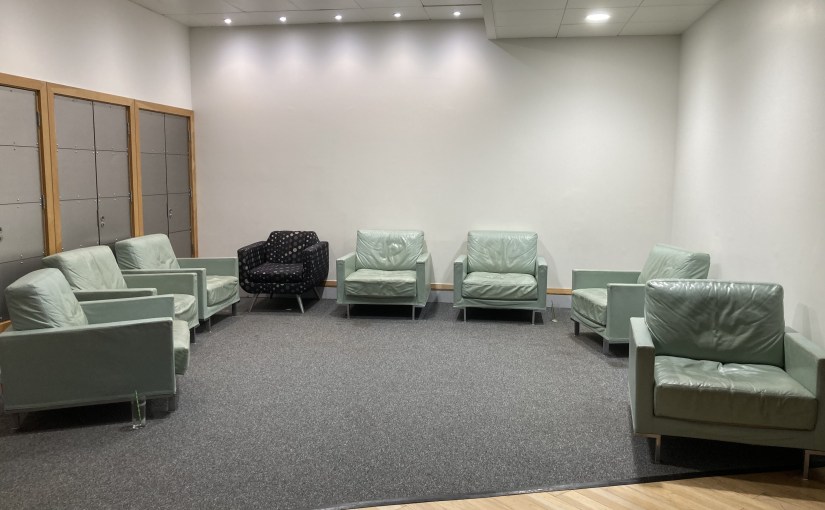
To Welcome A Stain (a poem)
I had more than an hour to wait for my flight, so I was happy when I found a corner with armchairs in Manchester airport. The seats were comfortable, but after I sat down I noticed that they were at least as tired as I was. The colour was faded, the edges were dirty, and there was a stain on the armrest.
How long have those chairs been there, in that corner? How many strangers have they welcomed and provided comfort for? Over time, it has made them tired and stained, and I understand that. People can be hard to hold up. Messy. But the chairs are still there, still welcoming new travellers anyway. My hour in one of them reminded me that it’s better to wear out by accepting stains than collecting dust. That’s what this poem is about:
Continue reading To Welcome A Stain (a poem)
The Same Person In Every Room
I was sitting in a meeting this week when a thought randomly crossed my mind about how odd it would be if I had come in wearing the clothes I had on earlier that same day, when I went to swim laps at the pool. My goggles and togs didn’t raise any eyebrows at the pool, but they would have at the meeting. And if I had shown up at the pool with my meeting clothes on, that would have drawn a bit of attention, as well.
Continue reading The Same Person In Every Room
Normal Life
The Monday after Easter Sunday is a bank holiday in Ireland, so I slept in. That may not seem very remarkable to you, but I remember when it was impossible. I remember when our children were small, and always woke up at the crack of dawn with bright eyes and boundless energy, ready for me to be the bad guy they could fight or the jungle gym they could climb or the narrator for their books. I remember before those mornings, back to the seemingly endless nights when they fit easily in my arms and I walked countless miles back and forth in their little bedrooms and put them down so gently and carefully and their eyes popped open and we started walking all over again. It didn’t seem possible at the time, but those endless nights ended. Sleeping through the whole night is normal for me now, and when a bank holiday comes, I can stay in bed even longer if I want to. When did that happen?
Continue reading Normal Life
Tea And The Sous-Chef (two poems)
It was my wife Jessica’s birthday yesterday, and these two poems are in honour of her and the many ordinary moments we share together.
Tea
Do you want a cuppa tea?
She said to me
And I said yes—
Because
I always want a tea
If she is drinking it
With me
The Sous-Chef
Jessica works magic
With the chicken
On the hob
While I stand by
And peel the spuds
Because that is a job
That requires little magic
But I like to be
Nearby
In proximity to her
I think that any job will do—
Being with her is the magic,
So now you can call me Sous
Patrick Loved Ireland Before Ireland Loved Patrick
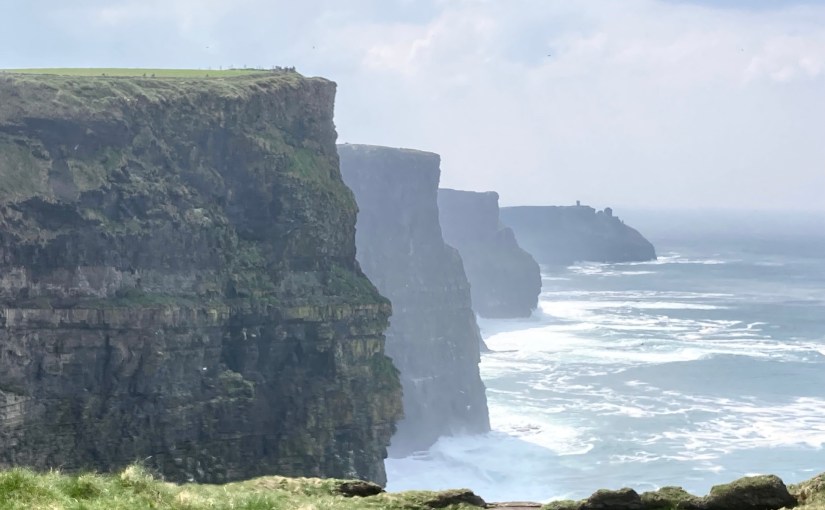
On the 17th of March, people around the world will celebrate Ireland’s national holiday, St. Patrick’s Day. Is there any other national holiday in the world that is celebrated as internationally as Ireland’s? It is truly unique. So as the bunting goes up and the landmarks turn green and the parades are organised, it’s worth remembering the man who inspired this global celebration.
Like the holiday named after him, Patrick’s life was truly unique. He did not consider himself a great man, and would likely be uncomfortable with the extravagance of the yearly honours we bestow on him. In his autobiography, he calls himself “a simple country person, a refugee, and unlearned.” The reason he calls himself a “refugee” is because his connection with Ireland, which is how everyone remembers him today, only began when he was sixteen—and it wasn’t a good start at all. The first Irish people that Patrick met were the people who raided his hometown (probably in Wales) and carried off thousands of prisoners—including Patrick—to be sold into slavery in Ireland. Our patron saint’s first sighting of Ireland’s beautiful shores came while he was in the chains of human traffickers. In Ireland, Patrick tells us that he was “brought low by hunger and nakedness daily.” His slavery continued until he was twenty-two years old. This is not the part of the story we celebrate on March 17th.
Continue reading Patrick Loved Ireland Before Ireland Loved Patrick
Pause (a poem)
Another day, another week, another year. Sometimes it can feel like time blurs together, like life is stuck on repeat and everything keeps happening all over again and the only difference is that I’m more tired this time around but I have to keep going anyway because otherwise things will get ahead of me. This is one of the reasons it’s so important for me to stop everything, every morning, long enough to reconnect with God and remember what life is, where it comes from, and why it matters so much. That’s what this poem is about.
Continue reading Pause (a poem) sethlewis.ie