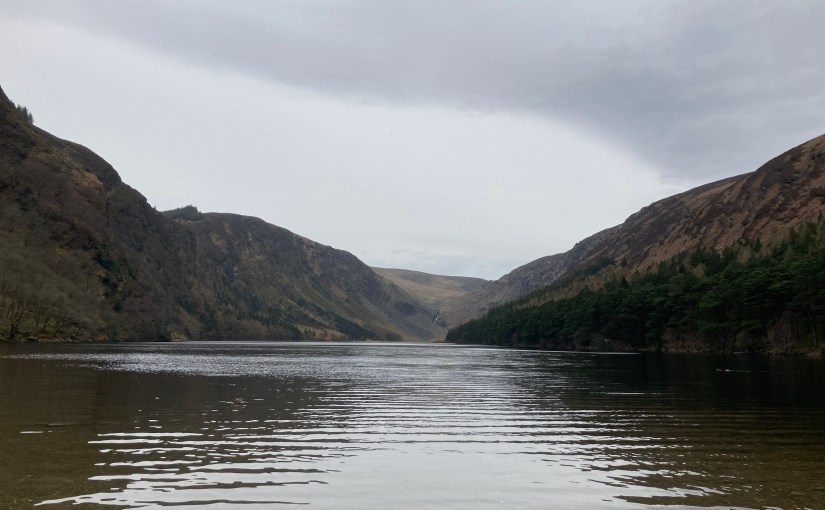
Fallow (a poem)

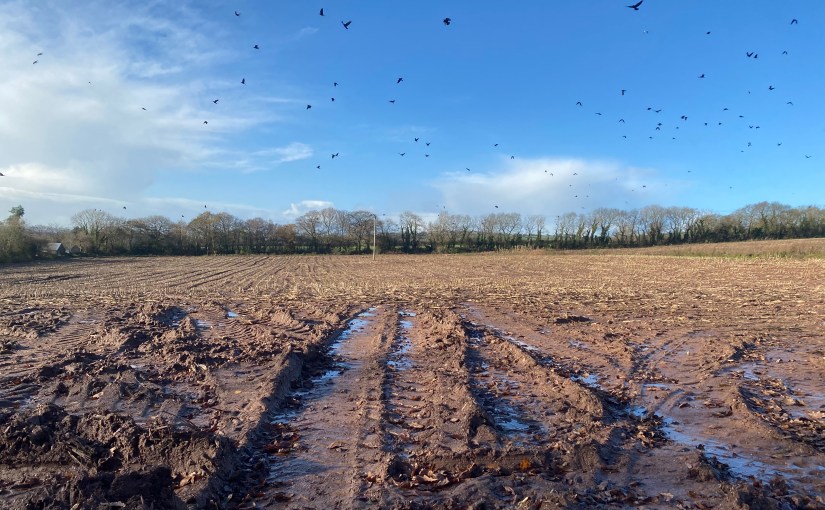
Today’s poem is inspired by some fields that I walk past regularly, which are lying fallow this time of year. I’ve felt that way, too.

Fallow

The harvester’s tyres
Left tracks on the ground
In the cold empty earth
Broken stalks all I found
To remember the days
When I used to walk by
When the soil was full
When the harvest was high

As I look at it now
It all seems so forlorn
So naked and useless
I’m tempted to mourn
Until I remember
The promise of spring
It’s not dead—it’s waiting
To rise up again

And I’ve felt the plough blades
On my back as well
And I’ve been left waiting
When everything fell
And I’ve seen what God
In his wisdom can grow
Out of cold empty hearts
With the seed that he sows

How To Avoid A Midlife Crisis (an open letter to twenty-somethings)

Dear young adult,

I know you’re not thinking about having a midlife crisis right now. I know the concept feels far away and foreign, the domain of grumpy gen-Xers and geriatric millennials who drink too much coffee and still complain about being tired all the time. I know you’re probably tired of people telling you to enjoy your stage of life because it all goes so fast. You might not believe me, but the reason almost everyone says this when they reach a certain age is because stages of life actually do go quickly. In fact I can prophecy with confidence that you’ll be saying the something similar in about twenty years time, to the tolerant nods of your juniors. Twenty years probably feels like an eternity to you right now. I get it. But eventually the speed of life catches up with you like a marathon runner who loses sight of the starting line and suddenly realises that the impossibly-distant finish line is actually real and not so distant after all. The difference is that a marathon runner wants to reach the finish line, whereas in life most people don’t. Thus, the midlife crisis. And apparently, I’m due for one. I’ve slept through enough nights and celebrated enough birthdays to qualify for such things, even though no one can tell me what the true mid-point of my life is with any degree of certainty. The specifics don’t matter. My life is clearly passing by, and I’ve reached the stage where this fact can no longer be hidden or ignored. This is the driving force of the midlife crisis—the sudden intrusion of truths we like to push away for as long as possible. At some point they come in anyway, and make themselves at home.

Continue reading How To Avoid A Midlife Crisis (an open letter to twenty-somethings)

The (Unimpressive) Ambassadors Of Heaven

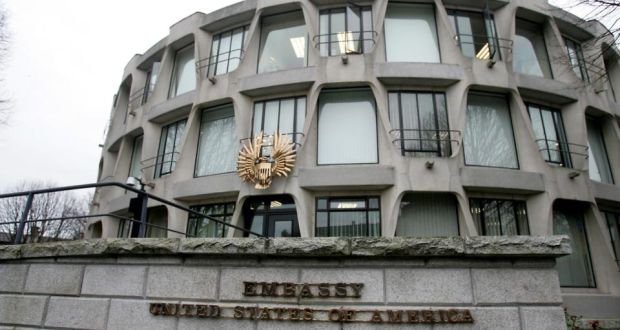
The American Embassy in Ireland is a big building, but the public (even the American ex-pat public) can only see a small part of it. That part is mostly security guards, fluorescent lights, and bulletproof glass. Somewhere inside of the building I know there’s a ballroom. If I was a Very Important Person I might get to see it, and maybe I’d even meet the ambassador herself. America’s ambassador to Ireland has a very impressive list of credentials, which is to be expected. Nations that are great and powerful (or want to be perceived that way) do their best to be represented by highly qualified individuals who are skilled in the diplomatic arts. People who can make a good impression at fancy dinners in ballrooms with VIPs. People who can move their nation’s interests forward through the ever-changing minefield of political realities.

Continue reading The (Unimpressive) Ambassadors Of Heaven

Wanting What I Already Have

There are strings of lights and stacks of chocolates growing in the shops, and the annual question is already hanging in the air: what do you want for Christmas? Mind you, the answer is meant to be something that fits neatly inside of wrapping paper, under a tree or in a stocking. ’Tis the season to assess what we all have and (more specifically) don’t have so that we can give each other good gifts that are actually wanted. I’m all for it. Social pressure to think about other people’s desires and happiness is a good thing, and if other people are thinking about my desires as well, that’s not bad. But as we all think hard about what everyone wants and doesn’t have yet, I’d like us to pause for a moment and remember a truth that can easily get lost in the flurry of festivities: it is possible to want what you already have.

Continue reading Wanting What I Already Have

The Leak (a poem)

Today I have a poem for you that is inspired by true events in our home. We recently discovered that a slow leak behind the shower had done enormous damage inside our bathroom walls without us realising it. As I considered what had happened I noticed a connection between our home and our hearts. That’s what this poem is about.

The Leak

Silently
the water creeps
behind the tidy
tiles, seeps
into the wood
and insulation
slow and patient
devastation
working hidden
in the dark
drip

by

drip

Continue reading The Leak (a poem)

A Personal Update (With A Book Update, Too)

I woke up the other day thinking about the list of normal things I was going to do that day, which is not unusual. But it struck me that I’ve been waking up like that for years and years, and the list of normal things I’ve thought about has changed dramatically. For example, recently I’ve been taking our oldest child out to practice driving. This is normal now, but it wasn’t a year ago, and it’s a sign that our family is entering another new and different kind of normal. Next year our youngest will join her brothers in secondary school and our normal will change again.

Continue reading A Personal Update (With A Book Update, Too)

The Past Is More Than A List Of Problems

It’s often said that those who don’t learn from the past are doomed to repeat it. The unstated assumption in this saying is that the past is full of problems—which is obviously true. Learning from the mistakes of the past is a big job because there are just so many to choose from. Our learning is also complicated by the danger of over-correction—of fixating so intently on avoiding one problem that we fall easily into another. After all, we’re just as susceptible to cultural blind spots, overlooked abuses, and self-serving justifications as anyone who went before us. Have you seen the internet lately? So we must learn from the mistakes of the past, and we must apply our lessons carefully. But I think we sell history, our ancestors, and our own selves short when we only see the past as a litany of problems to avoid. Our forebearers certainly had their issues—plenty of them—but they also had their successes. They were often wrong, but sometimes they were right. And what if we were humble enough to admit this? What if we learned from history not only by critiquing it, but also by letting it critique us?

Continue reading The Past Is More Than A List Of Problems

Assisted Suicide And The Meaning Of Life

Our representatives in Dublin are voting this evening on whether to approve recommendations for assisted suicide in Ireland. This is only an indicative vote, a first step towards changing our laws, but it is a step that will pave the way for official legislation to be brought forward in the future. The argument in favour of this change is usually framed in the language of compassion and choice—that those who are suffering greatly should be able to end their suffering—and their lives—on their own terms. There are, however, many significant concerns raised in the debate as well. For example, there is the unspoken (or perhaps spoken) pressure to die that allowing this option places on good-hearted people who hate to be a burden on others. Is that really a free choice? Or consider the obvious cost-cutting incentive that assisted suicide gives the health service to end lives rather than provide expensive palliative care. Does that really promote compassion? These concerns are reason enough to oppose assisted suicide, especially in light of the heartbreaking evidence from countries who have already started down this road. But I have another more fundamental objection. I know that the one great benefit and argument for assisted suicide is that it ends suffering. This is true enough. The trouble is that it ends suffering not by treating or managing it, but rather by ending the sufferer. In doing so, assisted suicide creates a new category for our culture—a category of human life that society agrees is simply not worth living. 

Continue reading Assisted Suicide And The Meaning Of Life

The Daily Dance Of Family Life

The electric kettle clicks off. I give some of the water to Jessica for the breakfast porridge and take the rest to warm the flasks for hot lunches for the children. I need a little more, so I fill the kettle again. The children are in the kitchen now, wearing their uniforms and queueing at the refrigerator to pack fruits and vegetables into their lunch boxes. I fill everyone’s water bottles then switch to unloading the dishwasher, working around Jessica who is now preparing breakfast fruit and the children who are laying the table and getting the juice out of the refrigerator (which has hardly closed). As the five of us step around each other and pause and dive in and out of cabinets and counter space to do our various morning jobs, someone observes that our movements around the kitchen are like a dance. We laugh, but it’s true.

Continue reading The Daily Dance Of Family Life

A Wide Place

As the youngest of four children, I was always the last to experience the privileges that came with growing up. I remember one year waiting impatiently for my birthday—the day I would finally be allowed to have my very own pocketknife. I wanted it right away. I wanted to carve sticks and notch arrows like my older brother could. But my parents were very strict: I had to be old enough, and I also had to be trained through Scouts in how to use knives properly and safely. I knew that my pocketknife privileges would be revoked the first time I failed to abide by the safety rules I learned. I didn’t fully understand why my parents were so serious about these regulations until my neighbour cut his thumb with a pocketknife badly enough to need stitches. After that, I saw the wisdom of my parent’s rules more clearly. Their strictness was protecting me and freeing me to enjoy the benefits of my pocketknife without being hurt by it. I saw that their commands were actually an expression of their love for me.

Continue reading A Wide Place