The Little Weeds

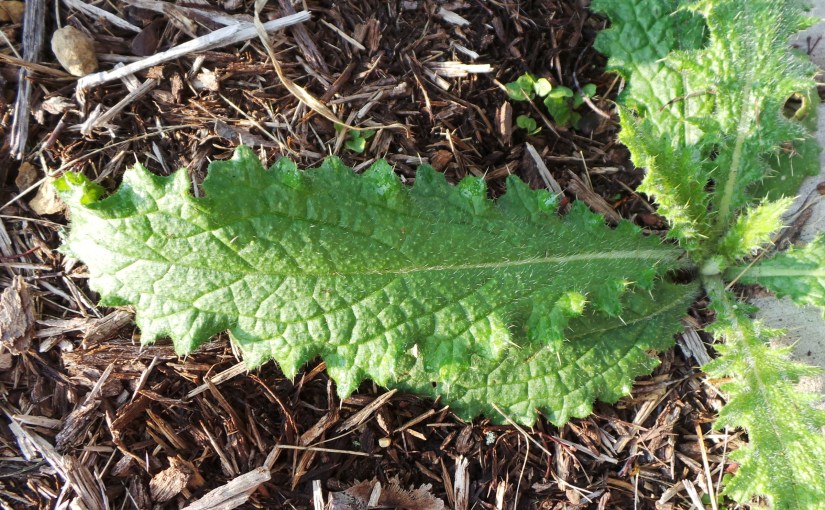
It used to be a vacant lot, in the middle of town. Over months and seasons the grass and weeds have slowly given way to rows of potatoes, apples, carrots, pumpkins, onions, and more. This is our local community garden. We even have a poly-tunnel that fills up with tomatoes, lettuce, and courgettes that grow bigger than my forearm. Some of our volunteers are keen gardeners with plenty of knowledge and experience, and then there are people like me and my wife, ready to do as we’re told. This year, I’ve spent a lot of my time in the garden on one job in particular: killing things. 

Continue reading The Little Weeds

I Miss The Stars

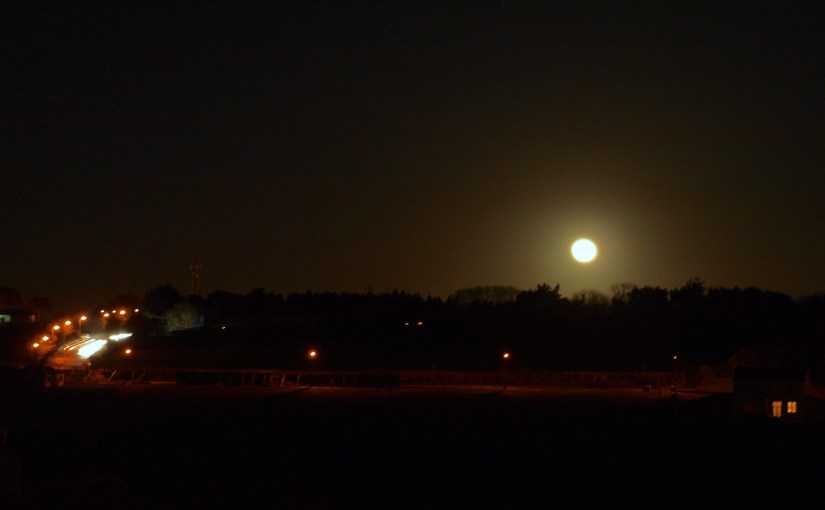
One of the advantages of growing up in the country in Alabama was the clear view I had of the night sky. As a child, I got used to seeing billions, maybe trillions of stars—I don’t really know, there were far too many to count. Stars were a given for me, along with the noisy nighttime chorus of cicadas, crickets and frogs. Now I live in Ireland, where most nights the clouds pull themselves over me like a duvet. Under these covers my town is equipped with rows of man-made lights that imitate and compete with the stars, so even when the duvet is lifted, I might—on a good night—be able to count a dozen stars. But I know better. I know what’s really out there in those seemingly dark, empty spaces—I’ve seen it with my own eyes. I remember the sparkling host, the glittering crowd, the innumerable army of light with its clustered regiments and flag-bearing constellations. Can I be honest? I miss them.

Continue reading I Miss The Stars

John’s Magnificent Pineapples

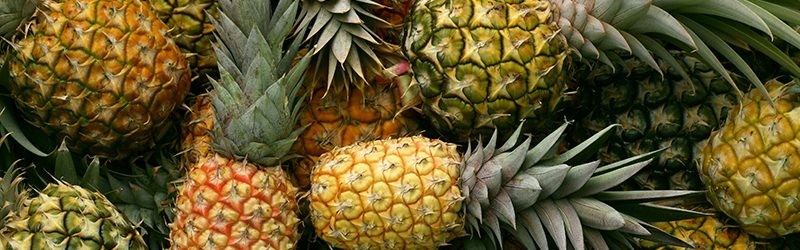
There once was a man named John the Magnificent. At least, that’s that he called himself. He lived near our home in Ireland a long time ago. I only know about him because of the effort he put in to proving his chosen name—because his manor house really is magnificent, and is still surrounded by gorgeous gardens that are now open to the public (I’m not sure John would approve of this, but he hasn’t said anything). In John’s day, a garden was a great way to display your wealth. His arboretum includes exotic specimens from around the world, and his greenhouses were so well designed and equipped that he was able to serve his guests home-grown pineapples—in Ireland!

Continue reading John’s Magnificent Pineapples

Three Castle Head

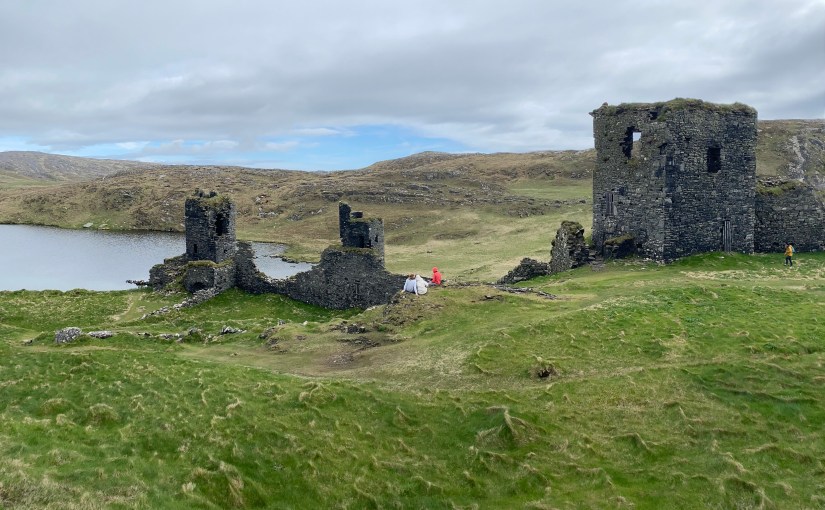
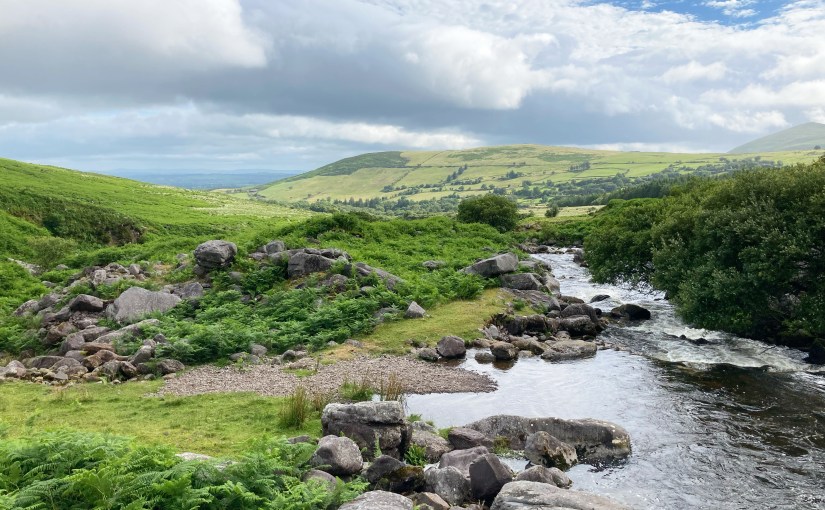
On a sunny day in the Spring, we pulled the car into a gravel parking area at the end of a remote peninsula in Ireland. The sea shimmered in the light beyond the deep green fields lined and dotted with grey rock walls and white sheep. We opened the gate and crossed a field, and then another, and another, carefully following the faint paths worn by the feet of those who had come here before us. Sometimes we had to make a choice—it seems not all of our predecessors had gone the same way. Or did hooves make one trail, and feet another? Eventually the grassy fields gave way to rocky hills, and we scrambled up one side and down the other where the grass and mud and boulders and the sound of the sea all blend together into a kind of otherworldly magic and I had to remind myself that I wasn’t looking at an illustration of the Wild Lands of Narnia—I was in the real, tangible, wild of the actual world.

Continue reading Three Castle Head

I Don’t Know Where The Streams Are

One warm Monday evening, I found myself with half an hour to fill as I waited for one of my children to have a music lesson. Across the street was a new greenway, quietly inviting me to spend the time strolling instead of scrolling. The path passed along roads I’d travelled many times in the car, so I didn’t expect to see anything new, just to stretch my legs. I was wrong.

Things look different when you’re walking. You have time to notice the individual wildflowers, and the meadow behind the wall with the horses in it that you just couldn’t see from the driver’s seat of the car. The discovery that surprised me most, though, was the stream running right beside the road. Through the crowded trees and bushes it babbles away constantly as it splashes its way over rocks and under roots and how did I travel this road so many times and never even know this was here?

Continue reading I Don’t Know Where The Streams Are

Afternoon (a poem)

At first all I feel is
The stillness and peace—
The silence of grass and
The patience of trees

Then slowly my senses
Begin to attune
To the business of nature
This warm afternoon

The birds chatter on
With their intricate songs
And there must be a meaning
To what I am hearing
While bees move with vigour
From flower to flower
A butterfly, also—
Though his schedule’s lighter
And now I see flies
And some midges float by
And an ant—and the action
Is filling my eyes!
And though it is quiet
Compared to my screens
And though it is peaceful
There’s work for the trees
As they silently grow
And the ivy and gorse
And the grass-eating horse
For the peace of this earth
Isn’t lazy or languid
It’s busy and blessed
And yet somehow,
At rest

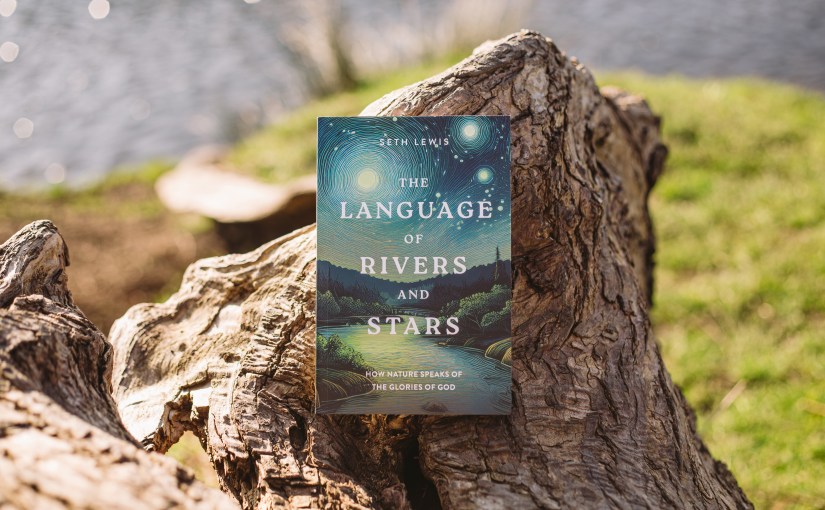
The Language of Rivers and Stars

While the children were off school this Easter our family took a trip to explore Mizen Head, the southernmost tip of Ireland. It’s a remote peninsula where the rocky, wild terrain is dotted with cottages of white or pale yellow and the land is a patchwork of squares and rectangles divided by low stone walls. Clusters of sheep and cows surround tiny villages with steeples in the middle and strings of houses and pubs and shops that might be out of eggs if you get there too late. At the southern point where the land runs out there’s an old signal station that’s become a tourist attraction, reached by a footbridge that stretches between impassable sea cliffs. When we walked across and looked down we saw three seals far below us, relaxing in a rocky inlet surrounded by towering, jagged rocks while the seagulls soared above our heads. In the far distance, we could just make out the shape of Fastnet Rock, a tiny island of stone where people managed—somehow—to build a lighthouse to warn those at sea of the ship-shattering dangers around them. At our feet the just-blooming sea-pinks waved in the breeze and I wondered again how these flowers manage—and even seem to prefer—to grow in places where there is so little soil and so much violent wind from the ever-turbulent ocean.

Continue reading The Language of Rivers and Stars

Transplanted

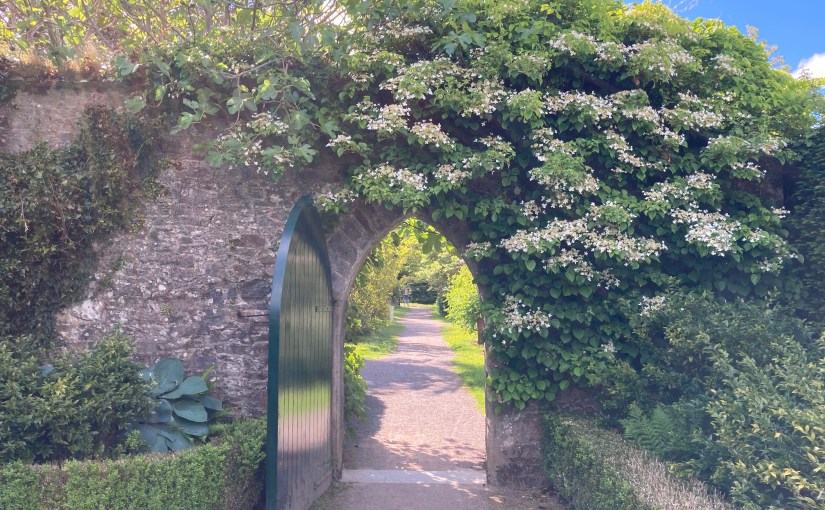
There’s an old Regency manor house near us that has been preserved as a heritage site, beautifully surrounded by manicured gardens that are faithfully tended by volunteers and open to the public. The gardens were planted and arranged over successive generations in the old English style—which means that the plants and trees were imported from all across the globe. This worked particularly well on the Fota estate because of its sheltered conditions. Even its name, Fota, is derived from the Irish “Fód te”, meaning “warm soil”. The arboretum is particularly impressive, boasting some of the finest specimens of pine, cypress and sequoia in Europe. There are also acers and eucalyptus, tasmanian tree ferns, acacia and magnolias that burst open with enormous flowers before the leaves even begin to appear. A walk through Fota gardens is a walk around the world, with the sights, smells, and colours of the Himalayas, Japan, Chile, China, New Zealand, the Pacific Northwest, and beyond.

Sometimes I’ve wondered how trees from California and Australia can grow so well in Ireland. I suppose they don’t have much of a choice in the matter, but they’ve certainly made the best of it. Their roots are deep in the fód te, and I have to strain my eyes to see some of their towering tops. They have not simply survived in a foreign land. They have made it their home, and thrived. When I wander among them, I am encouraged.

Continue reading Transplanted
Seedlings Need The Weather (repost)

It’s the time of year when fresh green leaves are unfolding and Jessica is preparing trays of seedlings for our garden. A few years ago I wrote about what I learned from our seedlings, and I’ve been thinking a lot about those lessons recently, so I decided to repost this post for you today. If you look closely, you’ll see that God is constantly communicating many valuable truths to us through the world he made for us. That’s what my forthcoming book is about— “The Language of Rivers and Stars”.


There’s a small square of earth behind our house that belongs to us. Which is strange, because it was here a long time before we were and will be here a long time after we’re gone. But there’s a deed in an office somewhere that has our names on it, so the ground is ours. And with that ground comes the responsibility to care for it—a responsibility that didn’t come from an office, but from Heaven.

We do our best. And when I say “we”, I really mean my wife, Jessica. She’s the one who does most of the caring and tending and planting. I made the raised beds around the edges of the garden, but she’s the one that filled them with roses and blueberries, mint and strawberries, pineapple sage and climbing jasmine and passion flowers. This year, she brought home packets of seeds for dahlias, zinnias, and cornflowers as well, because she wants to have flowers to cut for our dinner table throughout the spring, summer, and autumn. She sowed the seeds in trays of compost and found the perfect spot inside our glass door where our seedlings could have ideal conditions: plenty of sun (by Irish standards), warmth inside the house, protection from cold and storms and slugs, and regular watering. We babied our little baby plants, and we were delighted to see them grow, and grow fast. In fact they grew so fast that their stems became long and thin and too weak to hold up their own new leaves. One by one me they began to fall over. What went wrong? How could our seedlings be so weak when we protected them from every difficulty and obstacle? What more could we do for them? 

Continue reading Seedlings Need The Weather (repost)

Doodles On A Masterpiece

As I pulled the car into a spot at the edge of the parking garage I saw the sky shine bright blue between the rough block wall and the concrete deck above me. Further down the wall on the right I noticed a tree branch leaning in—green leaves detailed against the grey expanse. Moments before I had been driving under the open sky with living things growing all around, the hills in front and the sea behind me. Now, I was enclosed in a concrete case of re-formed rock, where every earthly material was repurposed beyond recognition. Those materials must have come from nature originally—they had to—but the ways we work with nature are often a stark contrast to the ways nature itself works. 

Continue reading Doodles On A Masterpiece