Transplanted

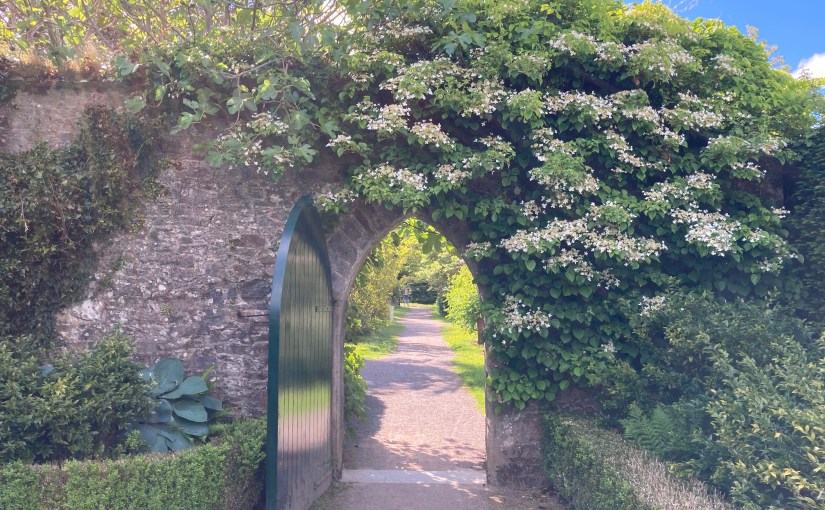
There’s an old Regency manor house near us that has been preserved as a heritage site, beautifully surrounded by manicured gardens that are faithfully tended by volunteers and open to the public. The gardens were planted and arranged over successive generations in the old English style—which means that the plants and trees were imported from all across the globe. This worked particularly well on the Fota estate because of its sheltered conditions. Even its name, Fota, is derived from the Irish “Fód te”, meaning “warm soil”. The arboretum is particularly impressive, boasting some of the finest specimens of pine, cypress and sequoia in Europe. There are also acers and eucalyptus, tasmanian tree ferns, acacia and magnolias that burst open with enormous flowers before the leaves even begin to appear. A walk through Fota gardens is a walk around the world, with the sights, smells, and colours of the Himalayas, Japan, Chile, China, New Zealand, the Pacific Northwest, and beyond.

Sometimes I’ve wondered how trees from California and Australia can grow so well in Ireland. I suppose they don’t have much of a choice in the matter, but they’ve certainly made the best of it. Their roots are deep in the fód te, and I have to strain my eyes to see some of their towering tops. They have not simply survived in a foreign land. They have made it their home, and thrived. When I wander among them, I am encouraged.

Continue reading Transplanted
Seedlings Need The Weather (repost)

It’s the time of year when fresh green leaves are unfolding and Jessica is preparing trays of seedlings for our garden. A few years ago I wrote about what I learned from our seedlings, and I’ve been thinking a lot about those lessons recently, so I decided to repost this post for you today. If you look closely, you’ll see that God is constantly communicating many valuable truths to us through the world he made for us. That’s what my forthcoming book is about— “The Language of Rivers and Stars”.


There’s a small square of earth behind our house that belongs to us. Which is strange, because it was here a long time before we were and will be here a long time after we’re gone. But there’s a deed in an office somewhere that has our names on it, so the ground is ours. And with that ground comes the responsibility to care for it—a responsibility that didn’t come from an office, but from Heaven.

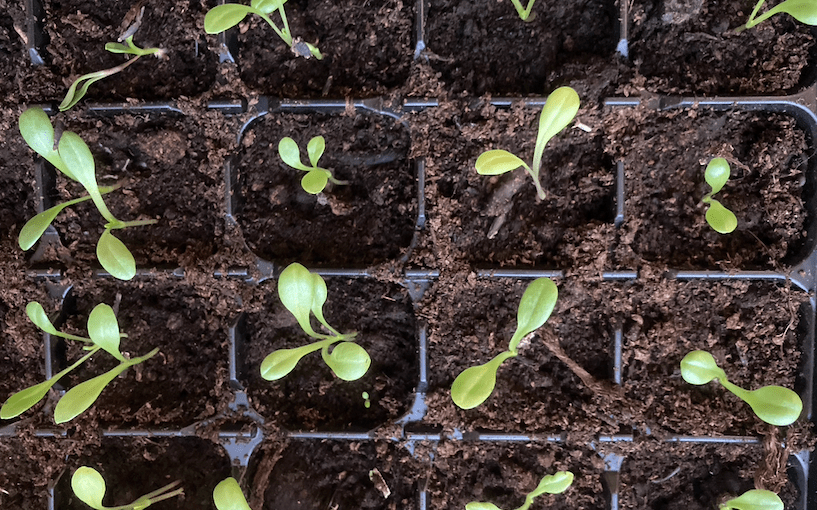
We do our best. And when I say “we”, I really mean my wife, Jessica. She’s the one who does most of the caring and tending and planting. I made the raised beds around the edges of the garden, but she’s the one that filled them with roses and blueberries, mint and strawberries, pineapple sage and climbing jasmine and passion flowers. This year, she brought home packets of seeds for dahlias, zinnias, and cornflowers as well, because she wants to have flowers to cut for our dinner table throughout the spring, summer, and autumn. She sowed the seeds in trays of compost and found the perfect spot inside our glass door where our seedlings could have ideal conditions: plenty of sun (by Irish standards), warmth inside the house, protection from cold and storms and slugs, and regular watering. We babied our little baby plants, and we were delighted to see them grow, and grow fast. In fact they grew so fast that their stems became long and thin and too weak to hold up their own new leaves. One by one me they began to fall over. What went wrong? How could our seedlings be so weak when we protected them from every difficulty and obstacle? What more could we do for them? 

Continue reading Seedlings Need The Weather (repost)

Doodles On A Masterpiece

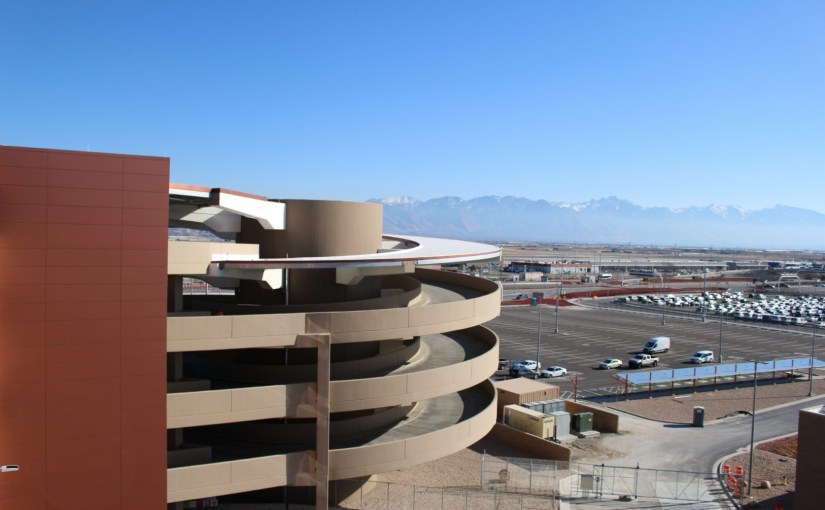
As I pulled the car into a spot at the edge of the parking garage I saw the sky shine bright blue between the rough block wall and the concrete deck above me. Further down the wall on the right I noticed a tree branch leaning in—green leaves detailed against the grey expanse. Moments before I had been driving under the open sky with living things growing all around, the hills in front and the sea behind me. Now, I was enclosed in a concrete case of re-formed rock, where every earthly material was repurposed beyond recognition. Those materials must have come from nature originally—they had to—but the ways we work with nature are often a stark contrast to the ways nature itself works. 

Continue reading Doodles On A Masterpiece

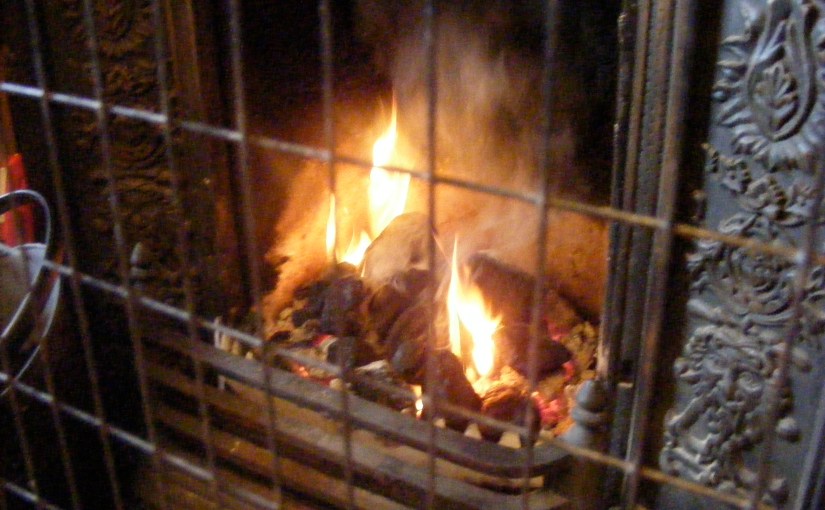
An Elegy For Our Fireplace

When my father built a home for our family in the hills of Alabama he put a large wood stove in the very centre. A good fire in that stove could heat the entire house, upstairs and down, for most of the night. I grew up splitting logs and carrying them in, building fires and learning to finesse small sparks into roaring warmth. They say firewood warms you twice, and it’s true—first when you cut it, and again when you burn it. The sound of our fire sucking air through the stove vents like breath, the crackling wood, the reassuring smoke from the chimney as I headed in from the winter cold—all are essential pieces of my childhood, baked into my soul by the power of the flames.

Continue reading An Elegy For Our Fireplace

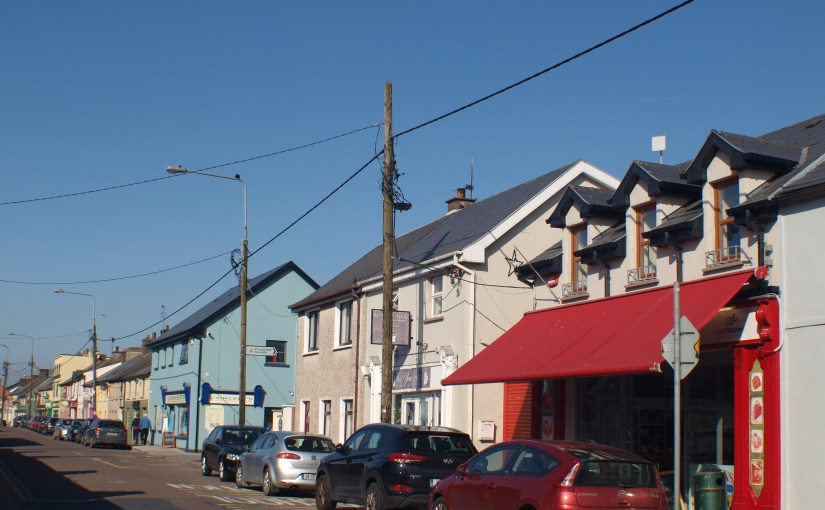
What Makes Our Town (Or Any Place) Great

What makes a town or a city a great place to live? There are many factors, of course, from cost of living to amenities and natural beauty and so on, but there is one factor that surpasses them all. This was pointed out to me by a man who has been dead for some time, G.K. Chesterton. He wrote about what makes cities great in his often surprising and famously thought-provoking testimonial work, Orthodoxy. Using Pimlico as an example—a village in central London which must have been dire in Chesterton’s time—he says:

“Let us suppose we are confronted with a desperate thing—say Pimlico…. It is not enough for a man to disapprove of Pimlico: in that case he will merely cut his throat or move to Chelsea. Nor, certainly, is it enough for a man to approve of Pimlico: for then it will remain Pimlico, which would be awful. The only way out of it seems to be for somebody to love Pimlico: to love it with a transcendental tie and without any earthly reason. If there arose a man who loved Pimlico, then Pimlico would rise into ivory towers and golden pinnacles; Pimlico would attire herself as a woman does when she is loved… If men loved Pimlico as mothers love children, arbitrarily, because it is theirs, Pimlico in a year or two might be fairer than Florence. Some readers will say that this is a mere fantasy. I answer that this is the actual history of mankind. This, as a fact, is how cities did grow great… Men did not love Rome because she was great. She was great because they had loved her.”

Continue reading What Makes Our Town (Or Any Place) Great

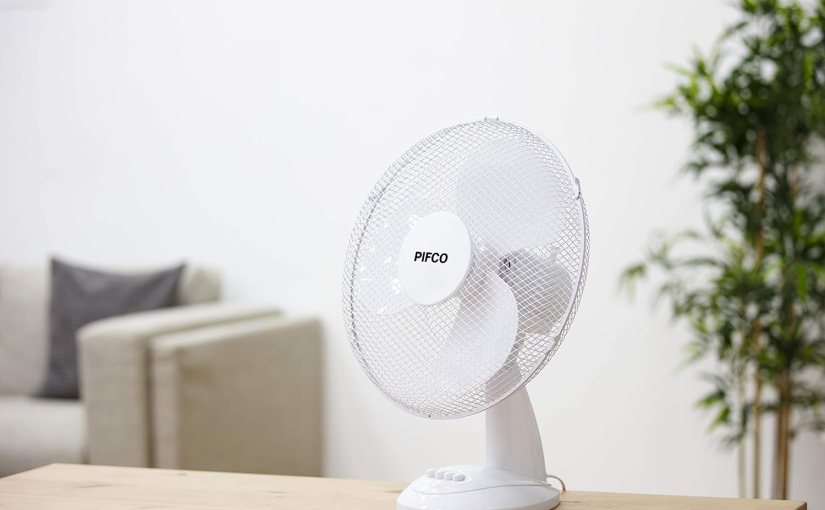
A Fan

There is a simple machine in our house that gives me more happiness than is really logical or reasonable. Most of the year, it lives in the attic, waiting for the summer when the house warms up and we open the windows to let the breeze in (this is the only air conditioning system we need in Ireland). To help encourage that summer breeze inside, we take down the fan from storage and turn it on. I enjoy turning on the fan more than I can sensibly explain to you. I guess you could say I’m a fan of it. The sound of the motor and spinning blades resonates with something deep inside of me, which is strange, I know, but the breeze dusts off long-past memories of summer days and the places I used to spend them. In that mental swirl there arises an old and comfortable happiness, intangible but very real, and I can’t help but smile. 

Continue reading A Fan

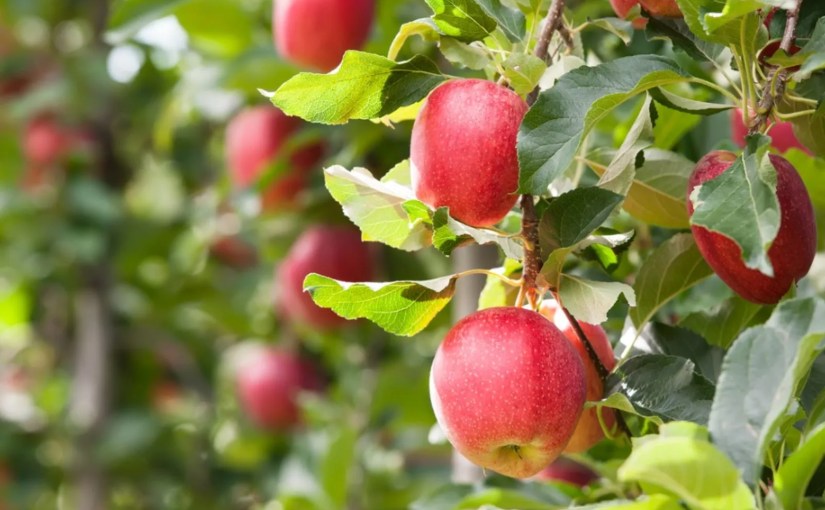
The Crooked Apple Tree

Beside a country road in Ireland there are two tall pillars marking the entrance to my friend’s home, down a lane that used to lead to a massive manor house. That mansion is long gone, but the stately pillars remain as crumbling reminders of its past glories. The gravel lane between them now winds its way to the old farm buildings on the estate, which were nothing but ruined walls until my friend rebuilt them into a home. Outside, the chickens wander freely with the dogs among the garden beds and fruit trees. 

Continue reading The Crooked Apple Tree

Pruning (a poem)

Everything grows fast in the garden this time of year. The rose stems stretch themselves upward, then droop with the weight of their own blooms. The grape vine climbs the arbour, blindly grasping anything it can hold on to. The weeds come back, and come back again, from somewhere, everywhere, while the vines on the back wall grow in every direction at once. All of this growth is a beautiful, abundant gift, yet I know that if I leave it untended for too long, my garden will eventually become something else entirely. The strawberries will send runners into the grass, the grass will colonise the herb bed, the weeds will colonise the grass, and the roses will block the path with thorns. The longer I leave it alone, the harder I’ll have to work to reclaim it. And here, in the wild tendencies of my garden, I see a reflection of myself. That’s what this poem is about:

Continue reading Pruning (a poem)

All Of It, All At Once

There was still an hour before I had to be at my first meeting for the day. The morning was beautiful, promising to be one of the nicest days of the year. I had to go outside. I didn’t know the area, but my phone told me there was a park in a nearby town I’d never been to. A few minutes later, I pulled in next to the jogger and dog-walker sedans—the family cars hadn’t arrived yet. The park was extensive. It was build around a lake, with ancient trees and well-maintained lawns, meandering paths, benches, swans, and the dawn chorus echoing in stereo surround-sound all around me. 

Continue reading All Of It, All At Once

The Secret Of Contentment

When I see the ruins of old cottages around us in Ireland, I’m always struck by how small they are, and by how dramatically our everyday living has changed. Even the best of the ancient castles are not nearly as comfortable as a standard modern home or apartment. They didn’t have flushing toilets. They didn’t have radiators or refrigerators or wifi. They didn’t have washing machines or cars or exotic foods from around the world available year round in local shops. They couldn’t order whatever they wanted from anywhere and have it shipped to their door in days without ever needing to leave the climate-controlled comfort of their own couch. If our ancestors could see us now, they would probably expect us to be the happiest, most care-free and content people to ever live. And they would be wrong. Our modern society is anything but content. We are plagued by anxiety, depression, relational breakdown, hopelessness, and despair. We promote mental health now more than ever, but the problems persist, and grow. Clearly, contentment is not just the result of having more wealth, more opportunities, more education, or better conditions. If it were, we should be one of the most content societies to ever live on planet earth. And yet somehow, contentment has eluded us. Have we been looking for it in the wrong places?

Continue reading The Secret Of Contentment