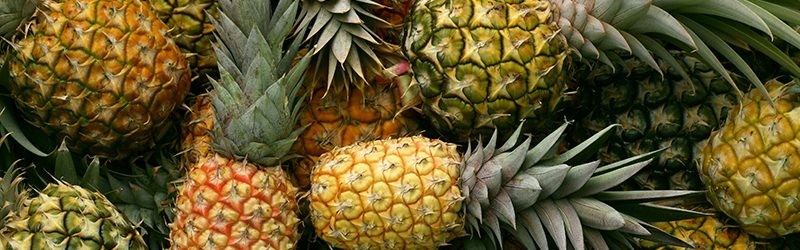
There once was a man named John the Magnificent. At least, that’s that he called himself. He lived near our home in Ireland a long time ago. I only know about him because of the effort he put in to proving his chosen name—because his manor house really is magnificent, and is still surrounded by gorgeous gardens that are now open to the public (I’m not sure John would approve of this, but he hasn’t said anything). In John’s day, a garden was a great way to display your wealth. His arboretum includes exotic specimens from around the world, and his greenhouses were so well designed and equipped that he was able to serve his guests home-grown pineapples—in Ireland!
Continue reading John’s Magnificent PineapplesTag: life
Small (a poem)
A sunbeam
A bird
A smile
A word
A song
So revealing
So filled up
With feeling
A wrinkle
A fear
A sweat bead
A tear
A dance in the kitchen
A laugh in the hall—
A lifetime so big
Made of moments
So small
Of Birds, Baguettes, And Being A Creature
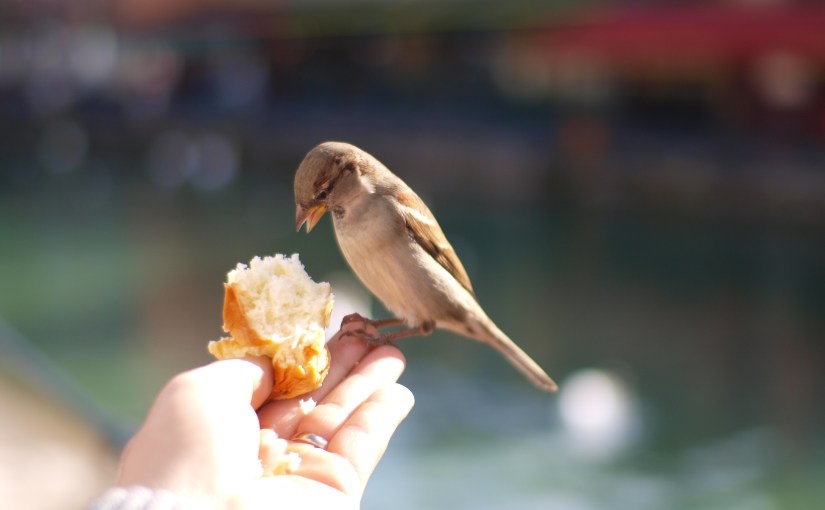
On a lakeshore in the French Alps, the old city of Annecy rises to meet the castle that crowns the hill. At the water’s edge, shops and restaurants trade in the same buildings that were used by medieval merchants. Our children were small when our family visited, but the memories are still clear in my mind. I remember the woman beside the water with a baguette, feeding the birds. I remember how fascinated the children were at how she could get the birds to come and eat bread right out of her hands. Then, when she noticed them noticing her, she generously gave the rest of her baguette to our family so that we could try it, too. Sure enough, a few bits of baguette was all it took to attract flocks of sparrows who flew around our heads, landed on our fingers and ate right out of our outstretched hands. Then again, who wouldn’t accept an invitation to share in a proper French baguette? As they came, we wondered at their tiny bodies, and we laughed at the feeling of their feet on our fingers. I suppose all animals will be this friendly and unafraid in the new creation. That will be glorious.
Continue reading Of Birds, Baguettes, And Being A Creature
Wildflowers Anonymous (a poem)
Hello my name is
Wildflower
Here today and
Gone tomorrow
Bursting glory
In my hour
Then I fade away
With me are ten thousand
Others—each one with
The same bright colours
How will I stand out from these
If I am just the same?
I don’t mind
It’s not my job
My colours are
A gift from God
And if I bloom
For just one day
And if a million
Are the same
And if nobody
Learns my name
I’ll still bloom here—
I still will bring
My little piece of glory
Sing
My song into the story
For my Maker
For my King
A Personal Update
I’ve been living on this planet long enough to get used to a lot of things (probably too used to too many things), but I’m also starting to realise that there is—and always will be—more room for first-time experiences. The world is full of possibilities, and life is full of change. Things won’t stay the same for long even if I want them to, so I figure I might as well embrace the constant adjustments and do my best to keep learning as I go. That’s certainly the way it is with family life—our children keep changing and growing, with new experiences all around. Our oldest son just got his provisional driving license, our middle son got a drum kit, and our daughter—the youngest—is about to graduate from primary school. I’m about to be the father of three children in secondary school, a new experience for sure. It feels strange, but that’s ok. Life is like that. Bring it on. Another new experience for me is leading our local church, which just launched in February, so everything we do is new. It’s been a full few months, and I’ve loved it. I thank God every day for the wonderful people we get to share life with in our little church. If you’re not part of a local church, I can’t recommend it highly enough. Find one and get as involved as you can!
Continue reading A Personal Update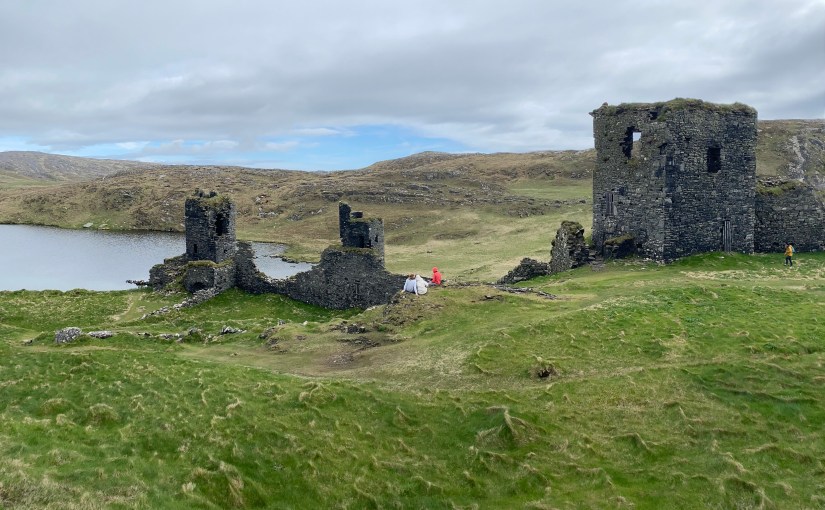
Three Castle Head
On a sunny day in the Spring, we pulled the car into a gravel parking area at the end of a remote peninsula in Ireland. The sea shimmered in the light beyond the deep green fields lined and dotted with grey rock walls and white sheep. We opened the gate and crossed a field, and then another, and another, carefully following the faint paths worn by the feet of those who had come here before us. Sometimes we had to make a choice—it seems not all of our predecessors had gone the same way. Or did hooves make one trail, and feet another? Eventually the grassy fields gave way to rocky hills, and we scrambled up one side and down the other where the grass and mud and boulders and the sound of the sea all blend together into a kind of otherworldly magic and I had to remind myself that I wasn’t looking at an illustration of the Wild Lands of Narnia—I was in the real, tangible, wild of the actual world.
Continue reading Three Castle Head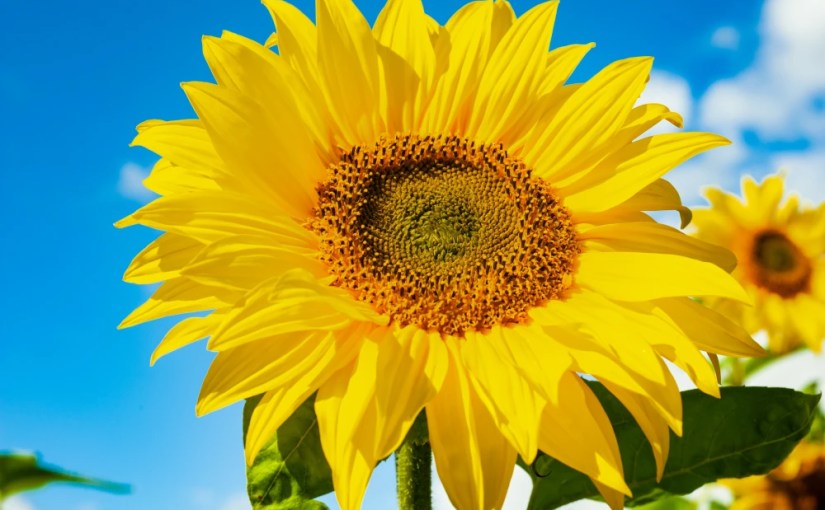
Easter Isn’t Over
Easter Sunday was a few days ago now, but that doesn’t mean it’s over. The effects of what we celebrated last Sunday continue to grow, slowly, like the buds of spring continue to open all around us and the fresh green continues to deepen into maturity and the apple blossoms transform themselves, somehow, into delicious fruit. Jesus said, “unless a grain of wheat falls into the earth and dies, it remains alone; but if it dies, it bears much fruit” (John 12:24). Then he died—for us. Now, 2,000 years later, his resurrection is still bearing fruit—transforming the cold, dead hearts of sinful, proud, selfish people who trust in his forgiveness and salvation into living, loving, new creations—a transformation that is every bit as glorious and surprising as the growth of a tiny, dull little sunflower seed into a towering, thriving wonder of nature. This is how God works. He does nothing by half-measures. He doesn’t ease off once he’s done enough to get by. He goes on, and on, and on—working wonders far beyond anything we could ask or imagine, and glories no mind has conceived (1 Corinthians 2:9). That’s why, in 1 Corinthians 15, Paul uses seeds as an illustration of the resurrection of God’s people:
Continue reading Easter Isn’t Over
A Poem About Life
I sat down to write a poem about life
The roof is leaking.
I began to think about the happy and
The dryer’s squeaking.
I got up and sat again and thought
Of mysteries
And things I ought
To have done yesterday.
Life is full of joy and
I’d better fold the clothes.
How it goes so fast
Nobody knows.
Again, it’s full of joy and
Interruption
Moments of construction
Of this messy
Happy gift of
What was I saying?
Oh yes the gift I love—
Life
The Gardener
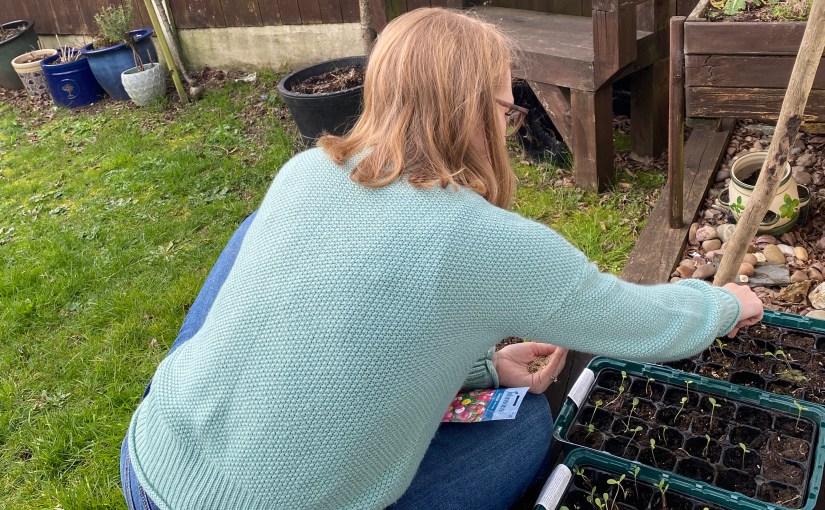
When we moved in to our house, the garden was undeveloped. It was a small patch of grass, with a shed. And those things are still there, but they’ve been joined now by a row of roses at the back, with jasmine and passion flowers growing against the wall. Blueberry bushes bloom on one side, with strawberries and grapes beside them. On the other side is an apple tree, a plum tree, and a collection of pots growing a collection of colourful flowers that Jessica cuts and gives away or brings inside for us to enjoy. This year, we’re expanding our window boxes to hold even more flowers. As I write today there are rows of seedlings on the back stoop, reaching up and acclimatising, being prepared for planting—because none of this growth happens overnight. We’ve lived here seven years now, and the progress has been slow. It is measured in months and seasons and years, not hours and days. It was my wife, Jessica, who saw what our undeveloped little plot could become and patiently worked over the years to bring that vision to life. As I go outside to look at the buds forming and opening this spring, I see the fruit of her careful attention and I rise up and bless her for bringing such abundance and beauty to our home.
Continue reading The Gardener
God Doesn’t Work For Me
“I’m glad you found something that works for you.”
He said it kindly, genuinely happy for me to have found meaning and purpose in my beliefs about God. I said, “Whether or not my beliefs work for me is not the point. I just want to believe what’s true, and live accordingly. I want to know what God is really like—not what I want him to be. My opinion about you doesn’t determine who you really are, and my opinion about God certainly doesn’t change who he is.” God is himself. He is not obligated to work for me—as if my own little self were the centre of all things—he is the centre, and the reason I work at all is because of him. So I’d much rather live in the light of reality, even if it makes me squint, than live in the shadows of my own comfortable delusions.
Continue reading God Doesn’t Work For Me sethlewis.ie