A Poem About Life

I sat down to write a poem about life
The roof is leaking.
I began to think about the happy and
The dryer’s squeaking.

I got up and sat again and thought
Of mysteries
And things I ought
To have done yesterday.

Life is full of joy and
I’d better fold the clothes.
How it goes so fast
Nobody knows.

Again, it’s full of joy and
Interruption
Moments of construction
Of this messy
Happy gift of

What was I saying?
Oh yes the gift I love—

Life

Seedlings Need The Weather (repost)

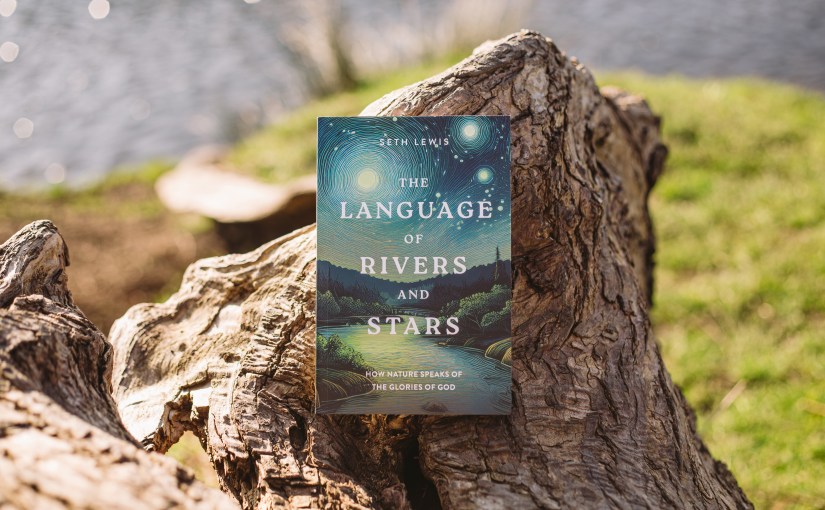
It’s the time of year when fresh green leaves are unfolding and Jessica is preparing trays of seedlings for our garden. A few years ago I wrote about what I learned from our seedlings, and I’ve been thinking a lot about those lessons recently, so I decided to repost this post for you today. If you look closely, you’ll see that God is constantly communicating many valuable truths to us through the world he made for us. That’s what my forthcoming book is about— “The Language of Rivers and Stars”.


There’s a small square of earth behind our house that belongs to us. Which is strange, because it was here a long time before we were and will be here a long time after we’re gone. But there’s a deed in an office somewhere that has our names on it, so the ground is ours. And with that ground comes the responsibility to care for it—a responsibility that didn’t come from an office, but from Heaven.

We do our best. And when I say “we”, I really mean my wife, Jessica. She’s the one who does most of the caring and tending and planting. I made the raised beds around the edges of the garden, but she’s the one that filled them with roses and blueberries, mint and strawberries, pineapple sage and climbing jasmine and passion flowers. This year, she brought home packets of seeds for dahlias, zinnias, and cornflowers as well, because she wants to have flowers to cut for our dinner table throughout the spring, summer, and autumn. She sowed the seeds in trays of compost and found the perfect spot inside our glass door where our seedlings could have ideal conditions: plenty of sun (by Irish standards), warmth inside the house, protection from cold and storms and slugs, and regular watering. We babied our little baby plants, and we were delighted to see them grow, and grow fast. In fact they grew so fast that their stems became long and thin and too weak to hold up their own new leaves. One by one me they began to fall over. What went wrong? How could our seedlings be so weak when we protected them from every difficulty and obstacle? What more could we do for them? 

Continue reading Seedlings Need The Weather (repost)

The Gardener

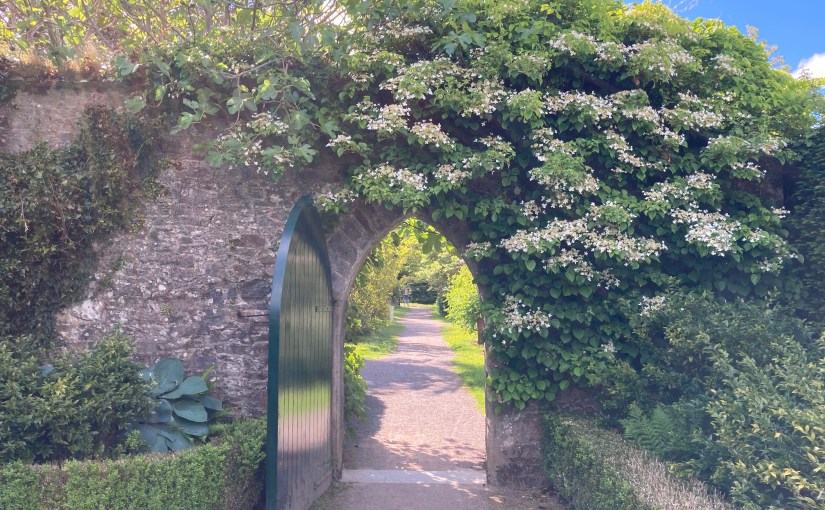
When we moved in to our house, the garden was undeveloped. It was a small patch of grass, with a shed. And those things are still there, but they’ve been joined now by a row of roses at the back, with jasmine and passion flowers growing against the wall. Blueberry bushes bloom on one side, with strawberries and grapes beside them. On the other side is an apple tree, a plum tree, and a collection of pots growing a collection of colourful flowers that Jessica cuts and gives away or brings inside for us to enjoy. This year, we’re expanding our window boxes to hold even more flowers. As I write today there are rows of seedlings on the back stoop, reaching up and acclimatising, being prepared for planting—because none of this growth happens overnight. We’ve lived here seven years now, and the progress has been slow. It is measured in months and seasons and years, not hours and days. It was my wife, Jessica, who saw what our undeveloped little plot could become and patiently worked over the years to bring that vision to life. As I go outside to look at the buds forming and opening this spring, I see the fruit of her careful attention and I rise up and bless her for bringing such abundance and beauty to our home.

Continue reading The Gardener

Unthinkable (a poem)

If there was ever a doubt that God can take the evil of this world and turn it into good greater than we can imagine, that doubt was laid to rest when Jesus walked out of the tomb where he had been laid to rest. Humanity killed him for spite, and he died willingly—and rose again to save us. Now he promises that the troubles of his children who trust and follow him will also “work together for good” (Romans 8:28)—but of course that’s not how it feels in the moment when we face the unthinkable. 


Unthinkable

Sometimes God allows
The unthinkable
Unbelievable
Thing
To happen

Continue reading Unthinkable (a poem)

Realism And Resurrection

Perhaps it’s a product of growing up, but I do feel that the passing years have tarnished the old optimism I remember from the world of my childhood. There were always deep problems in the world—even I knew this growing up—but there was also a general sense of progress in the air, at least as I remember it. There was a hopeful feeling back then that our problems were not insurmountable, and better days were ahead. Science was supposed to solve some of our challenges, politics would solve others, and culture and civilisation would inevitably advance, even if the process was slow and bumpy. Those were the days when the unified, peaceful vision of a harmonious humanity depicted in shows like Star Trek felt like it could be a real possibility someday—minus the teleporters, of course.

Now we’re not so sure. The world feels different. Maybe our new technologies haven’t been all that we hoped they would be. Maybe our political leaders have burned us too many times and left us disillusioned with the system. Wars have continued relentlessly, as have human trafficking and slavery and corruption. Selfishness, injustice, and cruelty still plague our cultures and institutions, and they can pop up unexpectedly in our own hearts, too. Things are still moving quickly, but it’s become clear that movement isn’t necessarily progress. The old optimism of my memory has given way to a tired realism that doesn’t expect as much, hope as much, or feel as disappointed when everything goes sideways—isn’t the whole world constantly spinning sideways anyway?

Continue reading Realism And Resurrection

The Indispensable Inefficiency of Prayer

The to-do list is long—it’s always long—and the day only has so many hours. If we want to maximise our time on this planet, we have to prioritise. We can’t do everything, and it’s important to “make the most of every opportunity”, as the apostle Paul tells us in Ephesians 5:16. But what does this mean? How does it look?

For a Christian, one of the most effective uses of our time is an activity that looks to most people—and maybe quite often to ourselves—like one of the most inefficient. And yet, if we really believe what we say we believe, and if we really trust our Saviour to guide us, then it is indispensable:

Prayer.

Continue reading The Indispensable Inefficiency of Prayer

Perspicuity (a poem)

They tell me
Perspicuity
Means “clarity”
But if that’s so
What’s the
Proposed utility
Of saying it this way?

Perhaps the pride of
Sounding smart
By using Latin
Works of art
To prove to
Educated classes
You’re above the
Unwashed masses
Who insist on using
Simple language
(Such as “clear”)
Where gilded words
Perspicuous
Could raise themselves
Conspicuous
Above the tired landscape
Of all clear
Communication

C.S. Lewis On The Danger Of Getting Too Much News

I recently came across this excerpt from a letter C.S. Lewis wrote to a friend. He wrote it in 1946, before the internet was invented, before the dawn of push notifications and instant news updates without pause every moment of every day, and yet the wisdom in these few sentences only grows more important the more our technologies and access to information increases. We’ve reached the stage now where we can hear of every new battle, every devastating famine, every natural disaster and celebrity scandal on the other side of the globe more quickly and easily than we can hear what is happening with our own neighbours in our own community. Here’s what C.S. Lewis said about it:

Continue reading C.S. Lewis On The Danger Of Getting Too Much News

A City Whose Builder And Architect Is God

Have you ever noticed that illustrations of heaven tend to lean heavily on Greek architecture? The pillars and spires might be brighter, and the streets paved with gold, but the forms and styles still look familiar. It makes sense—the ancient Greek temples and forums were gorgeous, a true high point of human ingenuity and creativity. But these styles are human conceptions, whereas Hebrews 11:10 tells us that heaven is a city “whose architect and builder is God.”

Have you ever stopped to consider what it looks like when God himself designs and builds a city? 

Continue reading A City Whose Builder And Architect Is God

Winter Walk (a poem)

I put my hands inside my sleeves
And stuff them in my pockets
My collar up against the wind
Is not enough to block it
But as my nose and ears complain
Of slowly freezing
In my brain
My thoughts are getting warmer
And more active with each step
This wind has fanned the flame—
Yes even frozen wind—and swept
My thoughts into a blaze
And I’m aware that if I kept
My body locked
Behind the glaze
In perfect comfort
All my days
That there my mind
Would rest in ease—
And in that warmth
Would slowly
Freeze