Interrupted By Jesus

On the first Easter week, Pilate, governor of Jerusalem, handed down a sentence that Jesus should die. He had nothing against Jesus of Nazareth. He wasn’t the one who hunted him down, arrested him at night, or hired Judas to betray him. In fact, Pilate tried multiple times to release Jesus. He told everyone Jesus was innocent and didn’t deserve the death sentence the crowd was shouting for.

But he still had Jesus crucified.

Continue reading Interrupted By Jesus

Walking Home

Richard Baxter lived 400 years ago, but he still was able to help me recently with some good advice. He wrote that God’s people should “take one walk every day in the New Jerusalem.” He meant that we should intentionally remember God’s promises, and live right now in the light of them. But I love the way he said it, and that’s where this poem came from:

Continue reading Walking Home

Old Links That Still Make Me Think

The internet is a fast place. New content is posted every day, every hour, every minute—if you refresh your news and social media feeds right now, you’ll get loads of new posts to scroll through. When you’re done with those, you can refresh again. And again. In the online world, new content is constant, but it doesn’t stay new for long. A day or two later, it’s already old. It’s already been said. Attention has already shifted to today’s fresh, new posts. 

Continue reading Old Links That Still Make Me Think

The Key To Understanding The Bible

The Bible is the most influential book in history. No other book comes close to its print numbers, translations, or the number of lives and even cultures that have been radically changed by it. The message is more important, and more transformative, than anything ever written before or since. But although this book is the ultimate best-selling, world-shaping classic of literature, it can’t be fully understood if it is read like other books. It is not one more textbook to study, or history to appreciate, or how-to guide to follow. It is unique: it is God’s revelation of who he is and what he has done, and of who we are and what our lives are for. It does not present us with a religious or philosophical system to assent to, it presents us with a personal God to respond to. Reading it, hearing sermons about it, and studying it are all great things to do, but if you really want to understand the Bible, it’s not enough to listen to it. You have to respond to it. You have to obey it. 

Continue reading The Key To Understanding The Bible

Seven Books That Changed My Perspective

Communication is powerful. Written and spoken words can carry ideas, and ideas can change the world. This week, I’d like to share with you seven books that changed the way I think about things. There are many other books that I love and many that I have enjoyed greatly, but for a book to be on this list, it has to have changed my perspective on something. Here they are, in no particular order:

Continue reading Seven Books That Changed My Perspective

Seeds And Sunflowers

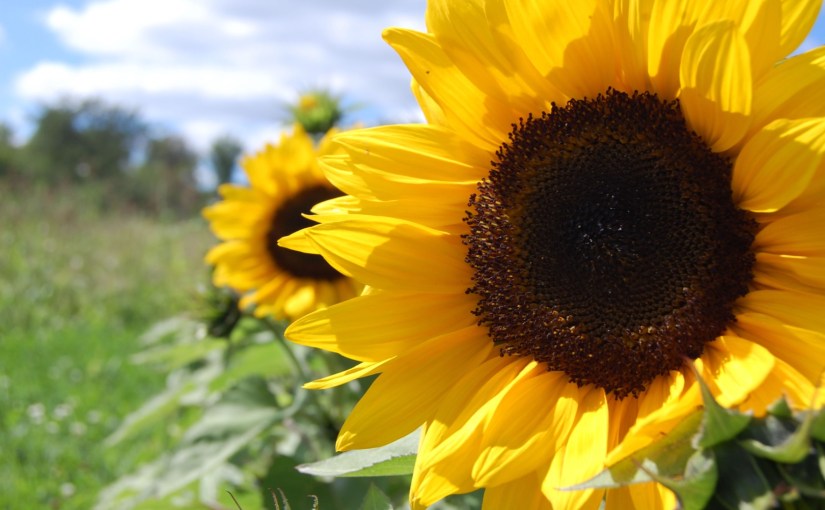
Growing up in Alabama, I loved snacking on sunflower seeds. I would crack the shells open and pull out a tiny little bit of deliciousness from each one. It’s hard to stop, once you start on them—especially if they’re salted. It’s also hard to imagine how those tiny tasty little seeds could ever become the massive plants that grow higher than my head and make flowers bigger than my face. When you think of it it’s kind of shocking, isn’t it?

Imagine showing someone who had never seen a sunflower that tiny seed in its tiny shell and trying to describe to them what would happen if they planted it in the ground. Imagine being the person that had never seen a sunflower, and trying to get your head around the idea that the little grey nothing in your hand could transform so completely into something so impressive and colourful. If all you knew was the seed, how could you ever guess the flower?

Continue reading Seeds And Sunflowers

Writing Roundup

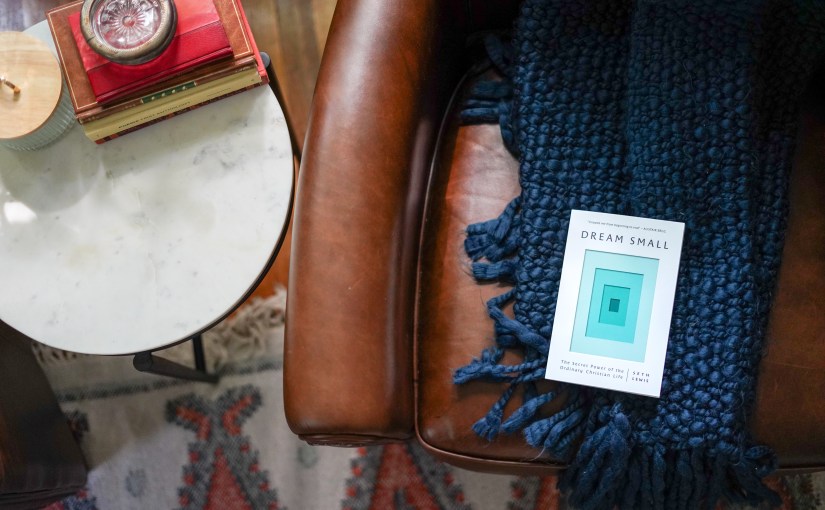
Dream Small was released four weeks ago, and I want to say a big thank you to everyone who has gotten the book and interacted with it. For this week’s blog post, I’d like to share with you some links that relate to the book–some from myself, and some from others. First, a couple of articles I’ve written recently for other sites on themes relating to the book:

Continue reading Writing Roundup

Wade In The Water

In 1998, Eva Cassidy recorded an old spiritual called “Wade in the water”. I was listening to her sing it in my car just recently:

Wade in the water
Wade in the water, children
Wade in the water
God’s gonna trouble the water

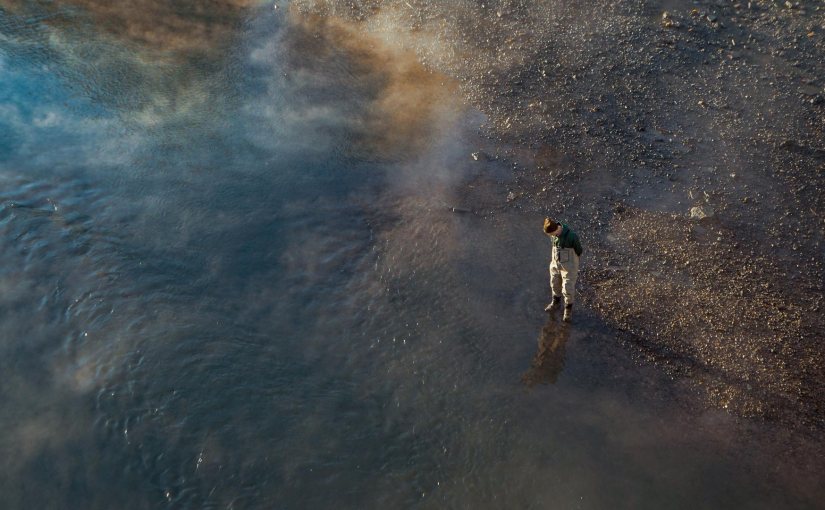
The lyrics are simple, but this water runs deep. As you’d expect from a spiritual, the reference is biblical. The rest of the song speaks of the children of Israel on the banks of the Jordan river, ready to cross into the promised land. In Joshua chapter 3, God tells the priests of Israel to carry the ark of the covenant, the symbol of his relationship with his people and presence with them, to the edge of the flooded river and stand in the water. They obeyed, and as soon as their feet got wet, God began to stop the flow of a mighty river and clear a path for his people to walk across on dry land.

Continue reading Wade In The Water

The Cry Of A Child

One of the most stunning realities in the Bible is that the God of the whole universe calls his people his children. Though we have all turned against him in sin, he not only stoops down to bring salvation (at great cost to himself), he goes much further—lifting those he saves to the heights of honour and privilege as the adopted members of his own family. He simply asks us to stop running away and come, like children running back into the arms of a loving father. As Paul says in Galatians 4:6, “And because you are sons, God has sent forth the Spirit of his Son into your hearts, crying, ‘Abba, Father.’” When Charles Spurgeon preached on this verse, he took time to focus on one word in particular: “crying”—a word that shows the intimacy and security of how the children of God relate to their Father. This is what he said:

Continue reading The Cry Of A Child

Hand-Crafted

A few months ago I was on a long flight over the ocean, and towards the end of it the airline attendants brought me a sandwich. When I looked closely at the plastic packaging I noticed that mine said it was “hand-crafted”, and that the bread was made using “authentic methods”. They must have passed out hundreds of “authentic” “hand-crafted” sandwiches that morning. I’m not really sure what those words mean exactly (what would an “inauthentic method” be?), but I know there’s part of me that does prefer to know that a human was involved in the process of making my food. Which is strange, to think of it—machines are pretty good at things, after all. With the right design and programming I’m sure they could be great at producing sandwiches. Probably better than a lot of people. I suppose the difference is that machines don’t care. A lot of people don’t care, either, but at least with a human there’s a chance. And that means something. It means so much, in fact, that the sandwich packaging said “hand-crafted”, not “machine perfected”. We like the thought of our lunch being made specially, with care, not just mindlessly mass-produced in a machine.

Continue reading Hand-Crafted