Our world today is flooded with so many options in so many areas of life, from relationships to work to how to spend weekends. In a climate like this, long-term commitments can feel like little more than limitations on our freedom to choose. Then again, what good are a thousand options if we never choose one? That’s what this poem is about:
Continue reading Commitment Is A BallCategory: Culture

Freedom
For my whole life I have lived in free societies, from growing up in America to now living in Ireland. In the long span of human history, and even in the world today, I know that I am in the minority to be able to live with this level of freedom. I also know that the freedoms I enjoy (and so often take for granted) did not come easily. Freedom is a gift, not a given. It is won and maintained only with effort and care. That’s what this poem is about:
Continue reading Freedom
A Thousand Words Are Worth A Picture
They say a picture is worth a thousand words, but as someone pointed out to me recently—can you draw a picture that effectively communicates that concept? Maybe you’re a good artist and you have an idea of how you could do that well, but I’ve never seen anyone try, and isn’t it interesting that the phrase always comes to us in words, not pictures? The whole point is that pictures are more powerful, but to make that powerful point we use words, not pictures.
Continue reading A Thousand Words Are Worth A Picture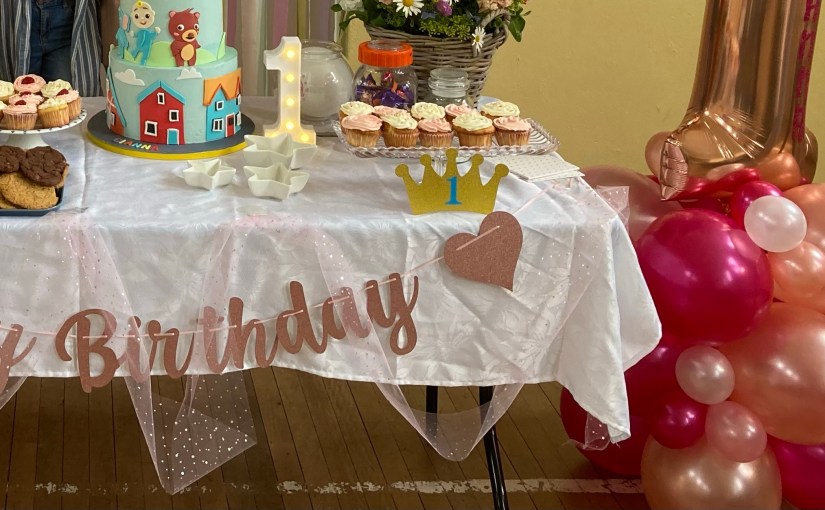
Life Is Precious
Last week our family attended the first birthday party of a little girl whose parents waited and longed and prayed for six long years, wondering if they would ever be able to have a child of their own. To say it was a joyful occasion is an understatement.
Also last week the Supreme Court of the United States reversed a decision from almost 50 years ago, finding that there is not actually a right to abortion in the US constitution, so individual states are free to legislate as they please on the issue. Some states have kept abortion legal, others have not. Some people rejoiced, others mourned. Some said the judgment was a gain for life, others that it was a loss for personal autonomy.
Continue reading Life Is Precious
Dress-Up Servants
There’s a house in Ireland, on the grounds of Cahir Castle, that is known as The Swiss Cottage. It has nothing at all to do with Switzerland, but the name sounds exotic and foreign and I’m pretty sure Switzerland doesn’t mind. It was actually designed by a famous English architect (who also designed parts of Buckingham Palace) for a powerful Irish Earl in the early 1800’s. It was made as a cottage orné, a style that imitated and idealised the homes of the poor, while still retaining the comforts of the wealthly. The Earl and his family and friends could escape from their large castle to the fanciful cottage for a picnic or party, and for a while pretend that they were like simple peasants, like the peasants who worked their large estates. They even went so far as to dress up for the part sometimes, or perhaps it’s more proper to say that they dressed down, into the clothes of the common people. Nearby, an underground tunnel meant that actual peasants could come and go from a hidden basement kitchen without being seen, until they were called upon to serve their masters, who were pretending to be like their own servants in the garden. Can you imagine being one of those servants, watching powerful lords and ladies playing dress-up in servant’s clothes, while still making you do all the actual work? If the walls of that underground kitchen could talk, I’d imagine they could repeat a few choice words. The Earl and his family may have dressed the same way as the servants, but there was still a big difference: the real servants served. The pretend servants didn’t.
Continue reading Dress-Up Servants
Don’t Measure Fashions By Their Age
I’m not quite over the hill yet, but in a lot of ways I’m already old-fashioned. I like old music and old manners and old standards for grammar, and I still don’t get the new trend of using emoji skulls in the place of laughing faces. More seriously, I don’t think that the modern trend of commitment-free relationships has been good for children. Or relationships.
On the other hand, there are some old fashions that I don’t like. I don’t like wearing neckties—who decided that tying a rope around your own neck was a good idea? I also don’t like old systems of religious rules that measure love for God by obedience to commands he never gave. And I don’t like being measured by my social connections or income level instead of the content of my character—an age-old fashion that is still circulating today. So I guess I’m not completely old-fashioned.
Continue reading Don’t Measure Fashions By Their Age
The Scenes They Leave Out
I don’t know who does the dishes at the Avengers HQ. I don’t know when they eat, or what. I’m also not sure how many bathrooms the Millennium Falcon has, but if I had to guess, it’s probably one small one with drain clogging issues and I bet Han Solo has to wait a long time for Chewbacca to wash his hair. I guess we’ll never know, though, because the movies don’t tell us. Those moments are too ordinary, and we like our movies packed with action. Even the documentaries and true life stories fast forward through most of the ordinary stuff of life, either ignoring it altogether or flashing back to highlights or giving us a few glimpses set to inspiring montage-music.
Continue reading The Scenes They Leave Out
What If I’m Not The Best At Anything?
I took a workplace assessment once to determine my strengths and weaknesses and find better ways to integrate them with the strengths and weaknesses of my teammates. When the results came back, there was one thing that stood out about my strengths, and that was that nothing stood out. There were a number of areas where I scored well enough, but nothing I was particularly good at, though I know myself there are definitely things I’m particularly bad at. The assessor hastened to reassure me that this can be an advantage. I’m a good all-arounder, passably good at a lot of things, even if I’m not excellent at any of them. That’s fine, and I see his point, but in that case I’d at least like to be an excellent all-arounder. Like the best all-arounder around, you know, if I can.
Continue reading What If I’m Not The Best At Anything?
The Mind Behind The Art
The mysterious Mona Lisa has been sitting on a secret (with a smile like hers it was obvious, wasn’t it?). But now, with the help of multispectral infrared reflectographic camera technology (whatever that means) researchers can see under her, and what they’ve discovered is that the famous lady actually began as a sketch—and here’s the thing—the original sketch was made somewhere else, because the lines were transferred to Lisa’s now priceless poplar panel by means of a technique known as spolvero.
Continue reading The Mind Behind The Art
John Newton’s Advice On Christian Controversy
Dear Sir,
As you are likely to be engaged in controversy, and your love of truth is joined with a natural warmth of temper, my friendship makes me solicitous on your behalf. You are of the strongest side; for truth is great, and must prevail…but I would have you more than a conqueror, and to triumph, not only over your adversary, but over yourself. If you cannot be vanquished, you may be wounded. To preserve you from such wounds as might give you cause of weeping over your conquests, I would present you with some considerations…
Continue reading John Newton’s Advice On Christian Controversy sethlewis.ie