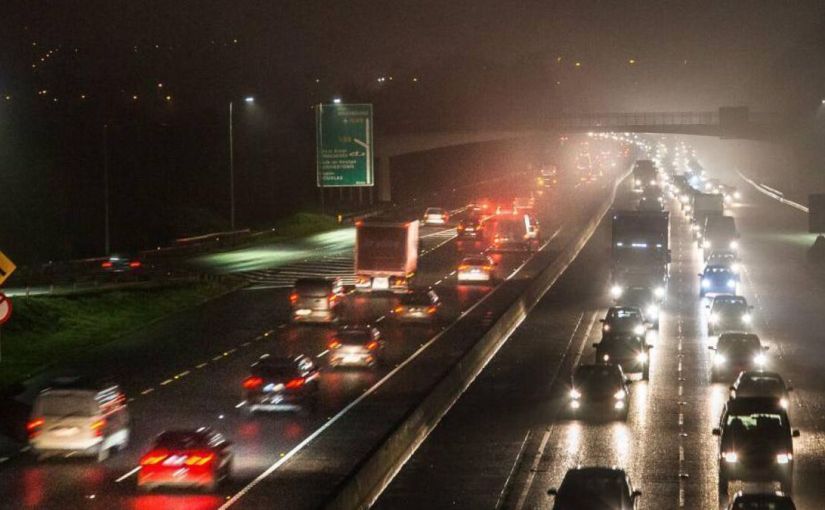
The area we live in is booming. The fields are growing houses, and there are rivers of tail lights flooding the little roads that used to flow freely. As I sat in the car, waiting again, I thought about how the people who lived here in generations past used to get around. It was walking, mostly, at the pace of people or animals, and even with the traffic my car is faster than that. On the other hand, I know that walking is healthier, and also when I walk I often bump into people I know and we might have a friendly chat—which isn’t possible when we only glimpse each other through passing windscreens. All of this got me thinking about a question I’d never considered before: what kind of transportation will we use in Heaven?
Continue reading Does Heaven Move More Slowly?Category: Culture

The Growing Power of Wilful Ignorance
She didn’t want to go to the dentist.
My friend already knew she had cavities, and she knew the dentist would want to do something about them. If she avoided seeing him, she could ignore the problem a little longer. It’s easy to ignore a cavity if the tooth is still functioning. Drills and fillings feel drastic when it’s entirely possible to carry on as normal with no intervention at all. The easiest way to deal with a little bit of decay is to apply a little bit of wilful ignorance to it. The trouble, of course, is that wilful ignorance is not an effective treatment for cavities. It only gives them time to grow. And as the decay grows, the wilful ignorance will have to grow with it. To keep a growing problem out of our minds, we must continually increase the capacity of our tolerance for it, slowly expanding the diameter of our blind spots to fit over its ugly edges.
Continue reading The Growing Power of Wilful Ignorance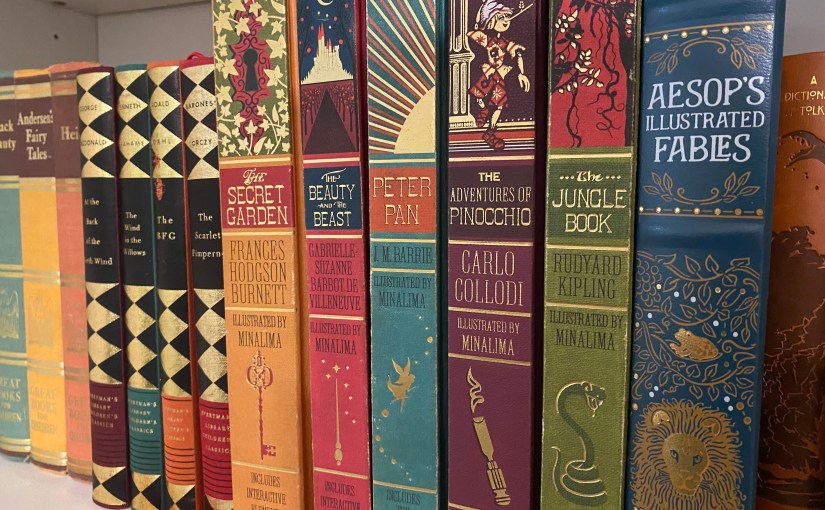
A Thousand Lives (a poem)
Here’s a poem to compliment my previous post, A Treasure Chest for Thoughts
I have often wandered in
The Hundred Acre Wood
If you’ve never been to Neverland
I’ll tell you that you could
But mind yourself—
There’s pirates there
And don’t trust Long John Silver
You need a bear like ol’ Baloo,
The jungle-wisdom giver
I’ve been in boats with Rat and Mole
And Huckleberry Finn
And for a time the Pevensies
Were pretty much my kin
I cried when Old Dan died and I
Rejoiced when Gandalf was revived
And I have lived a thousand lives
While sitting by the bookshelf

The Other Side Of Human Rights
Some of the most common language in cultural and political debate these days (besides comparing people to Nazis) is the language of rights. In the Enlightenment era, philosophers began to lay a particular emphasis on the idea that humans have natural rights, and this concept has driven social change ever since. The idea was not invented by the philosophers, it was only rediscovered. It was already built in to the Christian foundations of their civilisation. As the U.S. Declaration Of Independence put it, “We hold these truths to be self-evident, that all men are created equal, that they are endowed by their Creator with certain unalienable rights”.
Our ancestors’ emphasis on rights was a new and necessary correction to a social order that was terribly out of balance. Their culture needed to remember that every human is valuable beyond calculating because every human is made in the image of God himself, and because of this, every human has a right to be treated with respect and fairness by their fellow humans. We, the children of our enlightened forebearers, no longer find concepts like equality and fairness difficult to accept. These values are no longer revolutionary. They are the basic assumptions we grow up with. But I’m afraid our emphasis on rights has led us to a different kind of imbalance.
Continue reading The Other Side Of Human Rights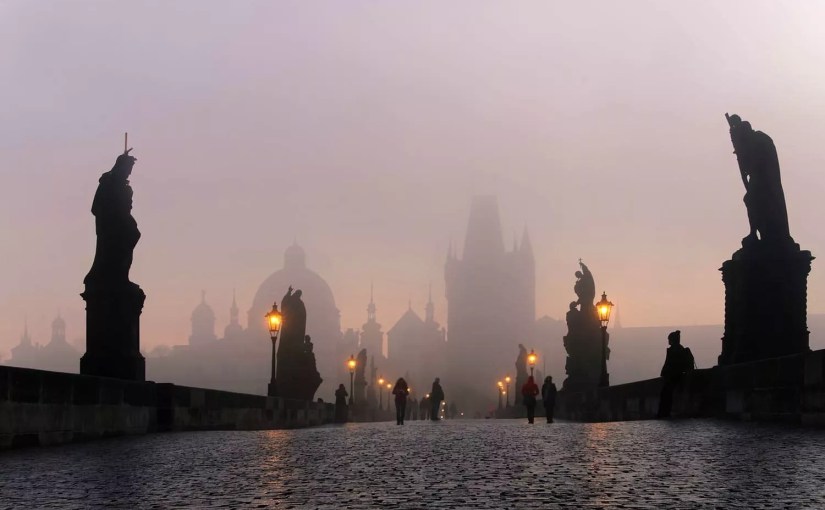
A Bridge Through Time (a poem)
This poem is inspired by a man I once saw on Charles Bridge in Prague.
Continue reading A Bridge Through Time (a poem)
The Never-Ending Novelty Of Staying With The Same Person
Love songs will never go out of fashion. But have you noticed that most love songs are limited to the very first stages of love? They’re almost always about two specific topics: either the excitement of meeting someone new, or the sadness of breaking up. It’s rare to hear love songs that focus on love in the decades after the “I do’s”. They’re out there, certainly, but they don’t make the top twenty lists.
It makes sense—by sheer numbers, there are a lot more relationships that start and end than relationships that go the distance. Perhaps the excitement of meeting someone new seems more interesting than the settled daily living of established relationships. There’s an appearance of novelty to it, except that when every song on the radio is about the same kind of novelty it doesn’t quite feel as novel anymore, does it?
Continue reading The Never-Ending Novelty Of Staying With The Same Person
Why I Will Never Use AI For Writing
You will never read an AI generated word on this blog or in anything I write. Not in a sermon. Not in a book. Not even in an email. I claim each and every word and sentence, every comma and dash—I am fond of dashes—and every careless error as entirely my own. I know AI is becoming a popular tool for writers. I know AI can do in a heartbeat what can sometimes take me hours of work (although I comfort myself that at least I have a heart to beat in those hours). I’ll take the time. There are more important things than efficiency, and the brain is a muscle. The labour of collecting thoughts, choosing words, and cementing them into sentences keeps my mind strong, engaged, and growing. I dare not relinquish it. I know that AI is good, and getting better every day, at mimicking human logic, emotion, and eloquence. I understand fully that it is progressing far more quickly than I am. It could easily outpace me, and in some ways I’m sure it already has, at being interesting, informed, persuasive, and inspiring—but it can never outpace me at being me.
Continue reading Why I Will Never Use AI For Writing
Life Is Not For The Faint Of Heart (But God Is)
I feel the sunlight streaming through the windows onto my skin, yet somehow the world still seems dark and cold. The headlines this week have fallen on me like long shadows, cast by the unrelenting clouds of hatred, violence, death, and evil, and in this chilly climate my heart responds with dismay. We like to think we’ve progressed beyond our ancestors, but when I see ordinary people dancing and celebrating the death of someone they merely disagreed with, I despair. How can we ever move forward like this? When the answer to open debate is a bullet, we’re all finished. Meanwhile, wars, atrocities, and injustices continue unchecked around the world, many of which we barely hear about. Even if we did, we wouldn’t have the capacity to track them all. There are too many.
Continue reading Life Is Not For The Faint Of Heart (But God Is)
In The Internet, But Not Of It
We went on a foreign holiday this summer and amidst all the uniqueness and differences, I noticed one thing that was all too familiar: we still had to dodge people who were too busy looking at their phones to notice where they were walking. I rolled my eyes at them, but then I remembered that one of the first things I looked for in our airbnb was the wifi password. Like it or not, the internet is ubiquitous, and even when we’re not using it our minds can easily turn to the things we’ve seen there, or the things we might post later. This is the way our world works now. But that doesn’t mean we should simply accept the internet’s new role in our lives without thought, or blindly take it on its own terms. There are still decisions to be made, and they are not insignificant. One of the biggest choices is where we will build our lives.
Continue reading In The Internet, But Not Of It
Means With No Ends
I’ve only reached middle age, but I’ve already lived to see the world remade by the introduction of personal computers and then remade again as we brought the power of the internet into our pockets with smartphones. It’s now obvious that another transformation is underway in the development of AI. As it was in the early days of other technologies, no one knows exactly what AI will mean for us long-term, but no one can deny that our world and our lives are changing fast. Humanity is always grasping for more power and control over everything we see and touch, developing new and better tools for ourselves, and we’ve been quite successful: no generation has ever had tools as powerful as the ones we wield today. This sounds like it ought to be good news, but most of us aren’t so sure. Humanity doesn’t have a great track record in using our tools well. I came across an observation recently that cuts through our progress to one of our biggest underlying problems:
“The first great fact which emerges from our civilisation is that today everything has become “means.” There is no longer an “end”; we do not know wither we are going. We have forgotten our collective ends, and we possess great means: we set huge machines in motion in order to arrive nowhere.” – Jacue Sellul
Continue reading Means With No Ends sethlewis.ie