You will never read an AI generated word on this blog or in anything I write. Not in a sermon. Not in a book. Not even in an email. I claim each and every word and sentence, every comma and dash—I am fond of dashes—and every careless error as entirely my own. I know AI is becoming a popular tool for writers. I know AI can do in a heartbeat what can sometimes take me hours of work (although I comfort myself that at least I have a heart to beat in those hours). I’ll take the time. There are more important things than efficiency, and the brain is a muscle. The labour of collecting thoughts, choosing words, and cementing them into sentences keeps my mind strong, engaged, and growing. I dare not relinquish it. I know that AI is good, and getting better every day, at mimicking human logic, emotion, and eloquence. I understand fully that it is progressing far more quickly than I am. It could easily outpace me, and in some ways I’m sure it already has, at being interesting, informed, persuasive, and inspiring—but it can never outpace me at being me.
Continue reading Why I Will Never Use AI For WritingTag: people
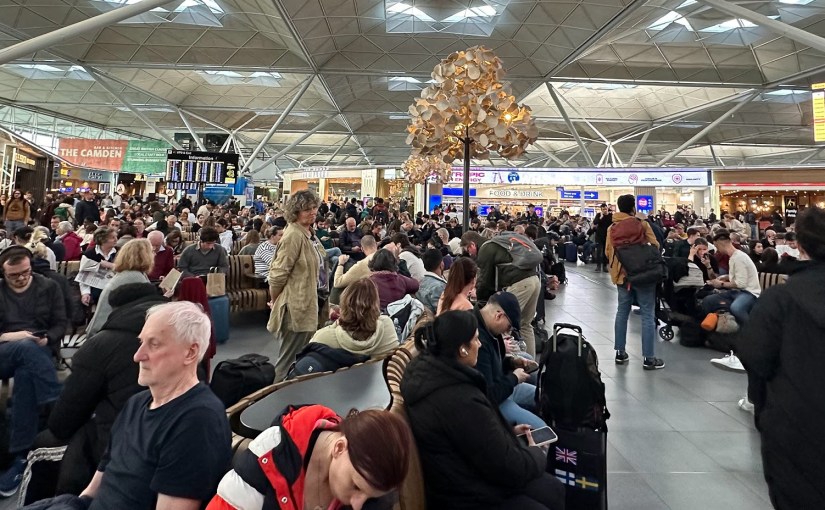
Layover At Stansted (a poem)
I hear English and Italian
And (I think)
a bit of French
As I’m sitting (one more stranger)
In the airport
On a bench
This assembly
Of the transient
People moving (yet we’re still)
Thrown together
For a moment
With a layover to fill
This collection
Of humanity—
The tired
Sad
Excited
Proves that
Being in proximity
Is not the same at all
As being in community
I’m glad I’m going home
A Thousand Miles, And A Poem
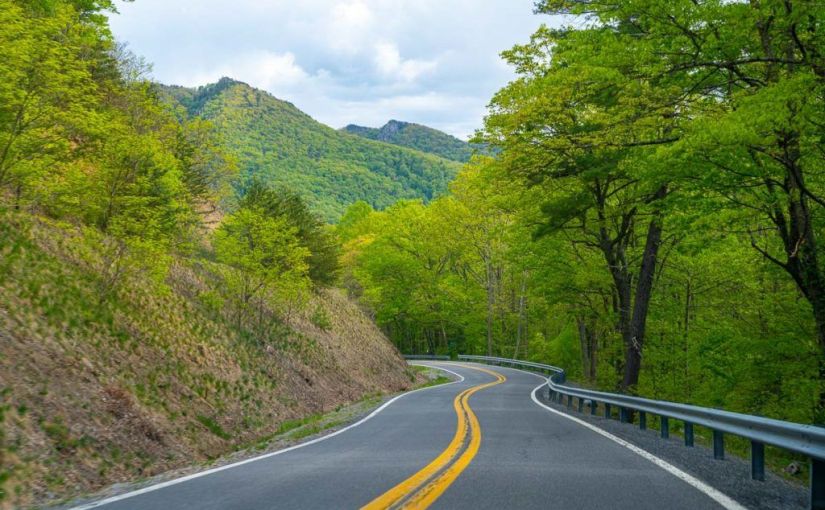
This summer I’ve driven well over a thousand miles across the southern states of America. I’m thankful for good air-conditioning, good music, good company (my family), and Chick-Fil-A. I like driving, which certainly helps, even if I have to think hard to get in the car on the side that has the steering wheel, after living in Ireland so long. We’ve been down highways through forests that seem to never end and we’ve been down country roads through corn and cotton and tobacco fields that grow outside of small towns where people sell fresh peaches and watermelons from roadside stands. Every few minutes there’s another white steeple on another red-brick church. One of them was just letting out from some kind of event, and the people were leaving with take-away boxes of food which was probably fried chicken and green beans and devilled eggs or some excellent kind of pie. I would have liked to pull in but it would have been strange for us to arrive at the end as total strangers. I don’t even know what town we were in, because I don’t have to keep track of that kind of information anymore thanks to the sat-nav. I just follow the blue line, keep an eye on how much fuel I have, and enjoy the view. Eventually, we get where we’re going.
Continue reading A Thousand Miles, And A Poem
A Curious Mind
Have you ever wondered about your ability to wonder about things? It’s a wonderful gift, when you think about it. It’s the ability that has unlocked most of our discoveries, because the most fertile ground for discovery is always a curious mind. I’m sure you can learn things without being curious—some lessons will slap you in the face whether you ask them to or not—but there’s no question you’ll learn a lot more if you start with questions. Isn’t our entire scientific method just a systematic series of questions? Without curiosity, the whole world fades into nothing more than a boring necessity, the people around us flatten down into a procession of stereotypes, and God himself starts to look like some kind of tired trope or taskmaster. Without curiosity, life goes stale. Tasteless.
Continue reading A Curious Mind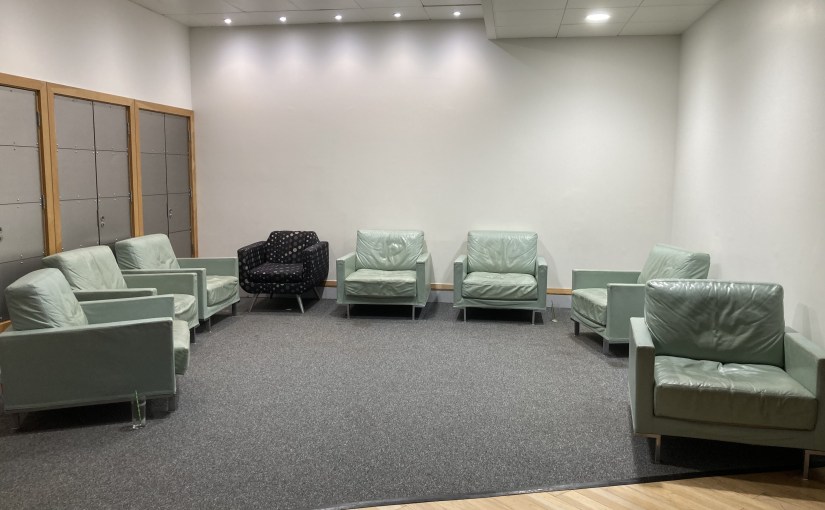
To Welcome A Stain (a poem)
I had more than an hour to wait for my flight, so I was happy when I found a corner with armchairs in Manchester airport. The seats were comfortable, but after I sat down I noticed that they were at least as tired as I was. The colour was faded, the edges were dirty, and there was a stain on the armrest.
How long have those chairs been there, in that corner? How many strangers have they welcomed and provided comfort for? Over time, it has made them tired and stained, and I understand that. People can be hard to hold up. Messy. But the chairs are still there, still welcoming new travellers anyway. My hour in one of them reminded me that it’s better to wear out by accepting stains than collecting dust. That’s what this poem is about:
Continue reading To Welcome A Stain (a poem)
The Same Person In Every Room
I was sitting in a meeting this week when a thought randomly crossed my mind about how odd it would be if I had come in wearing the clothes I had on earlier that same day, when I went to swim laps at the pool. My goggles and togs didn’t raise any eyebrows at the pool, but they would have at the meeting. And if I had shown up at the pool with my meeting clothes on, that would have drawn a bit of attention, as well.
Continue reading The Same Person In Every Room
Stop Looking For Friends, And Start Making Them
The treasure of true friendship is some of the richest, most valuable wealth in the whole world. If financial poverty eventually makes life unsustainable, friendship poverty makes it unbearable. By true friendship, of course, I don’t just mean acquaintances you enjoy a laugh with every once in a while, or online “friends” you can share pictures of your dinners with. I mean the real thing. The deep thing. The close thing. The uninhibited, understanding, unhurried and unbreakable thing. I mean the people who stick even when other people let go, the people who love you even after you’ve done wrong—and too much to let you get away with it. I mean the people who laugh with you about stupid inside jokes and cry with you about losses and disappointments and who know exactly what you’re thinking just by the faces you make. I mean the people you can trust enough to share life with—not just the social media highlight reel life, but the really real life, in all the mess and joy and shame of it. Friendships like these are more valuable than Blackbeard’s buried treasure (which is still buried, by the way). If we discovered his treasure hoard without ever developing true friendships, our lives would still be impoverished. Which raises the question: how do we find the treasure of true friendship?
Continue reading Stop Looking For Friends, And Start Making Them
How Satellites Changed How I See The World
I grew up on the edge of a new world. I was the first of my friend group to own a mobile phone—an indestructible Nokia that could call and text, but I didn’t use it to text because that was expensive and who would I text anyway? No internet. No satellite navigation system.
I was 16. My parents gave me the phone because we lived in the country and I had just gotten plastic proof of my adulthood: a full driver’s licence. I drove our little Toyota pickup truck with a tape deck that was so old the tapes would play faster or slower according to the engine rpms—so the tempo of the music changed every time I changed gears. It was hilarious. And really annoying. That truck was mostly reliable, but only mostly. I remember it breaking down on top of a mountain and how thankful I was that I could just barely coast into the driveway of the first house after miles of forest. I didn’t know the people there, but they helped me. I couldn’t always depend on the car, or the phone signal, so I had to depend on strangers. Gradually, as the cellular towers sprang up and the satellite networks became more reliable, our family breakdown stories changed. Helpful strangers began to feature less often in them.
Continue reading How Satellites Changed How I See The World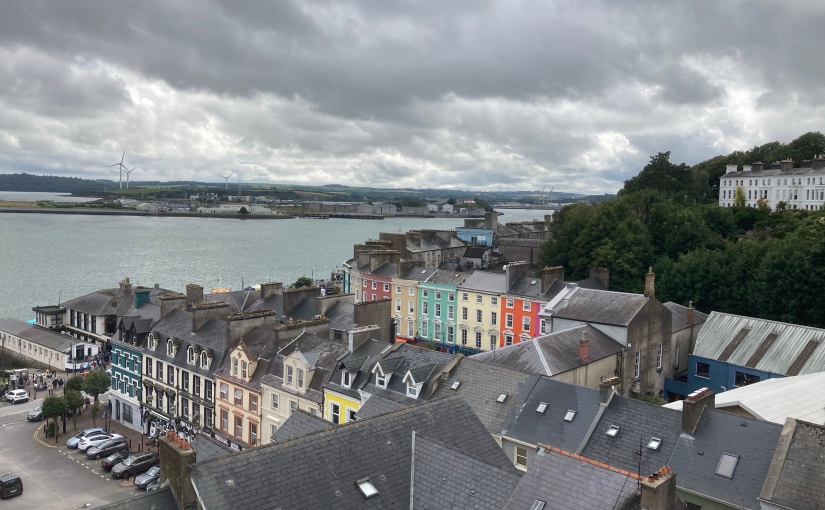
Looking Out For Number Two
“Look out for Number One” they say, “if you don’t, no one else will.”
Actually, it wasn’t some generic “they” who said this first, it was Arnold “The Brain” Rothstein. He was boss of the Jewish mob in New York City during the Prohibition era, so I guess you could say he lived it out, too. He certainly took care of himself. He probably took care of a lot of other people as well, if you know what I mean.
Maybe the quote is too vague. There are just so many ways of “looking out” for yourself. Thankfully, most people don’t do it by becoming kingpins. But we still take the kingpin’s advice: Look out for number one. Follow your own bliss. Take care of your own self. After all, The Brain’s logic seems bullet-proof: “if you don’t, no one else will.” Isn’t that how the world works?
Continue reading Looking Out For Number Two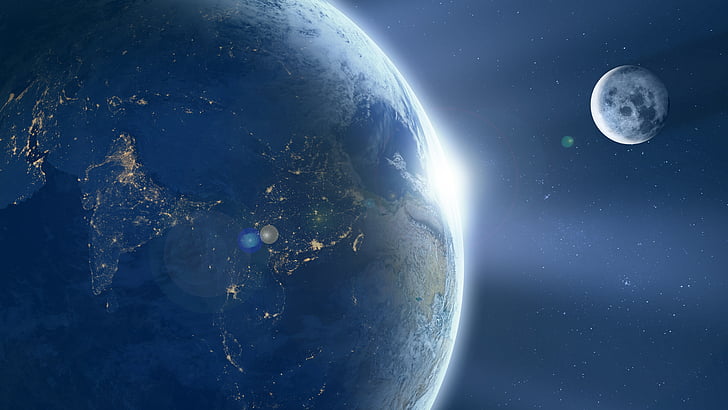
Shooting For The Earth
Shoot for the moon, they say, and even if you miss, you’ll land among the stars.
I‘m not so sure. I’m not denying it would be a thrill to take a walk on the moon, but I wouldn’t want to live there. I guess I like oxygen too much, and trees and water and birds. And I have absolutely no interest in landing among the stars, either. Do you know how hot those things are?
I know, I know, it’s metaphorical. No one wants to land on a literal star, they’d just like to be a star, or at least hang out with them in their exclusive clubs and private yachts. The saying just means dream big, have ambitions, and what’s wrong with that? Nothing.
It would definitely be a thrill to take a walk on the moon, or even on a red carpet, but I’d rather not live in either of those rarified atmospheres. I’m happy down here on Earth where I don’t have to breathe all that pressurised air. That’s why I’m not building a rocket. I’m tending a garden.
Continue reading Shooting For The Earth sethlewis.ie