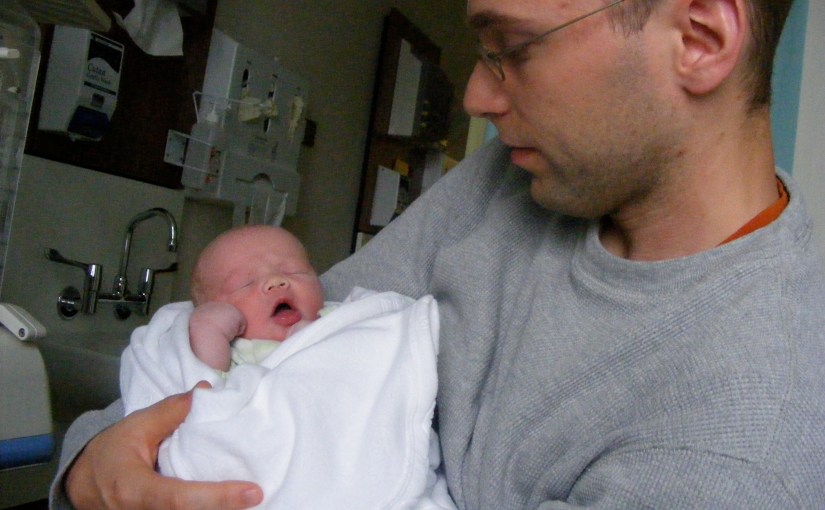
The moment I met our first child, everything changed. It happened as quickly as a heart can beat, with a force that took my breath away—my eyes and my heart were suddenly opened to understand love in an entirely new way. I had heard about the love of parents for their children. I had experienced it from the other end, as the child of truly wonderful parents. But none of this prepared me for how it feels when your hearts bursts with absolute, unconditional, unfathomable love for a human you don’t even know, who can’t respond, and whose needs never seem to end—and none of that matters at all.
Continue reading Learning by ExperienceTag: love

The Never-Ending Novelty Of Staying With The Same Person
Love songs will never go out of fashion. But have you noticed that most love songs are limited to the very first stages of love? They’re almost always about two specific topics: either the excitement of meeting someone new, or the sadness of breaking up. It’s rare to hear love songs that focus on love in the decades after the “I do’s”. They’re out there, certainly, but they don’t make the top twenty lists.
It makes sense—by sheer numbers, there are a lot more relationships that start and end than relationships that go the distance. Perhaps the excitement of meeting someone new seems more interesting than the settled daily living of established relationships. There’s an appearance of novelty to it, except that when every song on the radio is about the same kind of novelty it doesn’t quite feel as novel anymore, does it?
Continue reading The Never-Ending Novelty Of Staying With The Same Person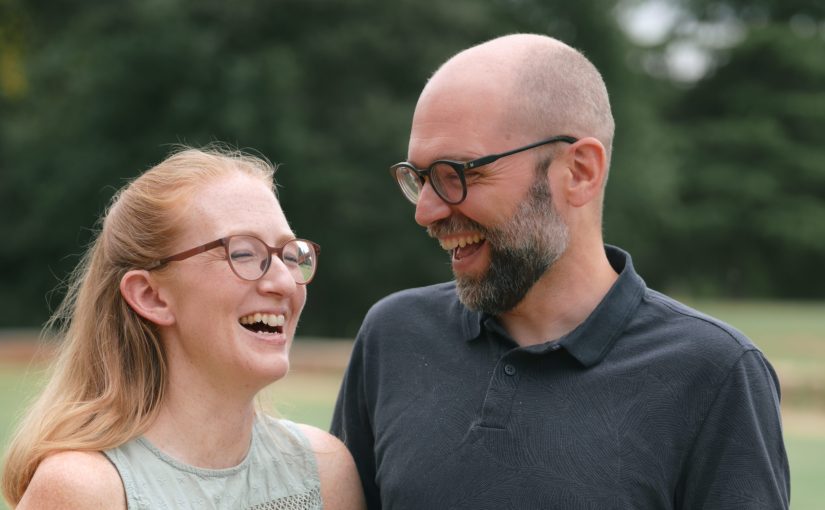
Threads (a poem)
It was the middle of September when Jessica and I went on our first date, while we were in university. That was twenty-three years ago, and ever since our lives have been woven together in too many ways to count. That’s what this poem is about:
Continue reading Threads (a poem)

A Time To Be Tired
In Ecclesiastes 3, Solomon famously says that “There is a time for everything, and a season for every activity under the heavens”. For example, he says that there is “a time to be born and a time to die, a time to plant and a time to uproot”, there is “a time to weep and a time to laugh, a time to mourn and a time to dance”, and the list goes on. It’s a long list, but it isn’t exhaustive, and I’d like to propose another pair that fits the theme:
There is a time to save your strength, and a time to spend it.
Continue reading A Time To Be Tired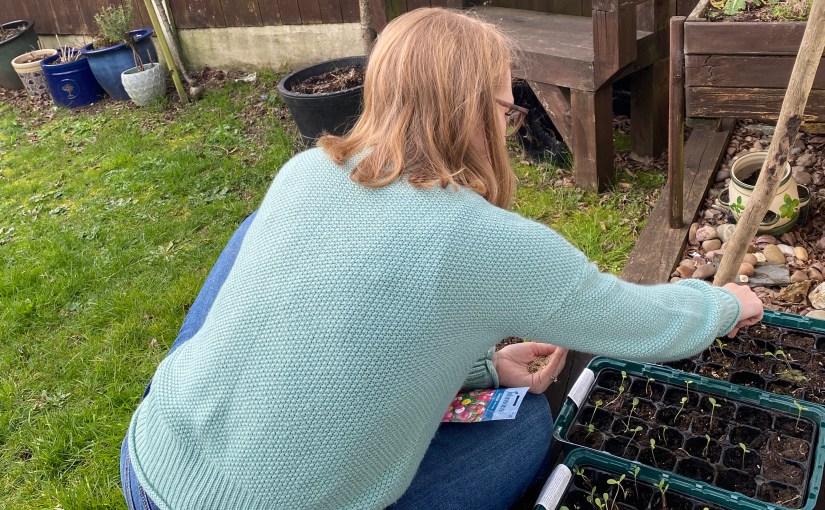
The Gardener
When we moved in to our house, the garden was undeveloped. It was a small patch of grass, with a shed. And those things are still there, but they’ve been joined now by a row of roses at the back, with jasmine and passion flowers growing against the wall. Blueberry bushes bloom on one side, with strawberries and grapes beside them. On the other side is an apple tree, a plum tree, and a collection of pots growing a collection of colourful flowers that Jessica cuts and gives away or brings inside for us to enjoy. This year, we’re expanding our window boxes to hold even more flowers. As I write today there are rows of seedlings on the back stoop, reaching up and acclimatising, being prepared for planting—because none of this growth happens overnight. We’ve lived here seven years now, and the progress has been slow. It is measured in months and seasons and years, not hours and days. It was my wife, Jessica, who saw what our undeveloped little plot could become and patiently worked over the years to bring that vision to life. As I go outside to look at the buds forming and opening this spring, I see the fruit of her careful attention and I rise up and bless her for bringing such abundance and beauty to our home.
Continue reading The Gardener
A Wide Place
As the youngest of four children, I was always the last to experience the privileges that came with growing up. I remember one year waiting impatiently for my birthday—the day I would finally be allowed to have my very own pocketknife. I wanted it right away. I wanted to carve sticks and notch arrows like my older brother could. But my parents were very strict: I had to be old enough, and I also had to be trained through Scouts in how to use knives properly and safely. I knew that my pocketknife privileges would be revoked the first time I failed to abide by the safety rules I learned. I didn’t fully understand why my parents were so serious about these regulations until my neighbour cut his thumb with a pocketknife badly enough to need stitches. After that, I saw the wisdom of my parent’s rules more clearly. Their strictness was protecting me and freeing me to enjoy the benefits of my pocketknife without being hurt by it. I saw that their commands were actually an expression of their love for me.
Continue reading A Wide Place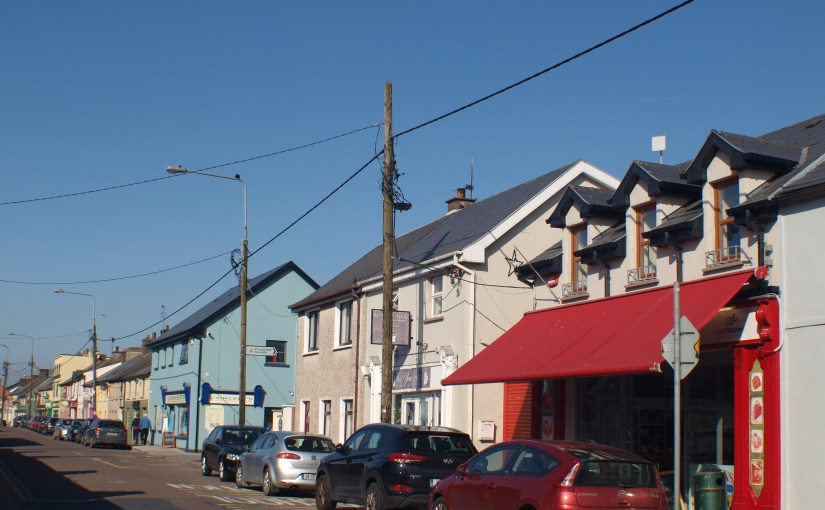
What Makes Our Town (Or Any Place) Great
What makes a town or a city a great place to live? There are many factors, of course, from cost of living to amenities and natural beauty and so on, but there is one factor that surpasses them all. This was pointed out to me by a man who has been dead for some time, G.K. Chesterton. He wrote about what makes cities great in his often surprising and famously thought-provoking testimonial work, Orthodoxy. Using Pimlico as an example—a village in central London which must have been dire in Chesterton’s time—he says:
“Let us suppose we are confronted with a desperate thing—say Pimlico…. It is not enough for a man to disapprove of Pimlico: in that case he will merely cut his throat or move to Chelsea. Nor, certainly, is it enough for a man to approve of Pimlico: for then it will remain Pimlico, which would be awful. The only way out of it seems to be for somebody to love Pimlico: to love it with a transcendental tie and without any earthly reason. If there arose a man who loved Pimlico, then Pimlico would rise into ivory towers and golden pinnacles; Pimlico would attire herself as a woman does when she is loved… If men loved Pimlico as mothers love children, arbitrarily, because it is theirs, Pimlico in a year or two might be fairer than Florence. Some readers will say that this is a mere fantasy. I answer that this is the actual history of mankind. This, as a fact, is how cities did grow great… Men did not love Rome because she was great. She was great because they had loved her.”
Continue reading What Makes Our Town (Or Any Place) Great
Tree House (a poem)
Tomorrow, my wife Jessica and I celebrate twenty years of marriage. Two decades sounds like a lot to me, but—doesn’t everyone say this?—it seems like it’s gone quickly. When we first got married, I wrote a poem for Jessica about how our love was in Spring, and I didn’t know what seasons would come, but with God’s help we would keep growing through them all. Twenty years—and many different seasons—later we’ve made our home in this growing love. That’s what this poem is about:
Continue reading Tree House (a poem)
Patrick Loved Ireland Before Ireland Loved Patrick
On the 17th of March, people around the world will celebrate Ireland’s national holiday, St. Patrick’s Day. Is there any other national holiday in the world that is celebrated as internationally as Ireland’s? It is truly unique. So as the bunting goes up and the landmarks turn green and the parades are organised, it’s worth remembering the man who inspired this global celebration.
Like the holiday named after him, Patrick’s life was truly unique. He did not consider himself a great man, and would likely be uncomfortable with the extravagance of the yearly honours we bestow on him. In his autobiography, he calls himself “a simple country person, a refugee, and unlearned.” The reason he calls himself a “refugee” is because his connection with Ireland, which is how everyone remembers him today, only began when he was sixteen—and it wasn’t a good start at all. The first Irish people that Patrick met were the people who raided his hometown (probably in Wales) and carried off thousands of prisoners—including Patrick—to be sold into slavery in Ireland. Our patron saint’s first sighting of Ireland’s beautiful shores came while he was in the chains of human traffickers. In Ireland, Patrick tells us that he was “brought low by hunger and nakedness daily.” His slavery continued until he was twenty-two years old. This is not the part of the story we celebrate on March 17th.
Continue reading Patrick Loved Ireland Before Ireland Loved Patrick
On The Origin Of Humanity’s Superpower
I originally wrote this post in 2018, and I’m reposting it today because it’s Valentine’s Day—a very good day to think about where our shared superpower comes from.
“You’d think that people would have had enough of silly love songs
But I look around me and I see it isn’t so
Some people wanna fill the world with silly love songs
And what’s wrong with that?”
So sang Sir Paul McCartney, and all it takes is a few minutes listening to the radio to prove him right. Same goes for silly rom-coms and royal weddings. For some reason, we humans get a bit silly over love. No matter how scientific our philosophy or cold and calculated our theory of existence, there’s nearly always someone in our lives who holds a mysterious power to break through our rigid shell into the gooey centre of our humanity where love is the unrivalled (and often unruly) ruler.
Continue reading On The Origin Of Humanity’s Superpower sethlewis.ie