What Makes Our Town (Or Any Place) Great

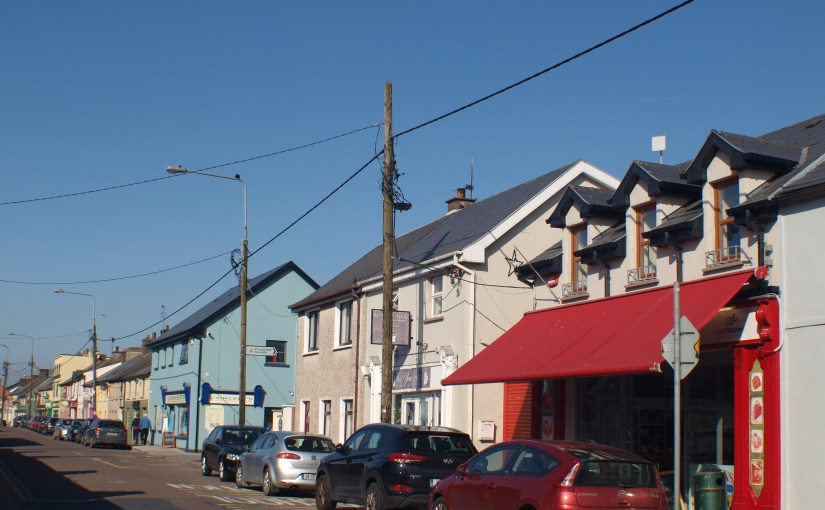
What makes a town or a city a great place to live? There are many factors, of course, from cost of living to amenities and natural beauty and so on, but there is one factor that surpasses them all. This was pointed out to me by a man who has been dead for some time, G.K. Chesterton. He wrote about what makes cities great in his often surprising and famously thought-provoking testimonial work, Orthodoxy. Using Pimlico as an example—a village in central London which must have been dire in Chesterton’s time—he says:

“Let us suppose we are confronted with a desperate thing—say Pimlico…. It is not enough for a man to disapprove of Pimlico: in that case he will merely cut his throat or move to Chelsea. Nor, certainly, is it enough for a man to approve of Pimlico: for then it will remain Pimlico, which would be awful. The only way out of it seems to be for somebody to love Pimlico: to love it with a transcendental tie and without any earthly reason. If there arose a man who loved Pimlico, then Pimlico would rise into ivory towers and golden pinnacles; Pimlico would attire herself as a woman does when she is loved… If men loved Pimlico as mothers love children, arbitrarily, because it is theirs, Pimlico in a year or two might be fairer than Florence. Some readers will say that this is a mere fantasy. I answer that this is the actual history of mankind. This, as a fact, is how cities did grow great… Men did not love Rome because she was great. She was great because they had loved her.”

Continue reading What Makes Our Town (Or Any Place) Great
Tree House (a poem)

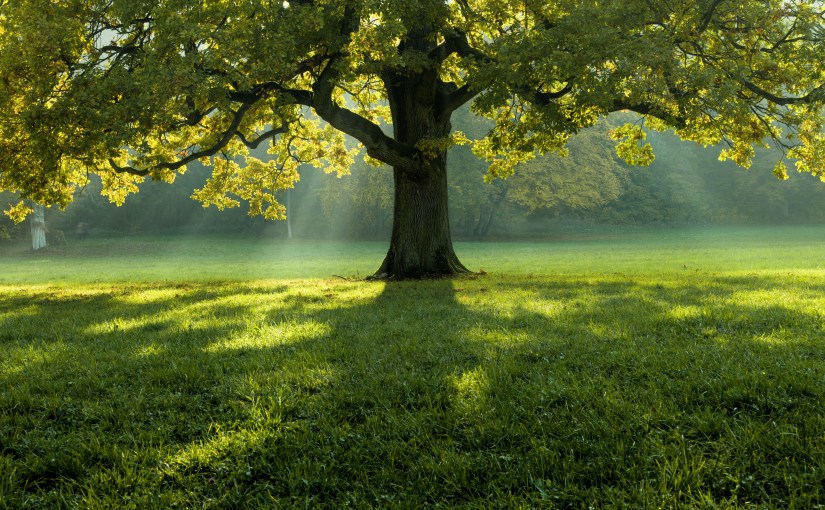
Tomorrow, my wife Jessica and I celebrate twenty years of marriage. Two decades sounds like a lot to me, but—doesn’t everyone say this?—it seems like it’s gone quickly. When we first got married, I wrote a poem for Jessica about how our love was in Spring, and I didn’t know what seasons would come, but with God’s help we would keep growing through them all. Twenty years—and many different seasons—later we’ve made our home in this growing love. That’s what this poem is about:

Continue reading Tree House (a poem)

Patrick Loved Ireland Before Ireland Loved Patrick

On the 17th of March, people around the world will celebrate Ireland’s national holiday, St. Patrick’s Day. Is there any other national holiday in the world that is celebrated as internationally as Ireland’s? It is truly unique. So as the bunting goes up and the landmarks turn green and the parades are organised, it’s worth remembering the man who inspired this global celebration. 

Like the holiday named after him, Patrick’s life was truly unique. He did not consider himself a great man, and would likely be uncomfortable with the extravagance of the yearly honours we bestow on him. In his autobiography, he calls himself “a simple country person, a refugee, and unlearned.” The reason he calls himself a “refugee” is because his connection with Ireland, which is how everyone remembers him today, only began when he was sixteen—and it wasn’t a good start at all. The first Irish people that Patrick met were the people who raided his hometown (probably in Wales) and carried off thousands of prisoners—including Patrick—to be sold into slavery in Ireland. Our patron saint’s first sighting of Ireland’s beautiful shores came while he was in the chains of human traffickers. In Ireland, Patrick tells us that he was “brought low by hunger and nakedness daily.” His slavery continued until he was twenty-two years old. This is not the part of the story we celebrate on March 17th.

Continue reading Patrick Loved Ireland Before Ireland Loved Patrick

On The Origin Of Humanity’s Superpower

I originally wrote this post in 2018, and I’m reposting it today because it’s Valentine’s Day—a very good day to think about where our shared superpower comes from.


“You’d think that people would have had enough of silly love songs
But I look around me and I see it isn’t so
Some people wanna fill the world with silly love songs
And what’s wrong with that?”

So sang Sir Paul McCartney, and all it takes is a few minutes listening to the radio to prove him right. Same goes for silly rom-coms and royal weddings. For some reason, we humans get a bit silly over love. No matter how scientific our philosophy or cold and calculated our theory of existence, there’s nearly always someone in our lives who holds a mysterious power to break through our rigid shell into the gooey centre of our humanity where love is the unrivalled (and often unruly) ruler.

Continue reading On The Origin Of Humanity’s Superpower

The Wise Man Is In Town

The wise man, with his flowing white beard, sits alone on top of a high mountain. The air is crisp and clear and the view is stunning, but he doesn’t see it. His eyes are closed in peaceful meditation. Nothing disturbs his solitude until the sound of footsteps announces the arrival of a wisdom-seeker. The sage remains seated, relaxed, as enigmatic (but deeply profound) answers fall slowly from his lips. As the footsteps of the now-satisfied (though slightly confused) intruder once again fade into the distance, the wise man resumes his silent reflection as if nothing had interrupted him.

Continue reading The Wise Man Is In Town

Love Is A Skill

Love is a big deal. People talk about it all the time—usually romantic love these days, but the broader concept of love for others in general gets plenty of airtime as well. We seem to agree that love is fundamental to what it means to live well as a human. It’s part of who we are, built in to the human heart. Which is exactly right: love is the image of God shining out, crying out to the world around us that the something or someone we love is worthy of valuing and treasuring. In that sense, love is natural. It is one of the deepest realities of who we are, of who God made us to be.

Then again, anyone who has tried very hard to love other people well will know that love doesn’t always feel very natural. A lot of times it feels more like hard work. “Love your neighbour as yourself” sounds straightforward—until your neighbour hurts you. Ignores you. Uses you for their own purposes. Belittles. Betrays. And I’m supposed to love them?? I’d rather do unto them as they did unto me. They don’t deserve my love.

Continue reading Love Is A Skill

Quotes I Can’t Forget

Words are powerful. They can communicate ideas, and ideas can change everything. Every once in a while someone captures a profound idea so well with their words that it hits my brain hard enough to stick and it won’t let go so it ends up becoming part of me. This week I want to share with you a few quotes that have become part of me. The hard part was picking just a few, so you’re likely to see this kind of post again in the future. Here they are:

Continue reading Quotes I Can’t Forget

The Cry Of A Child

One of the most stunning realities in the Bible is that the God of the whole universe calls his people his children. Though we have all turned against him in sin, he not only stoops down to bring salvation (at great cost to himself), he goes much further—lifting those he saves to the heights of honour and privilege as the adopted members of his own family. He simply asks us to stop running away and come, like children running back into the arms of a loving father. As Paul says in Galatians 4:6, “And because you are sons, God has sent forth the Spirit of his Son into your hearts, crying, ‘Abba, Father.’” When Charles Spurgeon preached on this verse, he took time to focus on one word in particular: “crying”—a word that shows the intimacy and security of how the children of God relate to their Father. This is what he said:

Continue reading The Cry Of A Child

A Living Poem

One of the reasons I love poetry is because of the power it has to make ordinary language come alive in new and different ways. But of course, when I say “come alive” that’s only a poetic phrase—I don’t actually mean that poems could ever really live. Or could they?

Continue reading A Living Poem