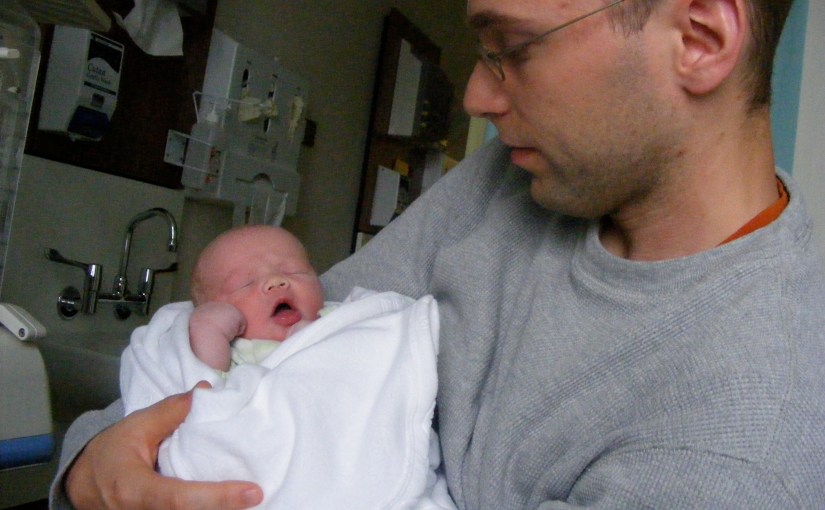
The moment I met our first child, everything changed. It happened as quickly as a heart can beat, with a force that took my breath away—my eyes and my heart were suddenly opened to understand love in an entirely new way. I had heard about the love of parents for their children. I had experienced it from the other end, as the child of truly wonderful parents. But none of this prepared me for how it feels when your hearts bursts with absolute, unconditional, unfathomable love for a human you don’t even know, who can’t respond, and whose needs never seem to end—and none of that matters at all.
Continue reading Learning by ExperienceTag: learning

A Bridge Through Time (a poem)
This poem is inspired by a man I once saw on Charles Bridge in Prague.
Continue reading A Bridge Through Time (a poem)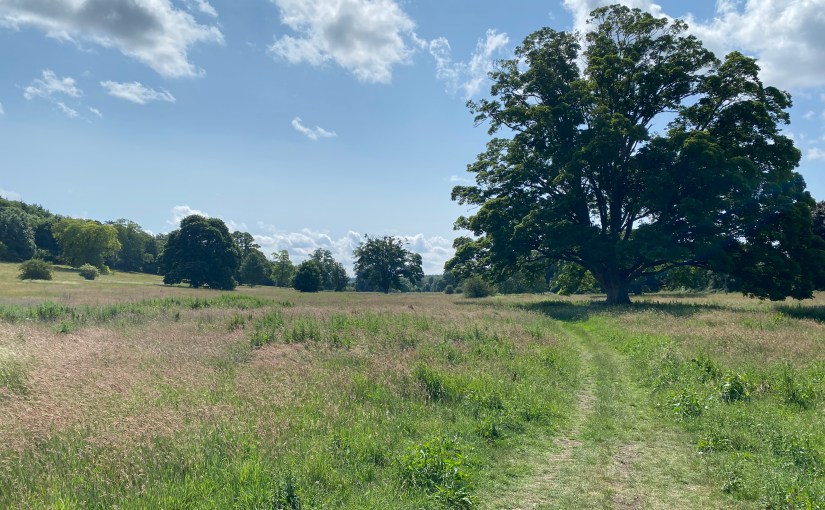
Appreciation Grows With Knowledge
The car windows were open, and Carlos Santana was making his guitar sing out of our stereo in ways that few can imitate. With the wind in her hair, my wife commented from the passenger seat that she reckoned people who play guitar probably appreciate his solos more than she could. She’s an experienced musician herself, but her instrument is piano. I play guitar—but I wouldn’t claim such a thing in front of Carlos. Still, even my amateur knowledge makes me see the truth in what my wife said. I’ve tried to learn my scales and unlock the hidden order of the fretboard and train my fingers to move freely along it—and I have not succeeded. When I hear someone whose mastery of the instrument is as complete as Santana’s, I think my own attempts—as small as they are—really do make me appreciate his abilities in a different way. My limited experience with the instrument gives me the beginnings of a context for the kind of work he must have put in day after day and year after year to develop his seemingly effortless (yet in reality hard won) talent. I’d imagine if I was more accomplished at guitar myself, I would appreciate the skill of masters like Santana even more. As my knowledge of music grows, my appreciation grows along with it.
Continue reading Appreciation Grows With Knowledge
What The Mysteries Of The Universe Teach Us About God
Every so often I run across a news article about new discoveries that could reshape our understanding of the universe, or how some scientists are proposing new ways of thinking about the questions that continue to confound our best efforts of explanation. As our knowledge grows and our scientific theories continually shift in response, it’s obvious that our experts are still out of their depth in the mysteries of creation. It often seems that the more we find out about the universe, the more questions we end up having about it. For all we’ve discovered, we still don’t know some of the fundamental basics about how it works. Yes, we have theories like dark matter to explain anomalies we don’t understand, but we’ve never observed dark matter and we may very well be wrong about it. We theorise about black holes, and postulate about the meaning of ripples in the space-time continuum. At the heart of the physical universe that supports our lives, there are mysteries that still boggle our minds. We know this, and accept it, even as we work to understand more. But while people have learned to live with this tension in our knowledge of the fundamental realities of the universe, they often reject the exact same dynamic when it comes to the One who created the universe. If you think about this, it doesn’t make sense.
Why should we expect the Creator to be easier to understand than his creation? Wouldn’t we rather expect him to be even deeper, even broader and more expansive than anything he made? Wouldn’t he, of all things, be the most mind-blowing reality of all?
Continue reading What The Mysteries Of The Universe Teach Us About God
The Past Is More Than A List Of Problems
It’s often said that those who don’t learn from the past are doomed to repeat it. The unstated assumption in this saying is that the past is full of problems—which is obviously true. Learning from the mistakes of the past is a big job because there are just so many to choose from. Our learning is also complicated by the danger of over-correction—of fixating so intently on avoiding one problem that we fall easily into another. After all, we’re just as susceptible to cultural blind spots, overlooked abuses, and self-serving justifications as anyone who went before us. Have you seen the internet lately? So we must learn from the mistakes of the past, and we must apply our lessons carefully. But I think we sell history, our ancestors, and our own selves short when we only see the past as a litany of problems to avoid. Our forebearers certainly had their issues—plenty of them—but they also had their successes. They were often wrong, but sometimes they were right. And what if we were humble enough to admit this? What if we learned from history not only by critiquing it, but also by letting it critique us?
Continue reading The Past Is More Than A List Of Problems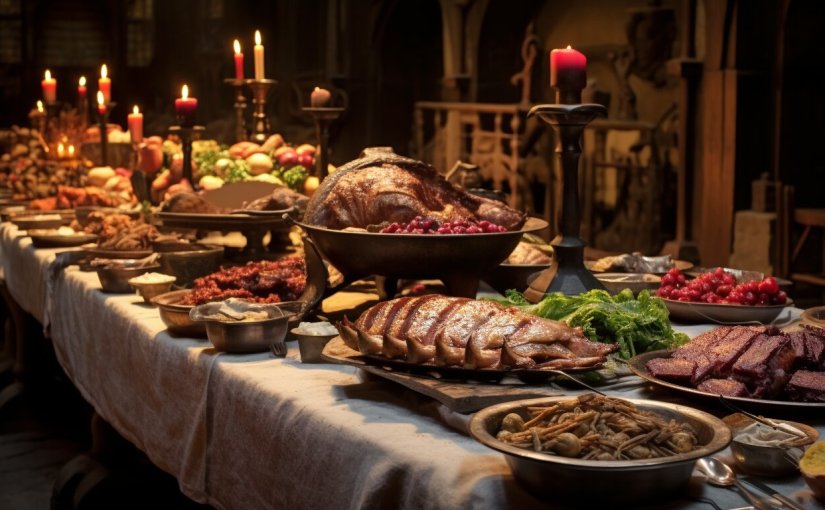
A Curious Mind
Have you ever wondered about your ability to wonder about things? It’s a wonderful gift, when you think about it. It’s the ability that has unlocked most of our discoveries, because the most fertile ground for discovery is always a curious mind. I’m sure you can learn things without being curious—some lessons will slap you in the face whether you ask them to or not—but there’s no question you’ll learn a lot more if you start with questions. Isn’t our entire scientific method just a systematic series of questions? Without curiosity, the whole world fades into nothing more than a boring necessity, the people around us flatten down into a procession of stereotypes, and God himself starts to look like some kind of tired trope or taskmaster. Without curiosity, life goes stale. Tasteless.
Continue reading A Curious Mind
The Key To Understanding The Bible
The Bible is the most influential book in history. No other book comes close to its print numbers, translations, or the number of lives and even cultures that have been radically changed by it. The message is more important, and more transformative, than anything ever written before or since. But although this book is the ultimate best-selling, world-shaping classic of literature, it can’t be fully understood if it is read like other books. It is not one more textbook to study, or history to appreciate, or how-to guide to follow. It is unique: it is God’s revelation of who he is and what he has done, and of who we are and what our lives are for. It does not present us with a religious or philosophical system to assent to, it presents us with a personal God to respond to. Reading it, hearing sermons about it, and studying it are all great things to do, but if you really want to understand the Bible, it’s not enough to listen to it. You have to respond to it. You have to obey it.
Continue reading The Key To Understanding The Bible
Knowledge Is Not A Bank
Now that my children are getting older, it has come to my attention that I have lost access to some of my own knowledge. I learned algebra in school, for example, but now that my son has taken it, I find that the lessons I had all those years ago seem to have slipped through a crack into some inaccessibly cloudy region of my skull. I know I knew it, but I can’t deny that I don’t know it now. And the same is true for much more than my maths.
Continue reading Knowledge Is Not A Bank
Writing Proverbs
I’ve always enjoyed the book of Proverbs in the Bible. The short, memorable sayings hit hard, like espresso shots of truth. You might say that the book is a bit like Twitter, but without the hot-takes, the cut-downs, and the crazy weird stuff and arguments… so not like Twitter at all, actually.
The whole point of the book of Proverbs is to gather wisdom and knowledge about life and living, and to pass it on to the next generation. Which got me thinking: if Solomon can write proverbs to pass on what he learned about life to help his children, why can’t I? I have lived for a little while now, and I’ve learned a few things along the way. Why shouldn’t I try to capture some of those things in proverbs—short, memorable sayings that might help my children, or someone else?
Continue reading Writing Proverbs
“Well, THAT was magic!”
When my second son was three, he didn’t walk—he marched. Everywhere. His stride may have been short, but it was full of confidence. I vividly remember the day he marched ahead of us into the grocery store, but had to pause as the automatic doors slid open. He watched them closely, then announced as a matter of fact: “Well, THAT was magic!” Then he marched through.
Was it magic? Not really. I know, and you know, and he knows now that he’s older, that automatic doors don’t operate on fairy dust. There is a mechanical, electrical explanation, and it all adds up and it all makes sense. Yes. But isn’t it amazing? The doors open themselves! It may not be magic in a technical sense, but isn’t there something magical about it?
Continue reading “Well, THAT was magic!” sethlewis.ie