Looking Out For Number Two

“Look out for Number One” they say, “if you don’t, no one else will.”

Actually, it wasn’t some generic “they” who said this first, it was Arnold “The Brain” Rothstein. He was boss of the Jewish mob in New York City during the Prohibition era, so I guess you could say he lived it out, too. He certainly took care of himself. He probably took care of a lot of other people as well, if you know what I mean.

Maybe the quote is too vague. There are just so many ways of “looking out” for yourself. Thankfully, most people don’t do it by becoming kingpins. But we still take the kingpin’s advice: Look out for number one. Follow your own bliss. Take care of your own self. After all, The Brain’s logic seems bullet-proof: “if you don’t, no one else will.” Isn’t that how the world works?

Continue reading Looking Out For Number Two

Rivers, Not Lakes

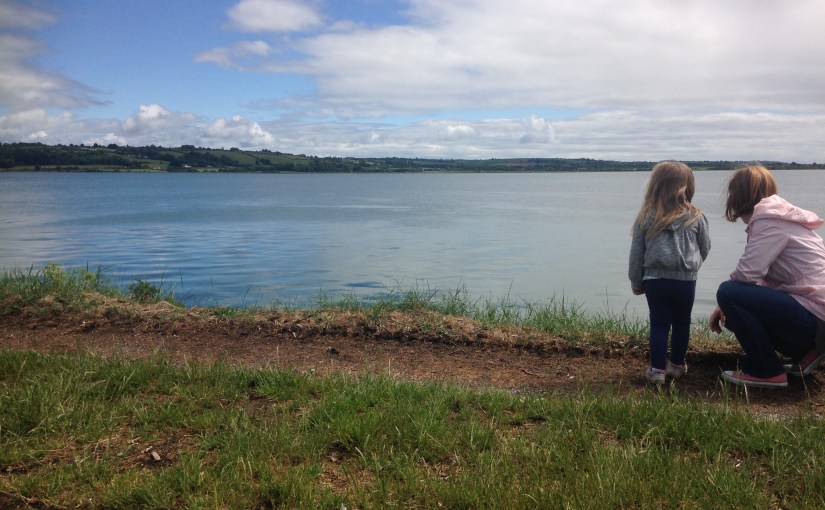
There’s a small lake in our village with a path around it and an island in the middle where a pair of swans make their nest every year. When the cygnets are born, they’re grey and fluffy and clumsy until they grow up and slowly become majestic. Eventually they all fly away and I don’t know where they go. Then every year one couple returns and there’s a new nest and eventually new cygnets.

The cygnets and ducklings and baby coots (cooties?) on the lake make the place a lot nicer to visit, because there are certain times of the year when the water isn’t much of an attraction on its own. It has the typical problem that most small lakes have: it tends to grow green and manky with pondweed and algae and such, especially in the summer. Some summers are worse than others, but even on a good year (like this one) there are still places where the weeds are thick enough that the little cooties can walk around on them instead of swimming.

Continue reading Rivers, Not Lakes

Answering Children

When our children were small, I used to write down some of the things they said because the things they said were so funny and cute. I recorded the most when they were around three and four years old, because that’s the sweet spot when simple logic, creative grammar, and limited vocabulary all come together in fantastically surprising ways. Like the time one of my children asked to see “the belly friend” and I didn’t know who that was but it turned out that the belly friend was the ice cream man—which does make a lot of sense when you think about it. Or when I was asked to pretend that I was real (a question some philosophers would probably love to dig into) or the time one of them asked me to stay with them because they wanted to be alone. Then there was the entrepreneurial child who asked if I’d let him sell our family car for €55 (I didn’t).

Continue reading Answering Children

Days Like Blackberries

It’s blackberry season in Ireland right now, and our family has a yearly tradition of picking them. They’re not hard to find. The vines are growing in the hedges along the roads, reaching out into the paths in the woods, climbing over the old stone walls in the fields, and all of them covering themselves in juicy, plump, sweet little berries. Like candy, except healthier, and with thornier packaging. And free! They just grow, right out of the ground, in loads of public places where we can pick and eat and keep as many as we want. Last weekend we got almost four pounds on one family walk which are now (thanks to my wife) three jars of delicious homemade jam. Can you believe we live in a world where there are jam-bushes growing wild? 

Continue reading Days Like Blackberries

With Cheerfulness

In Romans 12, the Apostle Paul writes that “the one who does acts of mercy” should do them “with cheerfulness.” There are a lot of other words he could have used in that sentence after the “with”. There are other instructions he could have given to those who seek to give practical help to others. He could have told us to do acts of mercy with diligence or perseverance, with wisdom or self-sacrifice and all of these words would make sense, but Paul doesn’t use them. He tells us to serve “with cheerfulness.”

Really, Paul? Cheerfulness?

Continue reading With Cheerfulness

The Sheep Don’t Know

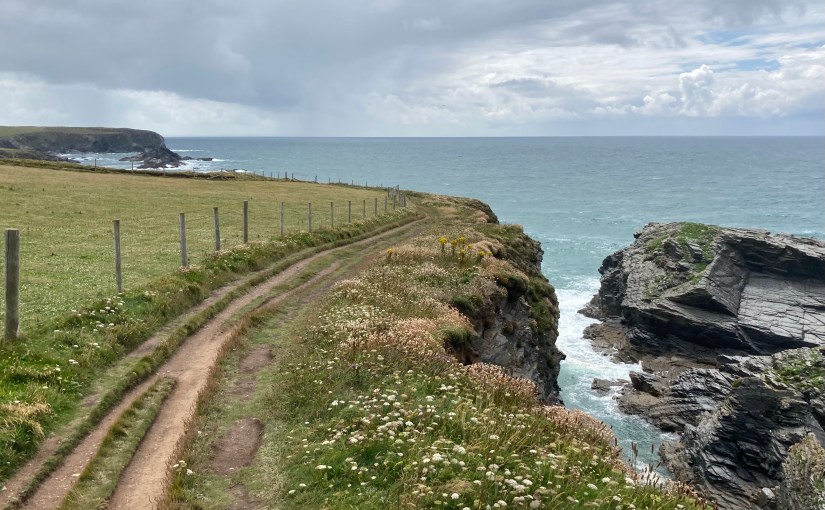
A cliff rises above the sea, jagged, wild, immovable. The waves, far below, break against it with noisy violence. This is where the ocean ends and the patchwork fields begin, suddenly. In the fields, there are sheep. As I walk past, one of them looks up at me as he chews a disinterested mouthful of grass. He has eyes, so he can see the same view I see. He has ears, so he can hear the waves, and the gulls crying out above him.

I am only visiting, and part of me envies this sheep his home and his everyday sights and sounds. I look up and wonder what the gull’s eyes are seeing as he soars over all of this on the power of the wind. I wonder if I were a gull, could I ever get used to that feeling enough to focus on feeding myself? I think I might be a skinny gull. But I think I would be filled with the thrill of wonder.

Continue reading The Sheep Don’t Know

The Day I Told God No

I remember a day many years ago when I realised with a shudder that in order to obey what I had just read in the Bible, I would have to take a specific action. I knew very well what I had to do, but I also knew very well what it could cost me. There was a good chance that this step of obedience could fundamentally change—or even destroy—a close friendship, and I was terrified of that possibility. I knew what I had to do, but I did not want to do it. I tried to reason with the Lord, to show him that his command was too much to ask of me. He did not relent. So I tried a different approach: I simply said “no.” There on the floor of my bedroom, I told the Creator of everything that I was happy to follow him in everything except this one thing.

I told God “no.”

Continue reading The Day I Told God No

More Than You Can Handle

John the Baptist was dead. Beheaded. It was unjust, brutal, and senseless. On hearing the news, Jesus left what he was doing and went with his disciples to a solitary place. He must have wanted to mourn, and pray, away from the crowds. But when he arrived, there was no solitude: somehow, word had spread about where he was going, and now a large crowd was waiting for him. Matthew records that Jesus didn’t send them away or throw himself a pity party—“he had compassion on them and healed their sick.” They were suffering, too. 

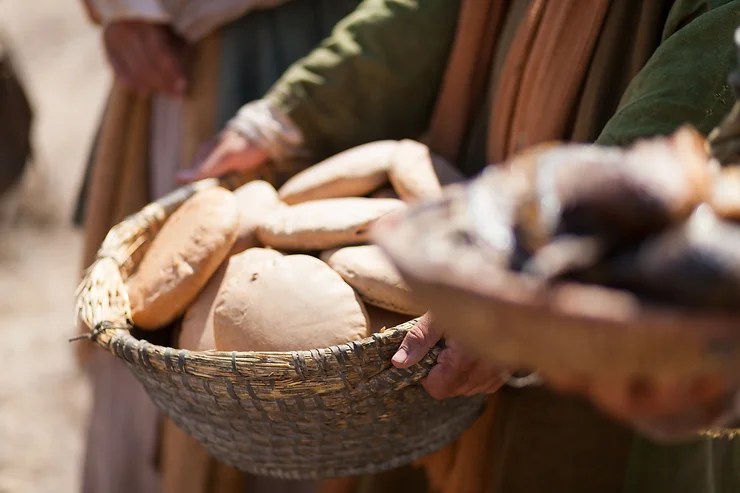
As the day wore on, Jesus’ disciples began to be concerned: what would these people eat for dinner, out there in the middle of nowhere? No one had planned logistics for a gathering like this. Taking stock of the situation, they made a practical suggestion that Jesus send the crowd away so that they could get to the villages and buy food for themselves. Jesus replied: “They do not need to go away. You give them something to eat.”

I’ve heard people say that “God will never give you more than you can handle.” I don’t think that’s true. Look at the job he gave his disciples: “you give them something to eat.” 

How?

Continue reading More Than You Can Handle

The Inner Circle

“It’s all who you know,” they say. If you want to get ahead, it really helps to know the right people in the right places. People on the inside, in the inner circle of influence. If they know you, they’ll be more likely to use their positions to help you. If they like you, or if you’ve done something for them, that’s even better. 

Continue reading The Inner Circle

How To Quit The Comparison Game

If you want to be thoroughly dissatisfied with your life, you can do it quickly in one easy step:

Compare yourself to others.

There will always be someone who is more successful or talented or good-looking or clever or confident or has more of whatever it is you want. Guaranteed. You might measure up pretty well against some people (as long as you’re careful to measure the right things), but eventually you’re bound to find someone who surpasses you at the very strengths you take pride in. The world is a big place. That’s how it goes.

Continue reading How To Quit The Comparison Game