You will never read an AI generated word on this blog or in anything I write. Not in a sermon. Not in a book. Not even in an email. I claim each and every word and sentence, every comma and dash—I am fond of dashes—and every careless error as entirely my own. I know AI is becoming a popular tool for writers. I know AI can do in a heartbeat what can sometimes take me hours of work (although I comfort myself that at least I have a heart to beat in those hours). I’ll take the time. There are more important things than efficiency, and the brain is a muscle. The labour of collecting thoughts, choosing words, and cementing them into sentences keeps my mind strong, engaged, and growing. I dare not relinquish it. I know that AI is good, and getting better every day, at mimicking human logic, emotion, and eloquence. I understand fully that it is progressing far more quickly than I am. It could easily outpace me, and in some ways I’m sure it already has, at being interesting, informed, persuasive, and inspiring—but it can never outpace me at being me.
Continue reading Why I Will Never Use AI For WritingTag: technology
Means With No Ends
I’ve only reached middle age, but I’ve already lived to see the world remade by the introduction of personal computers and then remade again as we brought the power of the internet into our pockets with smartphones. It’s now obvious that another transformation is underway in the development of AI. As it was in the early days of other technologies, no one knows exactly what AI will mean for us long-term, but no one can deny that our world and our lives are changing fast. Humanity is always grasping for more power and control over everything we see and touch, developing new and better tools for ourselves, and we’ve been quite successful: no generation has ever had tools as powerful as the ones we wield today. This sounds like it ought to be good news, but most of us aren’t so sure. Humanity doesn’t have a great track record in using our tools well. I came across an observation recently that cuts through our progress to one of our biggest underlying problems:
“The first great fact which emerges from our civilisation is that today everything has become “means.” There is no longer an “end”; we do not know wither we are going. We have forgotten our collective ends, and we possess great means: we set huge machines in motion in order to arrive nowhere.” – Jacue Sellul
Continue reading Means With No Ends
C.S. Lewis On The Danger Of Getting Too Much News
I recently came across this excerpt from a letter C.S. Lewis wrote to a friend. He wrote it in 1946, before the internet was invented, before the dawn of push notifications and instant news updates without pause every moment of every day, and yet the wisdom in these few sentences only grows more important the more our technologies and access to information increases. We’ve reached the stage now where we can hear of every new battle, every devastating famine, every natural disaster and celebrity scandal on the other side of the globe more quickly and easily than we can hear what is happening with our own neighbours in our own community. Here’s what C.S. Lewis said about it:
Continue reading C.S. Lewis On The Danger Of Getting Too Much News
How Satellites Changed How I See The World
I grew up on the edge of a new world. I was the first of my friend group to own a mobile phone—an indestructible Nokia that could call and text, but I didn’t use it to text because that was expensive and who would I text anyway? No internet. No satellite navigation system.
I was 16. My parents gave me the phone because we lived in the country and I had just gotten plastic proof of my adulthood: a full driver’s licence. I drove our little Toyota pickup truck with a tape deck that was so old the tapes would play faster or slower according to the engine rpms—so the tempo of the music changed every time I changed gears. It was hilarious. And really annoying. That truck was mostly reliable, but only mostly. I remember it breaking down on top of a mountain and how thankful I was that I could just barely coast into the driveway of the first house after miles of forest. I didn’t know the people there, but they helped me. I couldn’t always depend on the car, or the phone signal, so I had to depend on strangers. Gradually, as the cellular towers sprang up and the satellite networks became more reliable, our family breakdown stories changed. Helpful strangers began to feature less often in them.
Continue reading How Satellites Changed How I See The World
A Strategic Retreat
About a year ago, I deleted all the social media apps on my phone. It felt drastic at the time, like chopping off my own thumb (you know, the scrolling one). But I still have those apps on my tablet, and I still have both my thumbs, so I don’t think I’ve actually missed much. I still enjoy using social media. I guess I just got tired of missing things in the real world because I was looking at my phone too much when I could have been looking around.
Continue reading A Strategic Retreat
We’ve Inherited More, But That Doesn’t Make Us Better
Humans don’t fly. Every human in the world knew this for most of history—but I’ve flown. I’ve flown many times, over long distances, at heights and speeds that boggle the mind. How did I do it? I have no idea. I know it had something to do with aerodynamics and jet propulsion and lift and thrust and stuff like that, but mostly I just stepped through the door and when I walked out I was on a different continent. In my pocket I carry a small computer, which I know does something with invisible waves and towers and space satellites and stuff like that, but mostly I just know I can talk to my friends and family through it. I turn the key in my car, and I know there are belts and gears and little petrol explosions that push pistons, but mostly I just sit down and push a little pedal with my foot and wish the other cars would get out of my way. In the kitchen I have hot running water and cold food, and I can make the cold food hot in minutes with some kind of micro-radiation cube.
Continue reading We’ve Inherited More, But That Doesn’t Make Us Better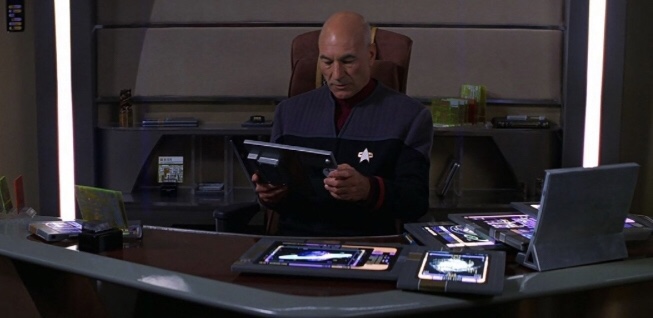
What Star Trek Missed
I grew up when Star Trek: The Next Generation was popular, and now I’ve lived to see many of their imagined technologies become real. We’re still not quite there on warp drives or teleporters, but we’re getting closer to the holodeck with virtual reality, and we already have touchscreens, computers you can control with your voice, wireless communication that is constantly available, and handheld devices that can do all sorts of things. I’ve lived to see yesterday’s science fiction become today’s reality.
Continue reading What Star Trek Missed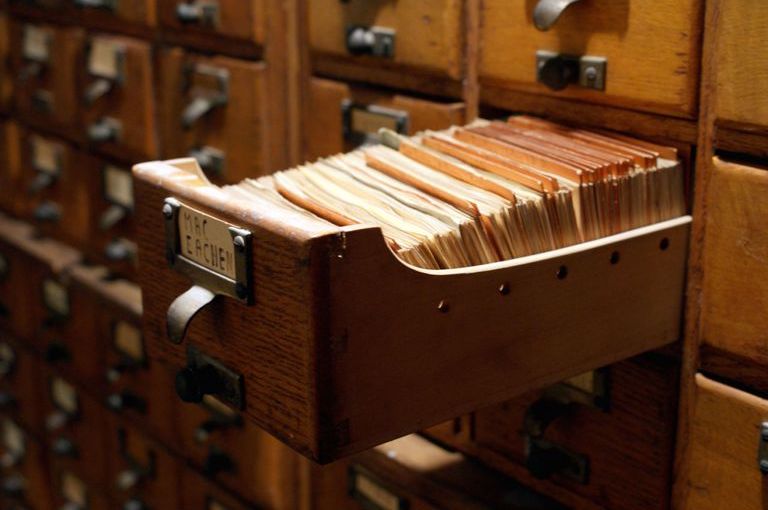
Googling Wisdom
Where I grew up we called the library “Fort Book” because it looked like it would stand up well in a siege. Inside, there were rows of filing cabinets housing the card catalogue – one card for each book, organised precisely in deep drawers. If I wanted to learn something, those cards were the indexes of knowledge. Now they’re gone. Now the catalogue cabinets of the world have squeezed themselves into a little bar at the top of the screen in my hand. Getting information has never been easier. No other era of history has had the power I carry in my little glowing rectangle. It’s overwhelming. And it’s easy to assume that having access to humanity’s storehouse of knowledge should make me wise.
Continue reading Googling Wisdom
My Children’s Childhood Is Not Like Mine
Last year on our flight to America, my boys were looking forward to the Pac-Man knockoff game on the in-flight entertainment system before we even boarded. My daughter remembered which movies she had watched two flights before. She had just turned six, and was about to take her fourth trip over the Atlantic.
This was not my childhood.
I Miss Talking To Strangers
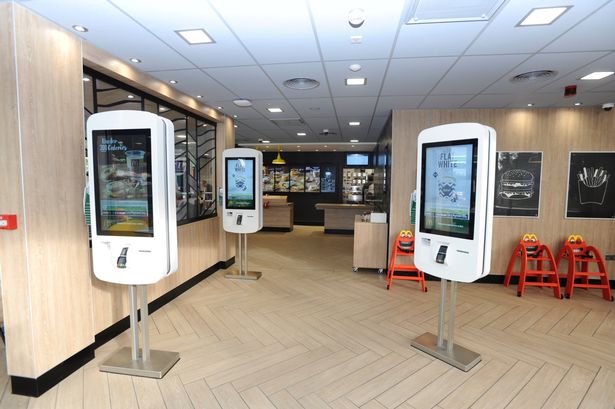
I remember the first time our family got a touchscreen. It was an early GPS model (the kind you had to buy map updates for), but I was too young to drive, so what stood out to me was the touchscreen. I’d seen Star Trek, so I knew what to do. I just never guessed that I would live to see the day when McDonalds had more touchscreens than the bridge of the Starship Enterprise. Screens for ordering, screens for keeping children entertained at the tables, screens for displaying menus, and don’t forget the personal communication devices everyone carries everywhere. Captain Kirk would be impressed.
 sethlewis.ie