Seedlings Need The Weather (repost)

It’s the time of year when fresh green leaves are unfolding and Jessica is preparing trays of seedlings for our garden. A few years ago I wrote about what I learned from our seedlings, and I’ve been thinking a lot about those lessons recently, so I decided to repost this post for you today. If you look closely, you’ll see that God is constantly communicating many valuable truths to us through the world he made for us. That’s what my forthcoming book is about— “The Language of Rivers and Stars”.


There’s a small square of earth behind our house that belongs to us. Which is strange, because it was here a long time before we were and will be here a long time after we’re gone. But there’s a deed in an office somewhere that has our names on it, so the ground is ours. And with that ground comes the responsibility to care for it—a responsibility that didn’t come from an office, but from Heaven.

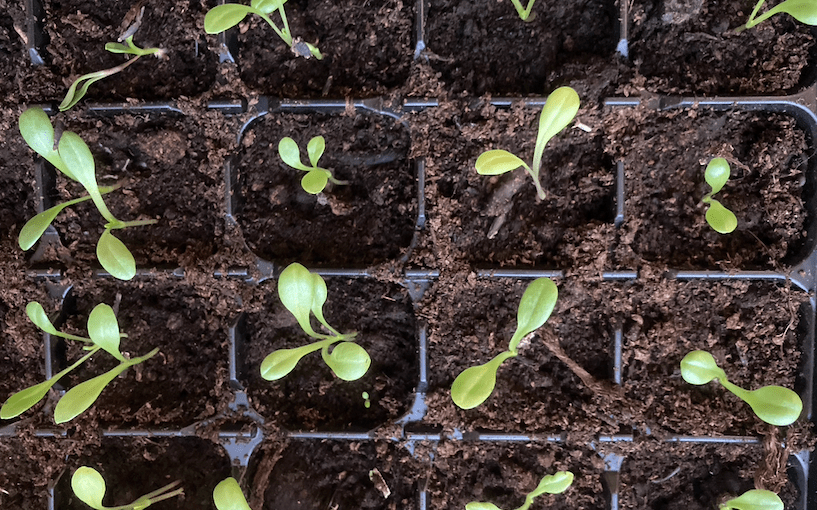
We do our best. And when I say “we”, I really mean my wife, Jessica. She’s the one who does most of the caring and tending and planting. I made the raised beds around the edges of the garden, but she’s the one that filled them with roses and blueberries, mint and strawberries, pineapple sage and climbing jasmine and passion flowers. This year, she brought home packets of seeds for dahlias, zinnias, and cornflowers as well, because she wants to have flowers to cut for our dinner table throughout the spring, summer, and autumn. She sowed the seeds in trays of compost and found the perfect spot inside our glass door where our seedlings could have ideal conditions: plenty of sun (by Irish standards), warmth inside the house, protection from cold and storms and slugs, and regular watering. We babied our little baby plants, and we were delighted to see them grow, and grow fast. In fact they grew so fast that their stems became long and thin and too weak to hold up their own new leaves. One by one me they began to fall over. What went wrong? How could our seedlings be so weak when we protected them from every difficulty and obstacle? What more could we do for them? 

Continue reading Seedlings Need The Weather (repost)

How To Avoid A Midlife Crisis (an open letter to twenty-somethings)

Dear young adult,

I know you’re not thinking about having a midlife crisis right now. I know the concept feels far away and foreign, the domain of grumpy gen-Xers and geriatric millennials who drink too much coffee and still complain about being tired all the time. I know you’re probably tired of people telling you to enjoy your stage of life because it all goes so fast. You might not believe me, but the reason almost everyone says this when they reach a certain age is because stages of life actually do go quickly. In fact I can prophecy with confidence that you’ll be saying the something similar in about twenty years time, to the tolerant nods of your juniors. Twenty years probably feels like an eternity to you right now. I get it. But eventually the speed of life catches up with you like a marathon runner who loses sight of the starting line and suddenly realises that the impossibly-distant finish line is actually real and not so distant after all. The difference is that a marathon runner wants to reach the finish line, whereas in life most people don’t. Thus, the midlife crisis. And apparently, I’m due for one. I’ve slept through enough nights and celebrated enough birthdays to qualify for such things, even though no one can tell me what the true mid-point of my life is with any degree of certainty. The specifics don’t matter. My life is clearly passing by, and I’ve reached the stage where this fact can no longer be hidden or ignored. This is the driving force of the midlife crisis—the sudden intrusion of truths we like to push away for as long as possible. At some point they come in anyway, and make themselves at home.

Continue reading How To Avoid A Midlife Crisis (an open letter to twenty-somethings)

On Losing Consciousness In Public

There was a period of years in my life when I randomly lost consciousness. The first time it happened I had just had an eye test, and I woke up on the floor with my head spinning and several blurry women in matching purple uniforms leaning over me. That was strange. Then there was the time my face went straight into my lunch, and the time I just fell over standing in the doorway of the kitchen. There was also the time I gave blood, and once again woke up with the staff leaning over me. Last, but certainly not least, there was the time my wife and I went to a traditional Irish music show. At the end of the evening they called people up from the audience to sing, and they called us, and we tried to say no but somehow we ended up on the stage anyway. We sang, and I was just starting to think we were pulling it off pretty well when I felt the blood leaving my brain. I knew that feeling like an old enemy by then, so I bent over double to encourage that blood to go back where it should have been while still trying to sing and act natural about the whole thing. I do not recommend this as a way to act natural. Thankfully, my wife caught me when I went down. When I woke up I saw sympathetic eyes glancing away from me. I guess most people don’t have a category for how to react to the guy who just collapsed publicly on stage in front of them. Fair enough.

Continue reading On Losing Consciousness In Public

Focusing On What I Can Measure

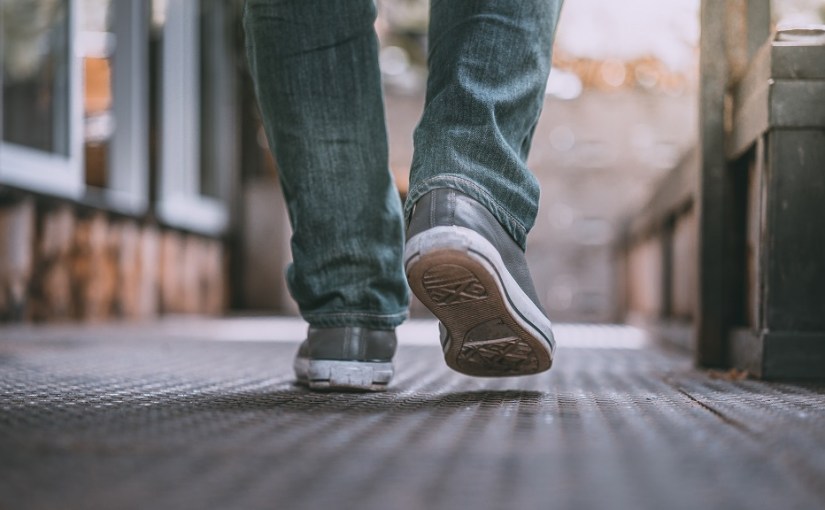
I got a watch recently that counts my footsteps. For my whole life I’ve never had a clue about the number of steps I take each day, but now I know, and all of a sudden I care. If I reach my goal number, I feel good. If I don’t, I feel less good. I do think my watch is good for me. It’s helping me be more aware of my level of activity, which helps me be more active, which I’m sure helps me be more healthy.

Walking is good, but there’s a lot more to my health than the amount of steps I get day by day. My watch can only measure certain things, and the most important aspects of how my body is working are beyond its ability to tell me about. I could have a severe underlying condition and still meet my step goal, and still get a little celebration on my wrist telling me how healthy I am. It’s even possible that an underlying condition could be made worse by more steps, not better. Thankfully that’s not true (as far as I know), but if it was true, I wouldn’t know it from the metrics on my watch.

Continue reading Focusing On What I Can Measure