The Cost Of Greatness (a poem)

Can you bear the cost of greatness
In the kingdom of our Lord?
You can’t buy it with your money
Or take it with a sword

Will you let yourself be overlooked
And measured as the least?
Can you bear to serve the tables
For the others as they feast?

Let your patience be called weakness
Let your love be misconstrued
Let them scorn your sacrifices
And speak evil of your good

Can you give away your rights
Without demanding recognition?
Quench the thirst of enemies
While they reload their ammunition?

Plough your years into the soil
Till your neighbour’s garden blooms
And keep on being generous
When everyone assumes
That the credit for the good you’ve done
Is everyone’s but yours—
And when they say your work’s in vain
Still keep a steady course

Can you offer up forgiveness
To the ones who’ve done you wrong?
Can you bend your neck into the yoke
And still lift up a song?

The climb to heaven’s greatness
On the pathway of our Lord
Is a climb that takes you downward
To his unending reward


“Whoever wants to become great among you must be your servant, and whoever wants to be first must be your slave—just as the Son of Man did not come to be served, but to serve, and to give his life as a ransom for many.”

– Matthew 20:26-28
What Makes Our Town (Or Any Place) Great

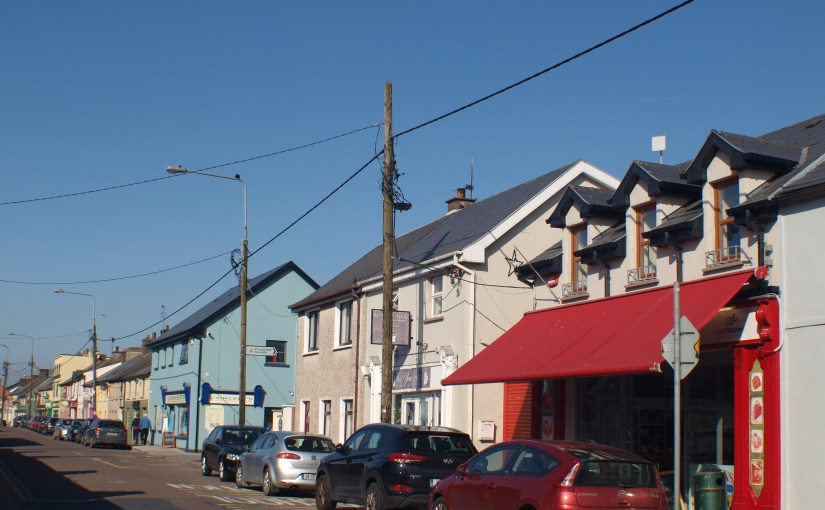
What makes a town or a city a great place to live? There are many factors, of course, from cost of living to amenities and natural beauty and so on, but there is one factor that surpasses them all. This was pointed out to me by a man who has been dead for some time, G.K. Chesterton. He wrote about what makes cities great in his often surprising and famously thought-provoking testimonial work, Orthodoxy. Using Pimlico as an example—a village in central London which must have been dire in Chesterton’s time—he says:

“Let us suppose we are confronted with a desperate thing—say Pimlico…. It is not enough for a man to disapprove of Pimlico: in that case he will merely cut his throat or move to Chelsea. Nor, certainly, is it enough for a man to approve of Pimlico: for then it will remain Pimlico, which would be awful. The only way out of it seems to be for somebody to love Pimlico: to love it with a transcendental tie and without any earthly reason. If there arose a man who loved Pimlico, then Pimlico would rise into ivory towers and golden pinnacles; Pimlico would attire herself as a woman does when she is loved… If men loved Pimlico as mothers love children, arbitrarily, because it is theirs, Pimlico in a year or two might be fairer than Florence. Some readers will say that this is a mere fantasy. I answer that this is the actual history of mankind. This, as a fact, is how cities did grow great… Men did not love Rome because she was great. She was great because they had loved her.”

Continue reading What Makes Our Town (Or Any Place) Great

Transcendence, Inc

My children and I were heading home after a swim, when a work van caught my eye. It had “Transcendence, Inc” written across its side, but honestly, it didn’t look very transcendent. It was parked on the footpath between the hotel and the road, just like any regular old non-transcendent work van would be. A closer look at the smaller print confirmed that “Transcendence, Inc” was the name of a company offering high-end decorating and furnishing services.

That’s a clever name for that kind of business. And perhaps it’s true, in the very lowest sense of the word, of merely “transcending” our normal expectations with something a bit beyond them. I’ve seen furniture and decorating that really has gone beyond expectations, leaving me genuinely impressed. For a while.

Continue reading Transcendence, Inc

The Invisible Castle

In the year of our Lord, 1858, the Shirleys of Lough Fea boasted that their estate house contained the largest room in County Monaghan. The honour was not secure, however—a nearby Baron, Lord Rossmore, was determined to claim it for himself. He extended the drawing room of Rossmore Castle to steal the distinction from them. But the rivalry wasn’t over. Lord Rossmore had to extend the drawing room five times to stay ahead of the Shirleys’ relentless construction, and in the end his drawing room still came in second to their Great Hall.

Even though it lacked the largest room in the county, no one could deny that Rossmore Castle was beautiful, built as it was on top of a hill with a panoramic view and 117 windows to see it through (the Shirleys only had 96). Its towers and turrets looked as if they had been lifted straight out of a fairytale illustration, even more so when there was a party on, and there were a lot of parties. The guest lists were star-studded as well—the Prince of Wales was a personal friend of Lord Rossmore. But, as can happen in fairytales, the castle vanished. This had more to do with dry rot than magic, but the effect was the same.

Continue reading The Invisible Castle

Do Great Minds Really Think Alike?

I’ve said it many times, as an automatic reflex. Just like “bless you” after a sneeze or “you’re welcome” after a “thank you”, the phrase “great minds think alike” rolls off the tongue naturally whenever two people have a similar idea. It’s a friendly way of complimenting others and ourselves simultaneously, a verbal pat on the back for being mutually great. It’s a bit of fun. But that doesn’t make it true.

Continue reading Do Great Minds Really Think Alike?

I Can’t Be Anything I Want To Be (And That’s Okay)

If you believe, you can achieve.

Evidently, if you believe hard enough and long enough, you can even fly – that’s what I heard on the radio. Metaphorically, this is encouraging. Practically, it’s still annoyingly impossible, no matter how strongly I imagine myself butterflying above the ground. The kind of advice that tells us we can be anything we want to be is meant to be inspiring, to encourage us to try difficult things, and help us push through to reach our goals even when it’s hard. The slogans sound so great and fit so well in songs and movies and books and memes and posters that it’s easy to overlook that one pesky little drawback of how none of them are true.

Continue reading I Can’t Be Anything I Want To Be (And That’s Okay)