New Year’s Day, 2025. The day we all start having to pause to remember what year to write on forms and checks and such, or when we start writing it wrong and having to scribble it out and start again. What will this New Year bring? No one really knows. Looking back is easier—we know what the past is. For good or bad, it’s done. Before long, this past year that was so current, so vital and cutting-edge yesterday will start to feel stale and dated. Old. Has been. Whether we look back on it as the good old days or some kind of personal dark age doesn’t change the fact that we will look back on it. There was a New Year’s Day last year, too. Do you remember it? Or ten years ago, or twenty? Last Halloween I saw that they were selling ’90’s costumes, as if the ’90’s weren’t just last week. But they did look a bit funny.
Continue reading I’m Dated (and you are, too)Category: Current Events
Assisted Suicide And The Meaning Of Life
Our representatives in Dublin are voting this evening on whether to approve recommendations for assisted suicide in Ireland. This is only an indicative vote, a first step towards changing our laws, but it is a step that will pave the way for official legislation to be brought forward in the future. The argument in favour of this change is usually framed in the language of compassion and choice—that those who are suffering greatly should be able to end their suffering—and their lives—on their own terms. There are, however, many significant concerns raised in the debate as well. For example, there is the unspoken (or perhaps spoken) pressure to die that allowing this option places on good-hearted people who hate to be a burden on others. Is that really a free choice? Or consider the obvious cost-cutting incentive that assisted suicide gives the health service to end lives rather than provide expensive palliative care. Does that really promote compassion? These concerns are reason enough to oppose assisted suicide, especially in light of the heartbreaking evidence from countries who have already started down this road. But I have another more fundamental objection. I know that the one great benefit and argument for assisted suicide is that it ends suffering. This is true enough. The trouble is that it ends suffering not by treating or managing it, but rather by ending the sufferer. In doing so, assisted suicide creates a new category for our culture—a category of human life that society agrees is simply not worth living.
Continue reading Assisted Suicide And The Meaning Of Life
Independent Power
Election seasons are always a rollercoaster, but being in America this summer during this particular presidential cycle has set a new record in my personal experience of political drama. The stakes are high, and the surprise plot-twists have been coming thick and fast. The news stories and ensuing commentary are non-stop, a constant reminder of how much raw global power is wielded by the American president. Whoever wins this election will command the world’s most powerful economy, military, and government. Their power will be massive, by virtue of the structures they oversee. It is a power granted by the people of America through democratic mandate, and executed through millions upon millions of civil-service employees, soldiers, and law-enforcement officers. In other words, it is a power that is dependent on others, contingent on the collective power of the people supporting them. This is how power works. The most powerful among us are those who are able to channel and control the collected power of others most effectively. On our own, we are small. We are created, finite beings, with limited strength. No matter how strong an individual may be, the collective force of millions working together will always be stronger. With one notable exception.
Continue reading Independent Power
How I’m Voting In The Constitutional Referendum (And Why)
On the 8th of March, the citizens of Ireland will be asked to make two changes to our constitution by referendum. Because of the importance of these decisions, I’d like to use this week’s post to discuss them. The first change would be to the constitutional definition of the family, adding “other durable relationships” alongside marriage in Article 41. The Article with the proposed change would read this way (updated wording in bold):
Article 41.1.1° “The State recognises the Family, whether founded on marriage or on other durable relationships, as the natural primary and fundamental unit group of Society, and as a moral institution possessing inalienable and imprescriptible rights, antecedent and superior to all positive law.”
Continue reading How I’m Voting In The Constitutional Referendum (And Why)
A Compass For Our Changing World
We’re a few days into another new year, and nobody knows what the next 12 months will bring. What we do know is this: the world is changing fast. Culture is changing. Economics are changing. Demographics are changing. Beliefs are changing. As the world shifts around us, there’s plenty of disagreement about which of these changes are moving us forward, which are holding us back, and what the path of progress should look like. That’s a vital question. Years ago, C.S. Lewis made an important point about it:
Continue reading A Compass For Our Changing World
Don’t Let All The Conspiracies Be Evil
The headlines are usually bad. Nations conspiring against nations, scandals and corruption in governments, corruption and abuse in charities, organised crime, businesses cheating the system, people cheating each other, and so on. It seems there are a lot of people in this world working hard to devise evil plans and then working together to carry them out. Which is nothing new. Isaiah wrote about the same thing hundreds of years before the first Christmas:
“…the schemes of the schemer are evil;
He devises wicked plans
To destroy the poor with lying words,
Even when the needy speaks justice.” – Isaiah 32:7 (NKJV)
After The Flood
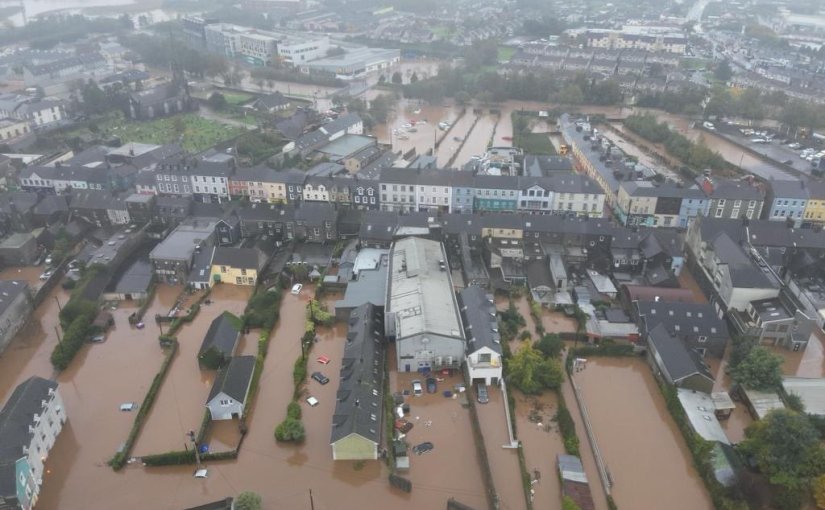
When the children went to school last Wednesday, it was raining. This is Ireland. We’re used to rain. Met Éireann gave an orange weather warning, but that almost always just means a bit of gusty wind or extra rain. I barely noticed. It wasn’t until the afternoon that I realised that this time it was not just a little bit extra—it was a month’s worth of rain, in 24 hours. The ground, so green and lush and well-watered, refused to take any more. The rivers carried away what they could, but they couldn’t carry it fast enough. Their banks broke. The green fields quickly became brown lakes. Then the lakes came into the streets, and the streets became rivers. And rivers don’t knock before they come inside.
Continue reading After The Flood
The Truth Is Not Mine
“What is truth?”
That was Pilate’s question to Jesus, after Jesus told him that he had come into the world “to testify to the truth.” The question was a good one, but Pilate didn’t wait for the answer. Probably it was less of a genuine question and more of a cynical—possibly bitter?—statement of the shifting realities of political life and Pilate’s role in it. This was a man who had given up on the idea of firm principles. He had seen how changeable the crowds could be, and how precarious his position and power were. He could not afford to care about what was really, foundationally, true—he could only respond to the immediate situation in front of him and try to make the best of it for himself. Or so he thought.
Continue reading The Truth Is Not Mine
How To Never Burn Out
Have you noticed that people aren’t quite the same after the pandemic? Apparently, humans beings can’t just pause most of their normal life activities for two years and then suddenly switch it all back on again without any difficulties. There are difficulties. People are generally more tired doing the same things, which makes them less willing to commit to the same number of things, which leaves some things undone, or at least struggling to get done. This seems to be especially true for voluntary activities like the local committees and clubs and churches that hold communities together and serve the needy and vulnerable. Serving others in these ways takes time and energy; resources that are already being demanded by commitments we can’t get out of, so often the easiest option is to cut the voluntary activities out. It makes sense. We only have so much to give. If we’re not careful, we’ll burn out. But I know a way to keep that from happening.
Continue reading How To Never Burn Out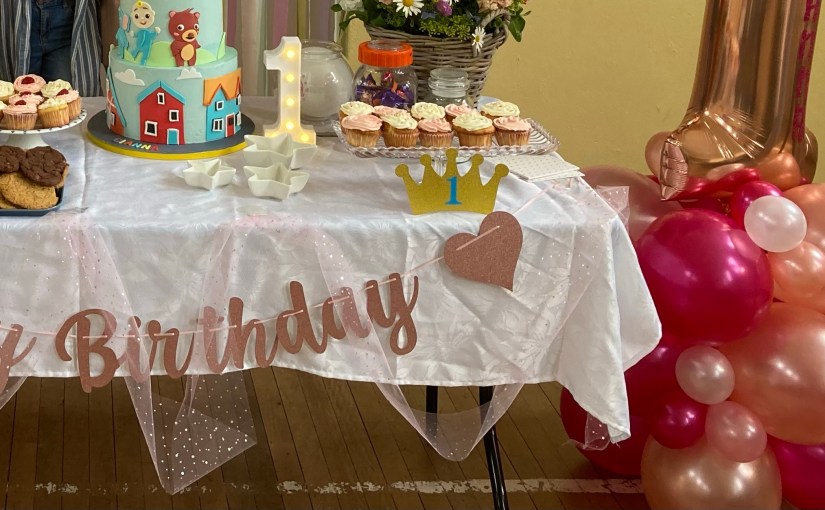
Life Is Precious
Last week our family attended the first birthday party of a little girl whose parents waited and longed and prayed for six long years, wondering if they would ever be able to have a child of their own. To say it was a joyful occasion is an understatement.
Also last week the Supreme Court of the United States reversed a decision from almost 50 years ago, finding that there is not actually a right to abortion in the US constitution, so individual states are free to legislate as they please on the issue. Some states have kept abortion legal, others have not. Some people rejoiced, others mourned. Some said the judgment was a gain for life, others that it was a loss for personal autonomy.
Continue reading Life Is Precious
