What Makes Our Town (Or Any Place) Great

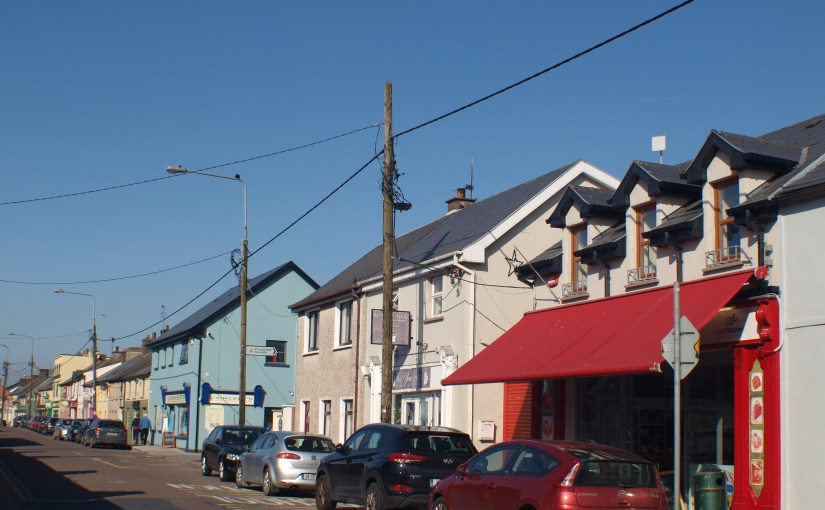
What makes a town or a city a great place to live? There are many factors, of course, from cost of living to amenities and natural beauty and so on, but there is one factor that surpasses them all. This was pointed out to me by a man who has been dead for some time, G.K. Chesterton. He wrote about what makes cities great in his often surprising and famously thought-provoking testimonial work, Orthodoxy. Using Pimlico as an example—a village in central London which must have been dire in Chesterton’s time—he says:

“Let us suppose we are confronted with a desperate thing—say Pimlico…. It is not enough for a man to disapprove of Pimlico: in that case he will merely cut his throat or move to Chelsea. Nor, certainly, is it enough for a man to approve of Pimlico: for then it will remain Pimlico, which would be awful. The only way out of it seems to be for somebody to love Pimlico: to love it with a transcendental tie and without any earthly reason. If there arose a man who loved Pimlico, then Pimlico would rise into ivory towers and golden pinnacles; Pimlico would attire herself as a woman does when she is loved… If men loved Pimlico as mothers love children, arbitrarily, because it is theirs, Pimlico in a year or two might be fairer than Florence. Some readers will say that this is a mere fantasy. I answer that this is the actual history of mankind. This, as a fact, is how cities did grow great… Men did not love Rome because she was great. She was great because they had loved her.”

Continue reading What Makes Our Town (Or Any Place) Great
How To Never Burn Out

Have you noticed that people aren’t quite the same after the pandemic? Apparently, humans beings can’t just pause most of their normal life activities for two years and then suddenly switch it all back on again without any difficulties. There are difficulties. People are generally more tired doing the same things, which makes them less willing to commit to the same number of things, which leaves some things undone, or at least struggling to get done. This seems to be especially true for voluntary activities like the local committees and clubs and churches that hold communities together and serve the needy and vulnerable. Serving others in these ways takes time and energy; resources that are already being demanded by commitments we can’t get out of, so often the easiest option is to cut the voluntary activities out. It makes sense. We only have so much to give. If we’re not careful, we’ll burn out. But I know a way to keep that from happening.

Continue reading How To Never Burn Out

The Importance Of Doing What Anyone Could Do

A good friend of mine got an award in recognition of his work with a charity that teaches job skills to men in Birmingham, Alabama. He has been their scissors, cutting them through all the red tape required to actually be able to support people. As a lawyer, he has the skill set needed for the job. As a Christian, he has a driving motivation to give himself for the sake of others, just as God has given to him. Still, he was modest:

“A lot of people could have done it.”

Which is true, I’m sure. The thing is, they didn’t. The charity didn’t need people who could do the job. They needed someone who would do it. My friend was (and is) that person, and I say the world needs a lot more like him. And it doesn’t always have to be complicated or specialised. Often the most helpful acts of support and kindness are also some of the most mundane – the kinds of things almost anyone could do. 

Continue reading The Importance Of Doing What Anyone Could Do