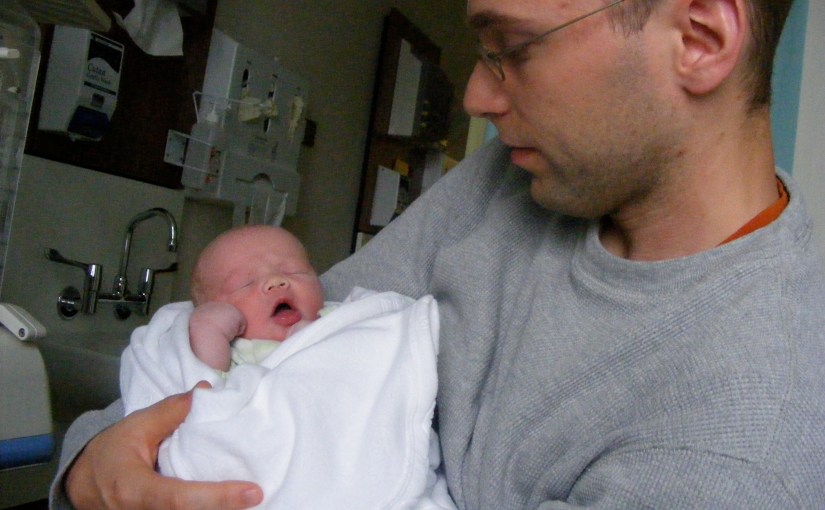
The moment I met our first child, everything changed. It happened as quickly as a heart can beat, with a force that took my breath away—my eyes and my heart were suddenly opened to understand love in an entirely new way. I had heard about the love of parents for their children. I had experienced it from the other end, as the child of truly wonderful parents. But none of this prepared me for how it feels when your hearts bursts with absolute, unconditional, unfathomable love for a human you don’t even know, who can’t respond, and whose needs never seem to end—and none of that matters at all.
I think one reason God invented families was to teach us about ourselves, and about himself. Doesn’t he call himself our Father? Parenting is created to be a picture of his love, care, and provision. A picture that also displays our need, weakness, and dependence—and how none of that matters at all. I knew these things before, in theory, because I read about them in the Bible. But when I had children, I learned about God’s fatherly love from an entirely new angle—the experience of being a father myself.
I realised recently that parenting was not the only life experience that helped me understand truth about God in a new way. Being married to my wife has also taught me many precious truths about Jesus’ relationship to his people, who he calls his bride. The ongoing experience of living in covenant continues to teach me about God’s love, so relentless and faithful, so forgiving and passionate, yet seen most often in the daily, hourly, ordinary stuff of life. Likewise, with the experience of friendship. Jesus calls us his friends, and I have learned from my friends just how wonderful it is to share life, work shoulder to shoulder, and build years and decades of trust and laughter and tears—together. I have learned from playing sports and going to the gym more of what God means when he tells us to “run with endurance”. I have learned from the experience of fishing and gardening, from traveling and working and washing dishes, from watching birds soar and waves crash and stars shine and a million other experiences—even the bad ones.
Yes, even the bad ones. In fact, the bad experiences can be some of the most instructive. As the apostle Paul said in Philippians 3, “I want to know Christ—yes, to know the power of his resurrection and participation in his sufferings, becoming like him in his death, and so, somehow, attaining to the resurrection from the dead.” He really did say that he wanted to know Christ through “participation in his sufferings”. Is that a thing? Can we really know Christ better by the experience of suffering? Paul thought so. And he would know. He suffered far more than most, with physical ailments and persecution, beatings and imprisonments, shipwrecks and hunger, rejection and loneliness and injustice. And while we rightly admire his deep and profound knowledge of God, perhaps we don’t appreciate what gave him that close, intimate knowledge of Jesus—a lot of it came from “participation in his sufferings, becoming like him in his death”. He poured out his life in loving service for God and others, even to death, following in the footsteps of his Saviour. In the process, he learned to know Christ in a way that only the “fellowship of his sufferings” could provide. He didn’t seek out these sufferings. He simply followed his Saviour, and when he met sufferings along the way, he didn’t balk. He didn’t grit his teeth and just endure. He rejoiced in understanding the love of his Saviour in a new way, through the fellowship of burdens born, of costs counted, sacrifices made, of emptiness and weakness filled to bursting with glory and resurrection power. It’s not an accident that many of the most peaceful, joyful, radiant Christians you’ll ever meet have suffered deeply in their lives. The two are often connected. They’ve learned to know Jesus and reflect his love and character in a dark and broken world by one of the most effective means possible—by experience.
 sethlewis.ie