
Time-travelling is one of the standard plot devices of our stories and films, from H.G. Well’s The Time Machine to Interstellar, Dr. Who, The Terminator, and hundreds more. It’s not hard to see the appeal—it’s interesting to imagine what it would be like to visit the world of the future or the past. It’s exciting to think of dipping into a different era, something totally unlike our normal everyday lives here and now. But it’s also easy to see the risks that this kind of time-travelling would bring with it. In the Back To The Future films, Doc Brown gives several stern warnings to Marty about the dangers and potential consequences of interfering with the past. He knows that time-travellers must be aware that even the smallest of actions can change the course of history in surprising ways—as we see in the films.
Continue reading Time-Travel With CareTag: movies
The Scenes They Leave Out
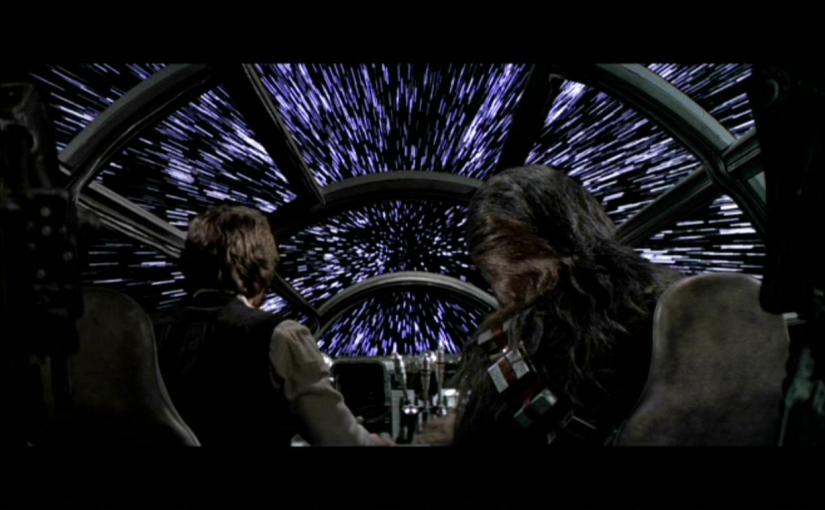
I don’t know who does the dishes at the Avengers HQ. I don’t know when they eat, or what. I’m also not sure how many bathrooms the Millennium Falcon has, but if I had to guess, it’s probably one small one with drain clogging issues and I bet Han Solo has to wait a long time for Chewbacca to wash his hair. I guess we’ll never know, though, because the movies don’t tell us. Those moments are too ordinary, and we like our movies packed with action. Even the documentaries and true life stories fast forward through most of the ordinary stuff of life, either ignoring it altogether or flashing back to highlights or giving us a few glimpses set to inspiring montage-music.
Continue reading The Scenes They Leave Out
Why The Book Is Better Than The Movie
I couldn’t wait to get into the cinema the day the first Lord of the Rings came out. To see a story I had loved for so long on the big screen was a treat, and I thoroughly enjoyed it. Tolkien’s storyline was preserved, and the special effects were brilliant. Still, when the film was over, I couldn’t shake the feeling that something had been lost, that some magic had been tainted in the transition from the page to the screen. And I know I’m not alone. There’s a reason that the phrase “the book was better than the movie” is almost proverbial. But why? Books don’t have a budget of millions to draw on. They don’t have high definition video, experienced actors, expensive special effects, and Dolby digital surround sound, either. So how is it that all of these advantages can be consistently bested by simple words on a page?
Continue reading Why The Book Is Better Than The Movie sethlewis.ie